

How Does a Slant-bed CNC Lathe Improve Precision Machining Efficiency?
2026-07-22
Article Summary
A Slant-bed CNC Lathe has become an essential machining solution for manufacturers seeking higher precision, better productivity, and improved operational stability. Compared with traditional flat-bed lathes, this advanced CNC machine adopts an inclined bed structure that enhances chip removal, rigidity, vibration resistance, and machining accuracy. This article explains how a Slant-bed CNC Lathe works, why it solves common machining challenges, and how manufacturers can choose the right equipment for different production requirements. With professional CNC technology and customized solutions, Jingfusi provides reliable machining equipment designed to support modern manufacturing industries.
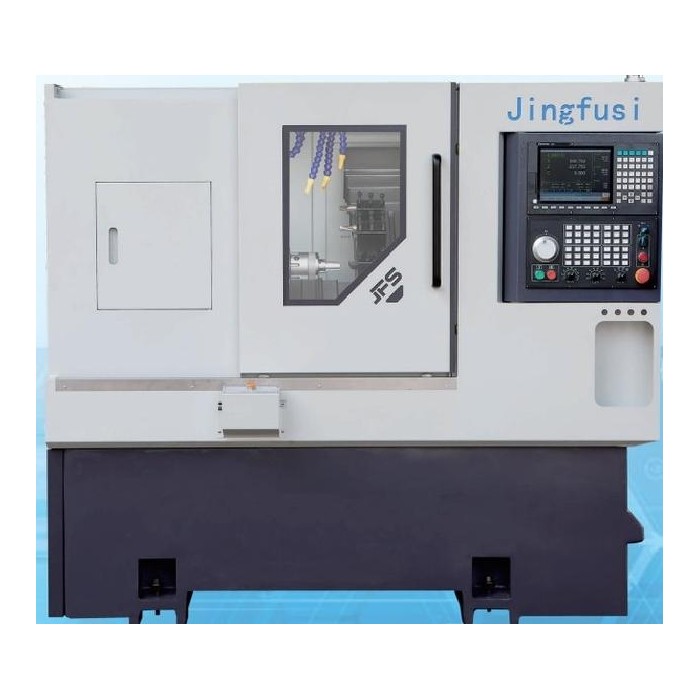
Table of Contents
- How Does a Slant-bed CNC Lathe Work?
- Why Do Manufacturers Choose Slant-bed CNC Lathes?
- What Problems Can a Slant-bed CNC Lathe Solve?
- Key Features of a High-quality Slant-bed CNC Lathe
- Applications of Slant-bed CNC Lathe in Different Industries
- How to Select the Right Slant-bed CNC Lathe?
- Maintenance Tips for Better CNC Lathe Performance
- Frequently Asked Questions
How Does a Slant-bed CNC Lathe Work?
A Slant-bed CNC Lathe is a computer-controlled turning machine designed with an inclined machine bed instead of the traditional horizontal structure. The angled bed usually adopts a 30-degree, 45-degree, or other optimized inclination design, allowing the machine to achieve better mechanical performance during high-speed machining.
The CNC system controls the movement of cutting tools, spindle speed, feed rate, and machining processes according to programmed instructions. During operation, the workpiece rotates at high speed while cutting tools precisely remove material to create complex cylindrical components.
The inclined structure provides several technical advantages. The cutting force is distributed more effectively, reducing deformation during heavy machining. At the same time, chips produced during cutting naturally slide downward instead of accumulating around the machining area, improving cleanliness and reducing downtime.
| Structure Type | Main Characteristics | Typical Performance |
|---|---|---|
| Flat-bed CNC Lathe | Traditional horizontal structure | Suitable for general machining operations |
| Slant-bed CNC Lathe | Inclined bed design with stronger rigidity | Higher precision and faster production efficiency |
Why Do Manufacturers Choose Slant-bed CNC Lathes?
Modern manufacturers face increasing pressure from shorter delivery cycles, higher accuracy requirements, and rising labor costs. A Slant-bed CNC Lathe helps companies overcome these challenges by combining automation, precision control, and durable mechanical design.
One major advantage is improved machining stability. The inclined bed structure creates a stronger support system for the spindle and guide rails, which minimizes vibration during cutting. This is especially important when machining hard materials or producing components with strict tolerance requirements.
- Higher machining accuracy: Stable structures reduce thermal deformation and vibration.
- Improved production efficiency: Faster tool movement and automated processes shorten cycle times.
- Better chip management: The inclined surface helps remove chips efficiently.
- Longer service life: High-rigidity designs reduce mechanical stress.
- Lower operating costs: Automated machining reduces dependence on manual labor.
For manufacturers producing automotive parts, hydraulic components, aerospace parts, and precision mechanical components, these advantages directly influence product quality and business competitiveness.
What Problems Can a Slant-bed CNC Lathe Solve?
Many machining companies experience common production difficulties, including inconsistent accuracy, excessive machine downtime, poor chip removal, and inefficient labor utilization. A Slant-bed CNC Lathe is designed to address these issues.
| Manufacturing Challenge | How Slant-bed CNC Lathe Helps |
|---|---|
| Low machining precision | High rigidity structure improves stability and reduces machining errors. |
| Frequent chip accumulation | Inclined design allows chips to discharge quickly. |
| High labor requirements | CNC automation enables continuous and unattended production. |
| Difficulty machining complex parts | Advanced CNC control supports multiple machining processes. |
| High maintenance frequency | Durable components improve machine reliability. |
By solving these production bottlenecks, manufacturers can achieve more stable output, reduce waste, and improve overall profitability.
Key Features of a High-quality Slant-bed CNC Lathe
A professional Slant-bed CNC Lathe should combine mechanical strength, intelligent control, and user-friendly operation. When evaluating equipment, manufacturers should focus on several important features.
- Rigid inclined bed structure: A strong machine base improves vibration resistance during high-speed cutting.
- Precision guide rails: High-quality linear guides ensure smooth movement and long-term accuracy.
- Powerful spindle system: A stable spindle provides consistent cutting performance for various materials.
- Advanced CNC controller: Intelligent control systems simplify programming and improve machining efficiency.
- Automatic tool changing capability: Reduces manual intervention and improves production speed.
- Customized machining solutions: Different industries require different configurations, tooling systems, and automation options.
Jingfusi focuses on providing reliable CNC machining solutions that meet different manufacturing requirements. Through advanced design and strict quality control, Jingfusi helps customers improve machining performance and production reliability.
Applications of Slant-bed CNC Lathe in Different Industries
Due to its flexibility and precision, the Slant-bed CNC Lathe is widely used across multiple industries. It can process various metal materials and manufacture components with complex geometries.
| Industry | Typical Components |
|---|---|
| Automotive Manufacturing | Engine parts, shafts, transmission components |
| Aerospace | High-precision structural parts and rotating components |
| Medical Equipment | Precision instruments and small metal parts |
| Energy Industry | Valve bodies, connectors, and mechanical components |
| Mold Manufacturing | Complex precision machining parts |
The ability to maintain consistent quality makes Slant-bed CNC Lathes an ideal choice for companies requiring both small-batch customization and large-scale production.
How to Select the Right Slant-bed CNC Lathe?
Choosing the correct CNC lathe requires careful consideration of production goals, material requirements, and machining complexity. An unsuitable machine configuration may increase costs and reduce efficiency.
- Define machining requirements: Determine workpiece size, material type, tolerance requirements, and production volume.
- Evaluate spindle performance: Select spindle power and speed according to cutting conditions.
- Consider automation needs: For continuous production, automatic loading and unloading systems may improve efficiency.
- Check CNC system compatibility: A reliable control system ensures easier operation and programming.
- Choose an experienced manufacturer: Professional suppliers provide better technical support and customized solutions.
Maintenance Tips for Better CNC Lathe Performance
Regular maintenance is essential for maintaining machining accuracy and extending equipment lifespan. Proper care can prevent unexpected downtime and ensure stable production.
- Clean chips and machining residue regularly.
- Check lubrication systems to ensure smooth mechanical movement.
- Inspect guide rails and spindle conditions periodically.
- Maintain proper electrical system protection.
- Calibrate machining accuracy according to usage conditions.
- Follow professional maintenance recommendations from the equipment supplier.
A well-maintained Slant-bed CNC Lathe can deliver reliable performance for many years while helping manufacturers maintain consistent product quality.
Frequently Asked Questions
What is the main advantage of a Slant-bed CNC Lathe?
The main advantage is its inclined bed structure, which provides better rigidity, improved chip removal, reduced vibration, and higher machining accuracy compared with traditional flat-bed machines.
Can a Slant-bed CNC Lathe machine different materials?
Yes. Depending on machine configuration and tooling selection, it can process materials such as steel, stainless steel, aluminum, copper, and other industrial metals.
Is a Slant-bed CNC Lathe suitable for mass production?
Yes. Its automation capability, stable operation, and high machining efficiency make it suitable for both mass production and precision customized manufacturing.
How long can a Slant-bed CNC Lathe operate effectively?
With proper maintenance, high-quality CNC lathes can provide long-term reliable service while maintaining machining performance and accuracy.
Why choose Jingfusi for Slant-bed CNC Lathe solutions?
Jingfusi provides professional CNC machining equipment with a focus on precision, durability, and customer-oriented solutions. The company works closely with customers to deliver machines that match specific production requirements.
Conclusion
A Slant-bed CNC Lathe is an important investment for manufacturers looking to improve machining accuracy, production efficiency, and long-term operational stability. Its advanced inclined structure, strong rigidity, and intelligent CNC control system make it suitable for demanding manufacturing environments.
Whether for automotive components, precision engineering, or customized metal processing, selecting the right CNC solution can significantly improve productivity and product quality. Jingfusi continues to provide dependable Slant-bed CNC Lathe solutions designed to help customers achieve efficient and reliable manufacturing results. For professional CNC machining solutions and customized support, please contact us today.