

How Does a Small High-power Relay Improve Electrical Systems?
2026-04-30
Summary: Small high-power relays are essential components in modern electrical systems, providing high current switching in compact designs. This article explores their working principles, advantages, applications, and key selection criteria. Whether you are an engineer or a project manager, understanding these relays can help optimize system efficiency and reliability.
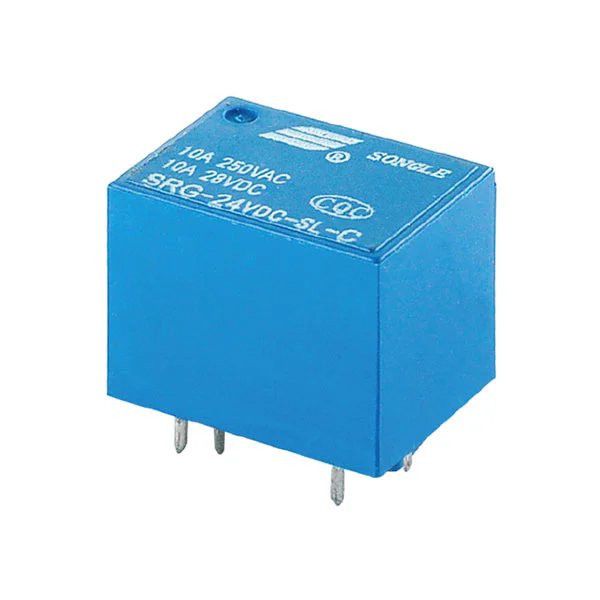
Table of Contents
- Introduction to Small High-power Relays
- Working Principle
- Advantages of Small High-power Relays
- Applications
- Selection Criteria
- Installation and Maintenance
- Comparison Table
- FAQ
- Conclusion
Introduction to Small High-power Relays
Small high-power relays are designed to handle substantial electrical currents while maintaining a compact size. Unlike standard relays, these devices can control high-power circuits with a low-power control signal, making them ideal for industrial automation, automotive systems, and energy management applications.
Songle, a leading manufacturer of high-quality relays, has developed a range of small high-power relays that combine durability, precision, and efficiency, ensuring optimal performance in demanding conditions.
Working Principle
A small high-power relay operates by using an electromagnetic coil to open or close its contacts. When the coil receives a voltage, it generates a magnetic field that moves the armature, changing the state of the contacts. This allows the relay to switch larger currents than the control signal could handle directly.
- Electromagnetic Activation: The coil converts electrical energy into a magnetic field.
- Contact Switching: The armature moves, closing or opening the high-power circuit.
- Return Mechanism: A spring returns the contacts to their original position when the coil is de-energized.
This mechanism ensures fast, reliable switching with minimal energy loss and extended operational life.
Advantages of Small High-power Relays
Compared with larger relays or mechanical switches, small high-power relays offer several key advantages:
- Compact size saves valuable space in electrical panels.
- High current capacity allows control of large loads with minimal input power.
- Durable contact design reduces wear and tear, extending service life.
- Low operating voltage improves safety and efficiency.
- Fast switching speed enables precise control in automated systems.
Applications
Small high-power relays are widely used in various industries due to their versatility and reliability:
- Automotive Systems: Controlling headlights, horns, and motor functions.
- Industrial Automation: Managing conveyor belts, robotics, and heavy machinery.
- Power Distribution: Switching high-current circuits safely in compact electrical panels.
- Renewable Energy: Protecting solar inverters and battery management systems.
Songle’s products are optimized for these applications, offering high durability under harsh environmental conditions.
Selection Criteria
Choosing the right small high-power relay requires considering multiple factors to ensure optimal performance:
- Current Rating: Must match or exceed the load requirements.
- Coil Voltage: Compatible with the control circuit voltage.
- Contact Material: Silver alloy contacts provide low resistance and long life.
- Mechanical Endurance: High cycles guarantee long-term reliability.
- Mounting Type: PCB, DIN rail, or panel mounting depending on the system design.
Proper selection reduces maintenance costs and ensures continuous operation in critical systems.
Installation and Maintenance
Installing and maintaining small high-power relays is straightforward but requires attention to detail:
- Verify voltage and current ratings before installation.
- Ensure proper heat dissipation to prevent overheating.
- Check contact integrity periodically to avoid arcing or pitting.
- Follow Songle’s guidelines for wiring and protective measures.
- Replace relays showing wear to maintain system safety.
Routine maintenance extends relay lifespan and prevents unexpected failures.
Comparison Table
| Feature | Small High-power Relay | Standard Relay |
|---|---|---|
| Size | Compact | Larger |
| Current Handling | Up to 30A or more | Typically 5–10A |
| Durability | High mechanical endurance | Moderate |
| Applications | Industrial, Automotive, Renewable Energy | General low-power switching |
FAQ
- Q1: Can small high-power relays handle inductive loads?
- A: Yes, but it is recommended to choose relays with rated contact material for inductive loads to prevent arcing.
- Q2: What is the typical lifespan of a Songle high-power relay?
- A: Mechanical endurance can exceed 100,000 cycles, while electrical endurance may reach 50,000 cycles depending on load type.
- Q3: Are these relays suitable for automotive use?
- A: Absolutely. Songle relays are designed to handle automotive voltage fluctuations and vibration conditions.
- Q4: How do I choose the right coil voltage?
- A: Match the coil voltage to your control circuit voltage. Songle offers a range from 5V to 48V options.
Conclusion
Small high-power relays are indispensable for modern electrical and industrial systems, offering reliable switching in a compact design. By understanding their working principle, advantages, and selection criteria, engineers and system designers can improve efficiency, safety, and longevity of their systems.
Songle’s high-quality small high-power relays combine durability, precision, and efficiency, making them an excellent choice for a wide range of applications. For detailed product information, visit our product page and contact us for personalized guidance and support.