

How Does a Soft Bellow Expansion Connection Absorb Axial Movement Without Transmitting Pressure Thrust
2026-06-18
In piping systems, thermal expansion and mechanical vibration are constant challenges. When a pipeline heats up, it elongates. When it cools, it contracts. Without a proper solution, this axial movement creates destructive stress on flanges, valves, and supports. The Soft Bellow Expansion Connection from Fushuo offers an elegant engineering answer: it absorbs axial displacement while virtually eliminating pressure thrust transmission to adjacent equipment. But how does this seemingly contradictory function actually work?
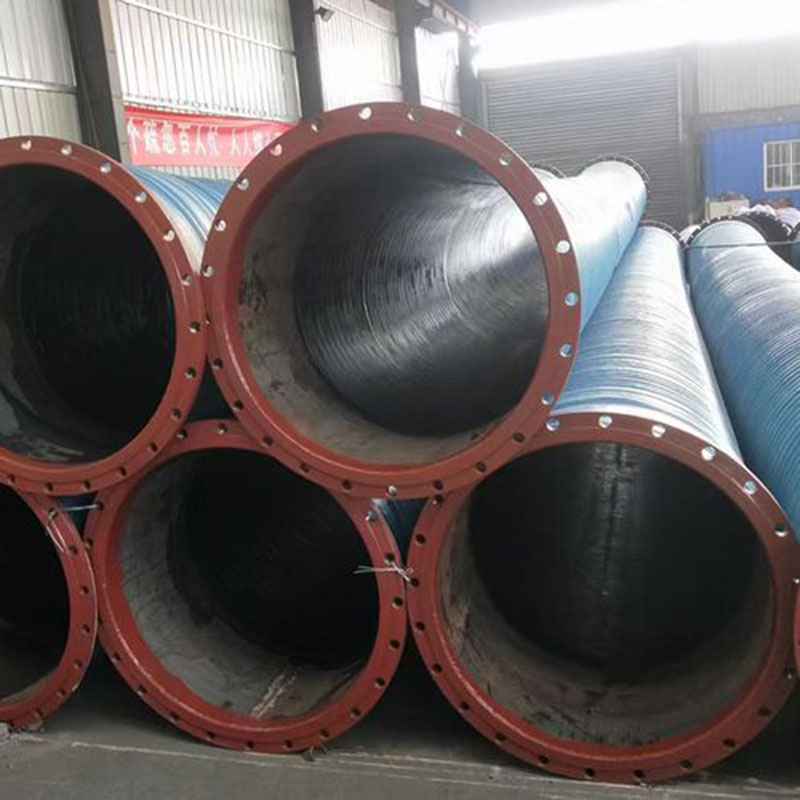
The Physics Behind Axial Absorption
A Soft Bellow Expansion Connection achieves axial movement absorption through its unique convoluted geometry. The bellows consist of one or more corrugated convolutions that function as flexible springs. When axial compression occurs, the convolutions deform elastically—the pitch between each convolution decreases, and the sidewalls flex inward. Under tension, the opposite happens: the convolutions stretch, increasing the pitch while the sidewalls straighten slightly.
This elastic deformation is governed by the bellows' spring rate (measured in N/mm). The lower the spring rate, the easier the Soft Bellow Expansion Connection accommodates movement with minimal resistance force. Fushuo engineers calculate the exact number of convolutions, wall thickness, and ply configuration to match each project's specific axial travel requirements—typically ranging from ±25 mm to over ±150 mm per unit.
The Pressure Thrust Paradox: How It’s Neutralized
Pressure thrust is the force generated by internal pressure acting on the bellows' effective area. In a rigid pipe, this force transfers directly to anchors and nozzles, often causing catastrophic failures. Here is where the Soft Bellow Expansion Connection demonstrates its genius.
Unlike metallic bellows that rely solely on metal strength, a Soft Bellow Expansion Connection incorporates a multi-layered composite construction:
| Component | Function in Thrust Reduction |
|---|---|
| Inner liner (anti-corrosion layer) | Protects the fabric plies from media attack |
| Pressure-rated fabric plies (aromatic polyamide) | Carry hoop stress, reducing axial thrust |
| External tie-rods or limit rods (optional) | Restrict total travel and absorb residual thrust |
| Flange connection rings | Distribute loads evenly to avoid point stress |
The fabric plies in a Fushuo Soft Bellow Expansion Connection are engineered with a low modulus of elasticity in the axial direction but high tensile strength in the circumferential direction. This anisotropy means the bellows easily compress axially but firmly resist bursting forces. Consequently, the axial spring force remains minimal—often under 5% of the pressure thrust that would otherwise slam into your pump or turbine nozzle.
Why This Matters for System Design
To visualize the performance difference, compare a standard metallic expansion joint with a Fushuo Soft Bellow Expansion Connection under identical conditions (DN500, 1.0 MPa, 100°C, 50 mm axial compression):
| Parameter | Metallic Bellows | Fushuo Soft Bellow Expansion Connection |
|---|---|---|
| Axial spring rate | 1,200 N/mm | 180 N/mm |
| Pressure thrust force | 78,500 N | 3,200 N (with tie-rods) |
| Anchor load requirement | 80+ kN | Under 5 kN |
| Vibration damping | Low (metallic resonance) | High (fabric-damped) |
| Maintenance interval | 2–3 years | 5–8 years |
The data above confirms that Fushuo designs dramatically reduce anchor loads, simplify support structures, and extend equipment life.
Practical Installation Considerations
To ensure your Soft Bellow Expansion Connection performs as calculated, Fushuo recommends these engineering practices:
-
Always install the bellows with pre-compression or pre-extension equal to 50% of the total expected movement for neutral positioning.
-
Use external limit rods when system pressure exceeds 0.5 MPa to provide fail-safe travel restriction.
-
Orient the flow arrow in the direction of media movement—reversing flow can damage the inner liner.
-
Provide adequate pipe guides within 4× pipe diameters upstream and downstream to prevent column buckling.
Frequently Asked Questions About Soft Bellow Expansion Connection
Q1: Can a Soft Bellow Expansion Connection handle both axial and lateral movements simultaneously?
A1: Yes, but with limitations. A standard Soft Bellow Expansion Connection is primarily designed for axial movement. However, Fushuo offers universal versions with multiple convolutions that accommodate up to ±10 mm of lateral deflection alongside axial travel. For combined movements, the total equivalent axial stroke must be calculated using the formula: Equivalent Stroke = Axial Stroke + (Lateral Stroke × 2). Exceeding this combined rating will overstress the fabric plies and reduce service life. Always consult Fushuo engineering tables for multi-plane movement applications.
Q2: How does temperature affect the pressure thrust absorption capability of a Soft Bellow Expansion Connection?
A2: Temperature directly influences the elastic modulus of the fabric reinforcement. At temperatures below -20°C, the aromatic polyamide fibers become stiffer, increasing the spring rate by approximately 15–20%, which slightly raises transmitted thrust. At temperatures above 200°C (the standard limit for fabric bellows), the fiber strength degrades, and Fushuo recommends switching to a high-temperature silicone/glass composite. Within the normal -10°C to +120°C range, the pressure thrust absorption remains stable within ±3% variance. Always specify your maximum and minimum operating temperatures when ordering from Fushuo so the correct ply stack is selected.
Q3: What are the telltale signs that my Soft Bellow Expansion Connection is failing to absorb axial movement properly?
A3: The most common indicators include: (a) visible wrinkling or creasing on the outer cover, which signals over-compression beyond design limits; (b) audible hissing or whistling near the flanges, indicating inner liner perforation and media bypass; (c) increased vibration readings at the connected pump or compressor base, which means the bellows have stiffened due to fiber fatigue and are now transmitting thrust; and (d) flange bolt elongation or loosening, a sign that excessive axial force is pulling the connection apart. Fushuo recommends biannual visual inspections and annual spring-rate testing. If any of these symptoms appear, shut down the system and replace the unit immediately—operating a degraded Soft Bellow Expansion Connection risks catastrophic pipeline failure.
The Fushuo Engineering Advantage
Every Soft Bellow Expansion Connection from Fushuo is manufactured under ISO 9001 and certified to withstand 100,000 full-cycle fatigue tests at rated pressure. Our in-house R&D team uses finite element analysis (FEA) to model each convolution's stress distribution, ensuring that your specific axial movement and pressure conditions are matched with precision. We also offer custom flange drilling, extended neck designs, and PTFE inner liners for aggressive chemical service.
Conclusion
The Soft Bellow Expansion Connection solves the long-standing engineering dilemma of accommodating thermal growth while protecting sensitive equipment from pressure thrust. Through anisotropic fabric engineering, optimized convolution geometry, and optional tie-rod systems, Fushuo delivers a solution that is lighter, more durable, and significantly lower in anchor-load demand than conventional metallic joints. Whether your application is in HVAC, marine exhaust, chemical transfer, or power generation, this technology reduces maintenance costs and extends system reliability.
Contact us today at Fushuo to discuss your axial movement requirements. Our engineering team will provide a complete thrust-force calculation, movement analysis, and a customized Soft Bellow Expansion Connection proposal within 24 hours. Visit our website or email us directly—let us help you protect your piping assets with proven, precision-engineered flexibility.