

How Does a Wire Winding Machine Optimize Precision, Efficiency, and Future-Ready Manufacturing?
2025-12-10
A Wire Winding Machine is engineered to wind wires, coils, and conductive materials into precise shapes and tension-controlled formations used across industries such as electronics, aerospace, automotive, motors, transformers, and communication equipment. The purpose of this article is to explore how advanced winding technology elevates manufacturing quality, boosts efficiency, and aligns with future automation trends. This machine is designed to solve problems such as inconsistent tension, slow manual winding, coil deformation, and unstable production repeatability. It improves output quality while significantly reducing labor costs. The following sections provide an in-depth exploration of its features, functions, performance parameters, and industry applications.
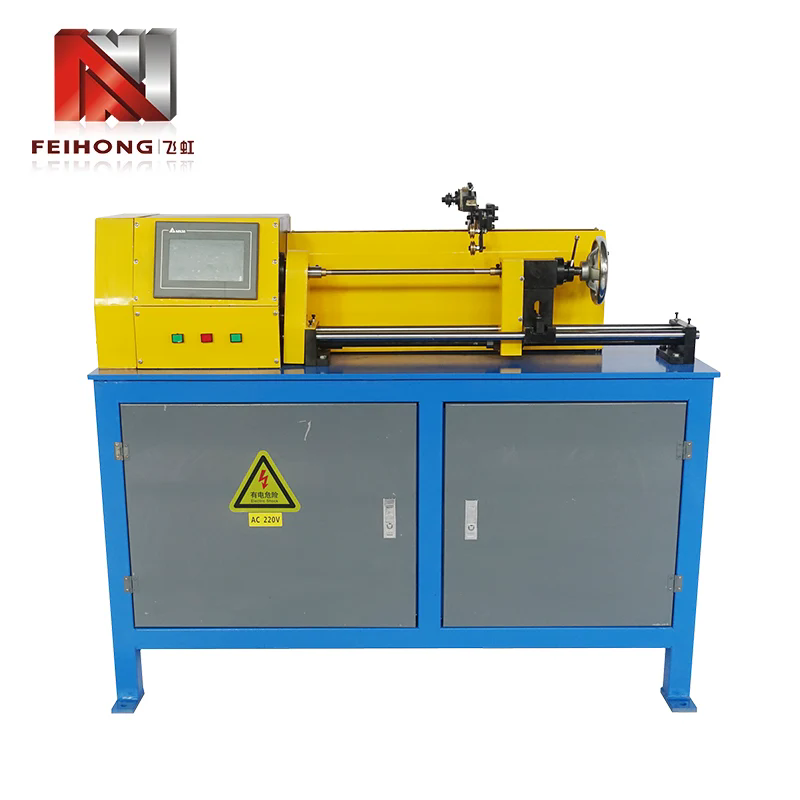
Below is a professional specification overview of a typical high-performance Wire Winding Machine model designed for precision-driven industrial environments:
Wire Winding Machine Technical Parameters
| Parameter Category | Specification Details |
|---|---|
| Winding Speed | 200 – 3,000 RPM adjustable, servo-controlled |
| Wire Range | 0.02 – 3.0 mm (custom options available) |
| Traverse Method | Linear servo guide, ±0.01 mm precision |
| Tension System | Automatic electronic tension control, closed-loop feedback |
| Spool Compatibility | Standard DIN spools, bobbins, toroidal cores, custom molds |
| Power System | High-efficiency brushless servo motor |
| Control Interface | Touchscreen HMI panel, multi-language support |
| Program Memory | 500+ winding program storage capacity |
| Error Detection | Wire break auto-stop, overload protection, misalignment alarm |
| Drive System | Synchronous belt drive for vibration reduction |
| Frame Material | High-strength steel + aluminum alloy |
| Cooling System | Intelligent temperature monitoring and airflow optimization |
| Automation Features | Optional robotic loading/unloading, IoT-enabled monitoring |
| Precision Level | ±0.02 mm repeatable winding accuracy |
How to Evaluate the Core Functional Advantages of a Wire Winding Machine?
A Wire Winding Machine serves as a cornerstone for industries requiring unmatched precision and consistent winding density. Understanding its functions helps users assess its impact on production quality, operational stability, and cost efficiency.
1. High-Precision Winding Control
Precision is the most critical requirement in coil production. Using servo motors and an intelligent feedback system, the machine ensures:
-
Stable and uniform tension
-
Perfect layer arrangement
-
Zero-gap coil winding as required
-
Repeatable output with minimal deviation
This means each coil meets strict technical standards for resistance, inductance, and structural integrity.
2. Intelligent Tension Management
Poor tension leads to wire breakage, deformation, and inaccurate coil resistance. The electronic tension controller solves this by maintaining constant tension during:
-
Speed changes
-
Start and stop cycles
-
Wire size variations
This significantly reduces scrap rates and ensures consistent performance.
3. Versatile Winding Capabilities
The machine supports various winding modes including:
-
Linear winding
-
Cross winding
-
Toroidal winding
-
Spiral winding
-
Layer-specific winding patterns
This versatility makes it suitable for transformers, motors, inductors, sensors, solenoids, and micro-coils.
4. Programmable Automation
The advanced HMI control allows operators to set parameters such as:
-
Winding speed
-
Pitch
-
Turns
-
Layer transitions
-
Acceleration and deceleration curves
Stored programs simplify repetitive production tasks and ensure uniformity across batches.
5. Efficiency-Driven Mechanical Design
The robust mechanical structure minimizes vibration, enabling high-speed operation without sacrificing accuracy. Meanwhile, the optimized servo drive ensures low noise, reduced energy consumption, and extended service life.
How Does a Wire Winding Machine Influence Industrial Productivity and Output Stability?
1. Faster Production Cycles
High-speed servo motors shorten winding time per coil while ensuring stable performance. This boosts daily output substantially compared to manual or semi-automatic winding.
2. Reduced Human Error
Automation eliminates inconsistent results caused by operator fatigue or inexperience. Every product achieves the same precise quality regardless of shift changes.
3. Lower Manufacturing Costs
Savings come from:
-
Reduced labor reliance
-
Fewer defective products
-
Longer machine lifespan
-
Optimized power consumption
These combined benefits generate a rapid return on investment.
4. Adaptability to Multiple Industries
A single machine can meet the needs of:
-
Electrical motor plants
-
Transformer manufacturers
-
Automotive coil producers
-
Telecommunications component factories
-
Aerospace equipment suppliers
This adaptability makes it a long-term asset that remains relevant even as production requirements evolve.
How Will Future Trends Shape the Development of Wire Winding Machines?
The manufacturing world is evolving rapidly, and winding machines are no exception. Industry trends clearly indicate that future models will prioritize:
1. Full Automation Integration
With Industry 4.0 adoption accelerating, machines will synchronize with:
-
Manufacturing execution systems (MES)
-
Robotic arms for automatic loading/unloading
-
Real-time production monitoring systems
This will lead to fully automated coil production lines.
2. IoT-Enabled Smart Diagnostics
Sensors are becoming more advanced, allowing machines to self-detect:
-
Abnormal tension
-
Motor temperature changes
-
Alignment deviations
-
Predictive maintenance cycles
This reduces downtime and repair costs.
3. Micro-Winding Technology Improvements
Demand for smaller electronic components is rising. Future machines will handle ultra-fine wires below 0.01 mm with even higher precision.
4. Environmentally Friendly Manufacturing
Energy-efficient drives, low-noise operation, and reduced waste align with global sustainability standards.
5. Customizable Software and Modular Design
Modular components and customizable control software will allow manufacturers to tailor the machine for specialized industry needs.
Common FAQs About Wire Winding Machines
Q1: How to choose the right Wire Winding Machine for different wire sizes and coil shapes?
A1: Selection depends on wire diameter, spool size, required tension control, winding pattern, and production volume. A machine with a servo traverse, electronic tension control, and programmable memory provides the flexibility needed for diverse coil types. For micro-wires or complex shapes, ensure the machine supports fine-pitch and multi-layer winding.
Q2: How to maintain a Wire Winding Machine to ensure long-term stability and precision?
A2: Regular maintenance includes cleaning wire guides, checking the tension system, inspecting belts or servo couplings, calibrating sensors, and ensuring proper lubrication. Additionally, monitoring temperature and vibrations helps identify early signs of mechanical wear, improving reliability and extending the service life.
Why a Wire Winding Machine Is a Strategic Investment for Future-Ready Manufacturing
A Wire Winding Machine is more than a tool—it is a precision-engineered system that elevates production accuracy, reduces labor dependency, and prepares manufacturing lines for full automation. Its advanced mechanical structure, intelligent control features, and adaptability make it indispensable across industries that rely on stable coil performance and high-density winding requirements. As technology continues advancing, the demand for efficient, digitally connected, and ultra-precise winding equipment will grow stronger, making this machine a long-term strategic investment.
Manufacturers seeking a trusted solution can rely on Feihong®, a brand known for delivering durable, high-accuracy, and innovation-driven winding equipment that supports industries striving for quality and efficiency. For detailed specifications, custom solutions, or professional technical support, contact us to discuss how the right Wire Winding Machine can transform your production capabilities.