

How Does an Air Source Ozone Generator Work in Industrial and Commercial Environments?
2025-12-24
Article Abstract
An Air Source Ozone Generator is a specialized system designed to produce ozone directly from ambient air for use in disinfection, deodorization, oxidation, and environmental treatment applications. This article provides a structured and technically grounded explanation of how air-source ozone generation functions, how system parameters affect output performance, and how this technology is deployed across industrial and commercial sectors. By focusing on operational principles, configuration considerations, and real-world application logic, this content supports informed decision-making and aligns with search intent commonly observed in professional procurement and engineering research.
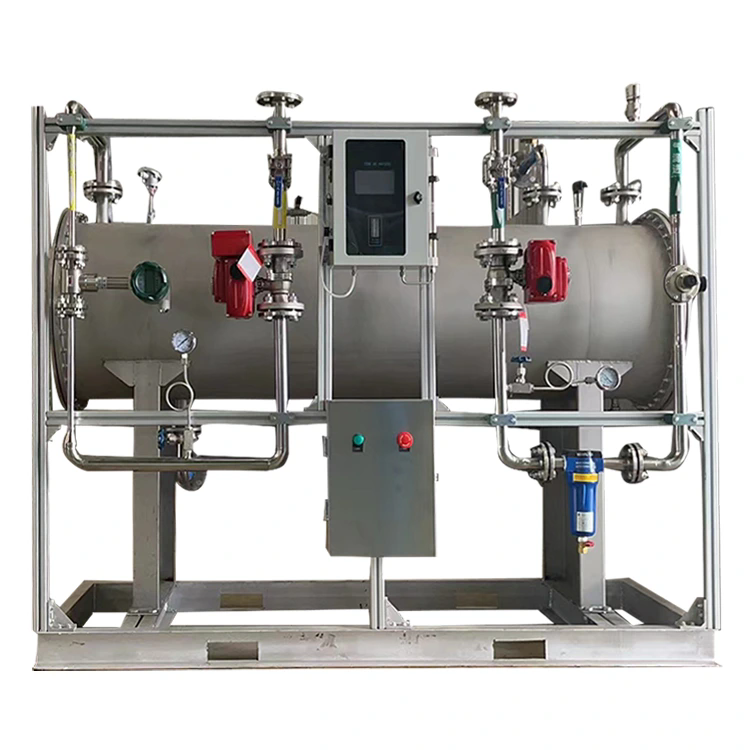
Table of Contents
- 1. How Is Ozone Generated from Ambient Air?
- 2. How Do System Parameters Define Performance and Stability?
- 3. How Is an Air Source Ozone Generator Applied Across Industries?
- 4. How Will Air Source Ozone Technology Evolve in the Coming Years?
Outline
- Core operating principles of air-source ozone generation
- Detailed technical parameters and configuration logic
- Industry-specific deployment models
- Common technical questions and structured answers
- Brand positioning and professional contact guidance
1. How Is Ozone Generated from Ambient Air?
An Air Source Ozone Generator operates by extracting oxygen molecules directly from surrounding air and converting them into ozone (O₃) through controlled electrical discharge processes. Unlike oxygen-fed systems that rely on bottled or concentrated oxygen, air-source systems integrate air preparation, purification, and conversion into a single operational framework.
The core process begins with ambient air intake. This air is filtered to remove particulate matter, moisture, and hydrocarbons that could interfere with stable ozone generation. After conditioning, the purified air passes through a high-voltage corona discharge chamber. Within this chamber, electrical energy splits diatomic oxygen (O₂) molecules, allowing free oxygen atoms to recombine into ozone.
This method enables continuous, on-demand ozone production without reliance on external gas supplies. As a result, air-source ozone systems are frequently deployed in facilities where operational autonomy, installation simplicity, and supply chain independence are required.
2. How Do System Parameters Define Performance and Stability?
The performance of an Air Source Ozone Generator is determined by a combination of electrical, mechanical, and environmental parameters. Precise alignment of these parameters ensures stable ozone concentration, consistent output, and extended equipment lifespan.
Below is a consolidated overview of typical technical parameters used to evaluate professional-grade air-source ozone generators:
| Parameter | Typical Range | Technical Significance |
|---|---|---|
| Ozone Output Capacity | 1 g/h – 200 g/h | Defines suitability for small rooms, HVAC systems, or large-scale industrial spaces |
| Input Voltage | 110V / 220V / 380V | Determines compatibility with regional electrical standards |
| Air Flow Rate | 5–120 L/min | Directly affects ozone concentration and dispersion efficiency |
| Ozone Concentration | 10–30 mg/L | Impacts oxidation effectiveness and application safety thresholds |
| Cooling Method | Air or Water Cooling | Maintains discharge chamber stability during continuous operation |
| Control Interface | Manual / PLC / Touch Panel | Enables integration with automation and monitoring systems |
These parameters must be evaluated collectively rather than in isolation. For example, higher ozone output requires proportionally enhanced cooling and airflow management to prevent thermal degradation of discharge components.
3. How Is an Air Source Ozone Generator Applied Across Industries?
Air-source ozone systems are utilized in environments where controlled oxidation is required for sanitation, odor neutralization, or process enhancement. The absence of chemical residues and the rapid decomposition of ozone into oxygen make it suitable for regulated industrial settings.
In food processing facilities, air-source ozone generators are commonly integrated into cold storage rooms and packaging zones to suppress microbial growth in ambient air. In HVAC systems, ozone is injected in controlled doses to reduce airborne contaminants within ductwork.
Municipal and commercial buildings deploy air-source ozone systems for odor control in waste handling areas, while manufacturing plants apply ozone for surface sterilization and air treatment without interrupting workflow continuity.
Common Questions About Air Source Ozone Generators
How does an air-source ozone generator differ from an oxygen-fed system?
An air-source ozone generator uses ambient air as its oxygen supply, eliminating the need for external oxygen cylinders or concentrators, while oxygen-fed systems rely on higher-purity oxygen to achieve higher ozone concentrations.
How is ozone concentration controlled during operation?
Ozone concentration is regulated through adjustments in discharge voltage, airflow rate, and operational duty cycles, often managed via integrated control panels or PLC systems.
How long can an air-source ozone generator operate continuously?
Continuous operation duration depends on cooling design, ambient conditions, and load configuration, with industrial-grade systems engineered for extended runtime under monitored conditions.
4. How Will Air Source Ozone Technology Evolve in the Coming Years?
Future development of air-source ozone generators is expected to focus on efficiency optimization, digital control integration, and application-specific modular design. Advances in dielectric materials and power electronics are enabling more stable discharge environments with reduced energy consumption.
Smart monitoring, remote diagnostics, and adaptive output modulation are becoming standard features as facilities demand tighter control over environmental treatment systems. These developments position air-source ozone technology as a scalable solution aligned with increasingly stringent hygiene and air-quality regulations.
Manufacturers are also prioritizing noise reduction, compact system architecture, and enhanced safety interlocks to support deployment in mixed-use commercial environments.
Brand Perspective and Professional Engagement
As air-source ozone technology continues to mature, Siyuan remains committed to delivering engineered ozone generation systems that align with industrial performance requirements and operational reliability expectations. Through structured design, controlled output logic, and application-driven customization, these systems support diverse environmental treatment objectives.
Organizations seeking detailed technical consultation, configuration guidance, or project-specific recommendations are encouraged to contact us for professional support and tailored solutions based on operational conditions and regulatory frameworks.