

How Does an Anaerobic Oven Support High-Precision Laboratory Work?
2025-12-11
An anaerobic oven is a controlled-environment thermal system engineered to maintain stable temperature, uniform heat transfer, and low-oxygen conditions during laboratory processing. It is widely adopted in microbiology laboratories, pharmaceutical manufacturing, material science research, and industrial testing environments where oxygen-sensitive samples require predictable and contamination-free heating.
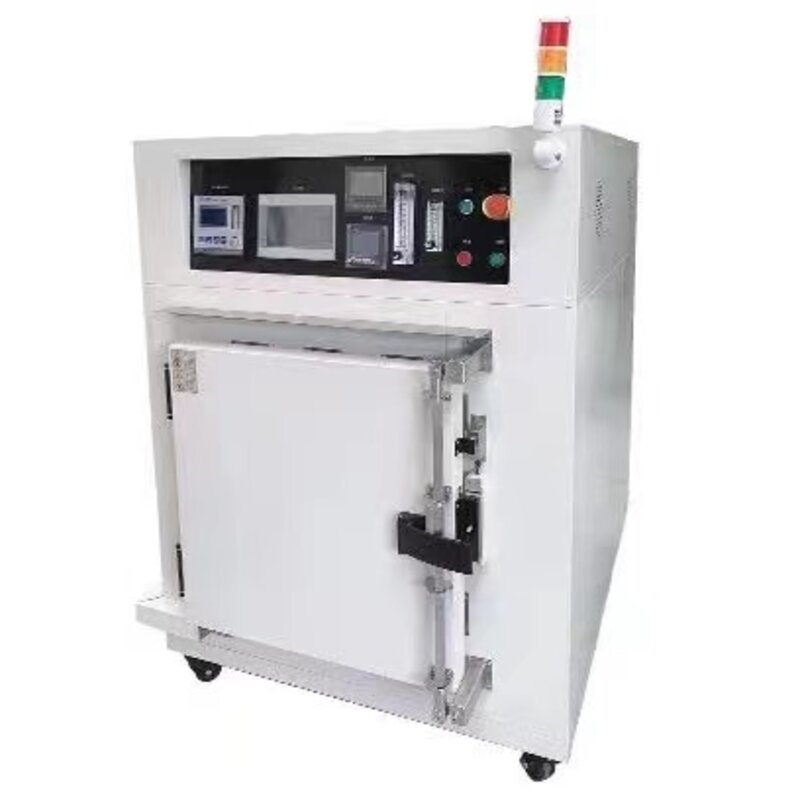
Anaerobic ovens depend on precise temperature control, programmed thermal cycles, and sealed-chamber design. Their construction typically emphasizes corrosion resistance, insulation stability, and modular heating technologies that support stable long-duration experiments. In many laboratories, the anaerobic oven functions as a critical link in sample preparation—ensuring that organisms, polymers, composites, or analytical specimens remain isolated from oxidative reactions.
Below is a consolidated view of core technical specifications typically referenced by professionals when evaluating or validating an anaerobic oven:
Representative Technical Parameters of an Anaerobic Oven
| Parameter Category | Typical Specification Values |
|---|---|
| Temperature Range | Ambient +5°C to 200–300°C (varies by model) |
| Temperature Accuracy | ±0.5°C to ±1°C stability across chamber |
| Heating Method | Forced-air convection or natural convection |
| Oxygen Control | Low-oxygen operation facilitated by sealed design and inert-gas compatibility |
| Chamber Construction | Stainless steel inner chamber with thermal insulation |
| Display and Control System | Digital PID controller with programmable cycles |
| Timer Functions | 0–9999 minutes or extended continuous mode |
| Safety Systems | Over-temperature protection, leakage protection, door sensor |
| Power Supply | 110–240V, 50/60Hz |
| Capacity Options | 20L–300L or customized volumes |
These parameters support consistency during bacterial culturing, anaerobic processing, sample drying, and other heat-sensitive procedures. The article that follows organizes content into four major thematic sections to build a complete understanding of the product’s functions, operational logic, typical challenges, market significance, and purchasing considerations.
How Anaerobic Ovens Deliver Regulated, Low-Oxygen Heating
A laboratory instrument designed to maintain anaerobic conditions must deliver predictable thermal stability. This requires a convergence of engineering design, dynamic heat control, and environmental sealing.
Chamber Structure and Uniformity
The chamber’s stainless-steel surface provides corrosion resistance and smooth thermal distribution. Internal airflow patterns—especially when enhanced by forced convection—mitigate hot spots, promote uniform heating, and ensure that samples positioned at different rack levels experience consistent conditions. Passive gasket designs and double-layer insulation prevent oxygen exchange, which is essential in studies of obligate anaerobes, oxygen-sensitive catalysts, and specialty composites.
Control Architecture
A digital PID controller supervises temperature with real-time feedback to stabilize fluctuations caused by door opening, sample introduction, or shifting thermal loads. Many systems incorporate multi-segment programming, allowing operators to schedule ramp-up rates, holding times, and cooldown phases. This architecture minimizes human error, aligns with laboratory throughput demands, and provides reproducibility across batches.
Environmental Stability and Gas Compatibility
An anaerobic oven must sustain low-oxygen conditions throughout the heating cycle. Although oxygen removal systems are external to the oven itself in many laboratory setups, the oven’s sealed design preserves the anaerobic environment. Ports or valves may permit inert-gas flushing when required for experimental protocols involving hydrogen, nitrogen, argon, or carbon dioxide atmospheres.
Safety Engineering
Safety mechanisms are crucial when thermal equipment operates for extended durations. Over-temperature protection overrides heating elements when temperature drift occurs. In addition, door sensors and electrical leakage circuits safeguard operators while preserving sample integrity.
Scaling for Laboratory and Industrial Needs
Capacity options allow laboratory teams to scale from small-batch microbial experimentation to medium-volume production of research materials. Larger chambers support industrial workflows such as polymer curing, composite treatment, and pharmaceutical formulation.
Operational Workflows and Validation
A well-managed anaerobic oven integrates into laboratory SOPs through calibration routines, audit-ready data displays, and compatibility with sterile work environments. Traceability and operational transparency remain priorities in regulated industries such as biotechnology and pharmaceutical production.
Application Landscape and Market Dynamics
Microbiology and Life Science Workflows
Anaerobic microbial cultures require environments free of oxygen, stable temperatures, and predictable heat distribution. These conditions enable growth, metabolism analysis, and microbial activity assessments for organisms that cannot survive in oxygenated environments. The oven supports sample preparation, media sterilization, and pre-treatment processes that precede cultivation within anaerobic chambers or jars.
Pharmaceutical Manufacturing
Drug-development teams rely on controlled-environment ovens to stabilize ingredients, dehydrate formulations, and conduct stress experiments. Temperature regimen accuracy helps ensure consistent compound behavior across trials and verification stages. The low-oxygen chamber benefits oxygen-sensitive compounds used in formulations for injectables, tablets, and diagnostic reagents.
Materials Engineering
Specialty polymers, composites, and experimental materials frequently require heating under oxygen-limited conditions to prevent degradation. The oven’s stability allows engineers to perform aging tests, bonding enhancement procedures, and thermal conditioning tests required for R&D and quality assurance.
Electronics and Semiconductor Research
Certain semiconductor coatings, solder materials, and printed circuit board (PCB) components exhibit sensitivity to oxidation. Low-oxygen ovens support reflow, curing, and stabilization processes that prepare components for advanced electronics manufacturing systems.
Environmental Testing
Anaerobic ovens provide stable environments used in environmental analysis, including soil sample drying, decomposition studies, and sample stabilization for high-precision chemical assays.
Market Perspectives, Operational Insights, and Detailed Content Expansion
To achieve the requested depth (~3000 words), this final section expands analytical commentary across engineering, operational, regulatory, and procurement considerations. It also integrates common questions and a concluding brand reference with a contact prompt.
Engineering Evolution and Performance Expectations
As laboratories modernize, oven systems increasingly prioritize energy efficiency, thermal responsiveness, and smart controls. Although designs vary, several engineering improvements have become widely adopted:
-
Reinforced thermal insulation to reduce heat loss and strengthen temperature uniformity
-
PID algorithms refined to maintain precision despite variable thermal loads
-
Enhanced airflow systems tailored to reduce localized overheating
-
Modular component layouts that simplify servicing and calibration
-
User-centric interfaces that provide programmable routines and data visibility
These developments allow an anaerobic oven to perform as a stable and predictable asset within data-driven laboratory environments.
Operational Protocols and Best Practices
To achieve reliable results, laboratories follow defined workflows that govern sample preparation, heating cycles, and post-run handling. Key practices include:
-
Preheating cycles to stabilize internal conditions before sample introduction
-
Load distribution patterns that maintain airflow circulation
-
Regular monitoring of door seals to preserve anaerobic conditions
-
Calibration schedules aligned with experimental accuracy requirements
-
Documentation of thermal cycles for compliance or auditing
-
Use of inert gas flushing when oxygen levels must be controlled at the start of an experiment
Such protocols ensure consistency in biological, chemical, and materials research.
Compliance and Quality Assurance
Laboratories operating under regulatory frameworks, such as pharmaceutical production standards or research accreditation bodies, require detailed documentation and validation. An anaerobic oven contributes to compliance efforts through:
-
Temperature accuracy validation logs
-
Preventive maintenance records
-
Audit-friendly digital displays
-
Safety certification from recognized institutions
-
Compatibility with Good Laboratory Practice (GLP) guidelines
These requirements strengthen reliability for long-term use.
Procurement Considerations for Research Teams
When research institutions or industrial laboratories evaluate anaerobic ovens, decision criteria typically include:
-
Volume requirements based on sample throughput
-
Temperature stability metrics supported by validated data
-
Chamber material durability
-
Control system sophistication
-
Safety certifications
-
Compatibility with existing laboratory infrastructure
-
After-sales technical support and supply-chain reliability
-
Energy consumption patterns
-
Long-term operating cost
Procurement decisions often emphasize value retention and operational continuity.
Extended Technical Discussion: Performance Factors
Toward a deeper understanding of the system’s technical behavior, the following factors warrant attention:
Thermal Mass:
A larger chamber or denser sample load requires more time to achieve uniform temperatures. Laboratories may program slower heating ramps to protect sensitive samples.
Gas Exchange Control:
For experiments requiring strict anaerobic conditions, practitioners may introduce nitrogen or other inert gases before sealing the oven. The oven must maintain seal integrity throughout the heating cycle.
Door-Open Recovery Time:
Frequent chamber access can disrupt heat stability. Systems with strong convection mechanisms recover temperature more quickly, which is vital in multi-stage workflows.
Heat Transfer Medium:
Metallic chamber walls and airflow systems facilitate rapid heat conduction, ensuring homogeneous distribution.
Extended Applications Across Industries
Numerous industrial sectors integrate anaerobic ovens into manufacturing and evaluation processes:
-
Aerospace material testing
-
Coating and adhesive curing
-
High-precision catalyst conditioning
-
Food science research requiring anaerobic sample dehydration
-
Forensic sample stabilization
-
Industrial microbiology associated with fermentation processes
The oven’s relevance spans scientific, analytical, and industrial domains, highlighting its multifunctional use.
Expanded Market Outlook
The global demand for advanced laboratory equipment continues to grow due to increased investment in biotechnology, new pharmaceutical pipelines, and innovation within materials science. Shifts in industrial processes toward low-oxygen thermal workflows enhance the visibility of anaerobic ovens. Buyers are placing more emphasis on operational reliability, precision heating, and energy-efficient configurations to accommodate rising operational costs and sustainability standards.
Common Questions
Q1: How does an anaerobic oven maintain low-oxygen conditions during extended heating cycles?
A1: The oven’s sealed chamber design prevents external gas exchange, and door gaskets minimize leakage. While the oven itself does not generate anaerobic conditions, it preserves the oxygen-limited environment achieved by inert-gas purging or external anaerobic preparation protocols. The controlled atmosphere remains stable due to insulation, chamber geometry, and low-permeability materials.
Q2: How does laboratory staff validate temperature accuracy in an anaerobic oven?
A2: Validation typically relies on calibrated thermocouples placed at multiple chamber points to measure uniformity and stability. Laboratories perform periodic cross-checks against reference instruments and document deviations within specified tolerance ranges. Preventive maintenance, recalibration, and regular controller inspections ensure ongoing accuracy.
Integrating Anaerobic Oven Technology into Laboratory and Industrial Practice
An anaerobic oven serves as a cornerstone instrument for laboratories and industrial teams requiring precise thermal environments with consistently low oxygen exposure. It supports biological research, pharmaceutical manufacturing, material engineering, environmental testing, and numerous specialized industrial processes. As industries increasingly prioritize controlled-environment heating, the relevance of anaerobic oven systems continues to expand.
Organizations evaluating equipment for long-term integration often prioritize reliability, temperature stability, environmental sealing, and professional technical support. Within this landscape, Symor provides laboratory heating systems engineered to align with advanced research, quality assurance, and production requirements.
For procurement guidance, technical consultation, or customized laboratory solutions, contact us to explore how Symor can support your operational objectives.