

How Does an Atmosphere Furnace Improve Heat Treatment Accuracy and Production Efficiency?
2026-07-22
Article Summary
An atmosphere furnace is an advanced thermal processing system designed to heat materials under a controlled gas environment to achieve precise metallurgical properties. Unlike conventional heating equipment, an atmosphere furnace prevents oxidation, improves surface quality, and enhances product consistency during processes such as annealing, sintering, brazing, carburizing, and heat treatment.
For manufacturers facing challenges such as material deformation, inconsistent heating results, surface contamination, and high production costs, choosing the right atmosphere furnace can significantly improve operational efficiency. This article explains how atmosphere furnaces work, their key advantages, applications, selection factors, and how FUAN provides reliable solutions for industrial heat treatment requirements.
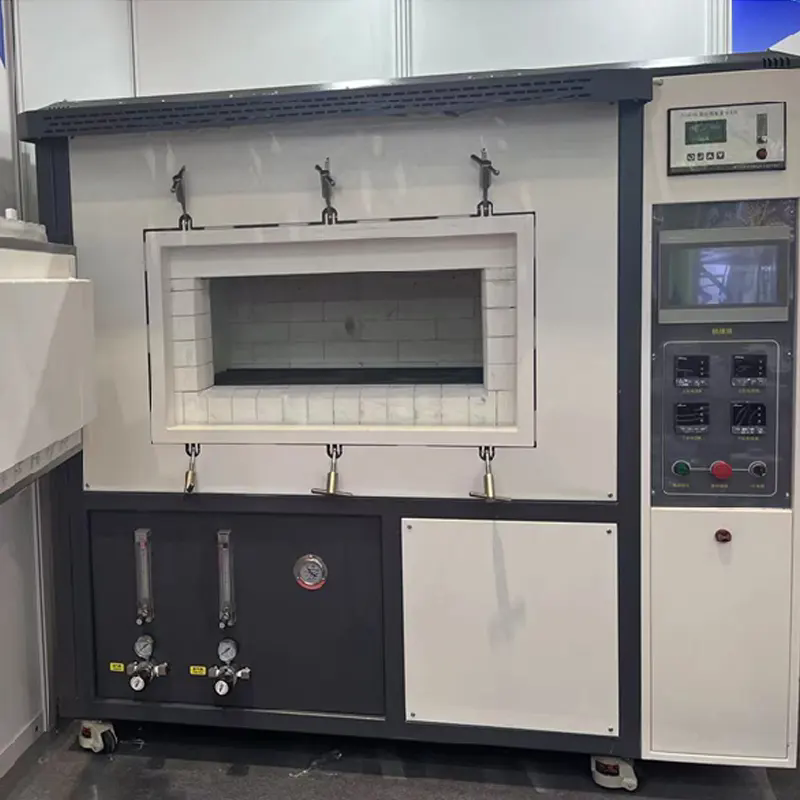
Table of Contents
- 1. What Is an Atmosphere Furnace?
- 2. How Does an Atmosphere Furnace Work?
- 3. What Problems Can an Atmosphere Furnace Solve?
- 4. Main Applications of Atmosphere Furnaces
- 5. Atmosphere Furnace vs Conventional Furnace
- 6. How to Choose the Right Atmosphere Furnace?
- 7. Why Choose FUAN Atmosphere Furnace Solutions?
- 8. Frequently Asked Questions About Atmosphere Furnaces
1. What Is an Atmosphere Furnace?
An atmosphere furnace is a specialized industrial furnace that performs heat treatment processes in a controlled atmosphere environment. During operation, protective gases such as nitrogen, hydrogen, argon, or mixed gases are introduced into the furnace chamber to regulate the chemical environment around the workpiece.
The primary purpose of an atmosphere furnace is to control reactions between heated materials and surrounding gases. When metals or other materials are heated at high temperatures, exposure to oxygen can cause oxidation, scaling, discoloration, or surface defects. By replacing normal air with a controlled atmosphere, manufacturers can achieve cleaner and more stable processing results.
Modern atmosphere furnaces are widely used in industries requiring high precision and repeatable quality, including automotive components, aerospace parts, electronics manufacturing, powder metallurgy, medical devices, and advanced material production.
| Feature | Description |
|---|---|
| Controlled Environment | Maintains specific gas conditions to protect materials during heating. |
| Temperature Precision | Provides accurate temperature control for consistent treatment results. |
| Oxidation Prevention | Reduces surface oxidation and improves finished product quality. |
| Wide Application Range | Suitable for metals, ceramics, powders, and special materials. |
2. How Does an Atmosphere Furnace Work?
The operation principle of an atmosphere furnace involves three main elements: heating control, atmosphere management, and temperature regulation. These systems work together to create a stable processing environment.
- Heating System: Electric heating elements generate controlled heat and maintain the required processing temperature.
- Gas Control System: Protective gases are introduced into the furnace chamber to replace unwanted oxygen and maintain the desired atmosphere.
- Temperature Control System: Sensors and controllers continuously monitor temperature changes and adjust heating power automatically.
- Sealing Structure: A high-quality furnace chamber design prevents gas leakage and maintains atmosphere stability.
During the heating cycle, materials are placed inside the furnace chamber. The furnace then increases temperature according to a programmed heating curve while maintaining the selected atmosphere. After reaching the required temperature and holding time, the materials undergo controlled cooling to achieve the desired physical and mechanical properties.
3. What Problems Can an Atmosphere Furnace Solve?
Many manufacturers experience difficulties when traditional heating equipment cannot provide stable processing conditions. An atmosphere furnace addresses these challenges by offering precise environmental control.
| Common Production Problem | How Atmosphere Furnace Helps |
|---|---|
| Surface oxidation after heating | Protective gases reduce contact between materials and oxygen. |
| Uneven heating results | Advanced temperature control improves thermal uniformity. |
| Material contamination | Controlled atmosphere prevents unwanted chemical reactions. |
| Low production consistency | Automated programs ensure repeatable processing cycles. |
| High maintenance costs | Stable operation reduces defects and unnecessary reprocessing. |
For companies producing precision components, even small variations during heat treatment can result in product failure. An atmosphere furnace provides a reliable solution by maintaining consistent conditions throughout the entire heating process.
4. Main Applications of Atmosphere Furnaces
Atmosphere furnaces are used across many industries because they provide excellent control over thermal processing environments. Typical applications include:
- Metal Heat Treatment: Used for annealing, hardening, tempering, and stress relieving metal components.
- Powder Metallurgy: Supports sintering processes by creating controlled conditions for powder-based materials.
- Brazing: Provides clean heating environments for joining metal parts without oxidation.
- Electronics Manufacturing: Helps process semiconductor materials and electronic components requiring precision heating.
- Ceramic Processing: Enables controlled sintering and thermal treatment of ceramic materials.
- Research Laboratories: Used for material testing and experimental thermal processes.
| Industry | Typical Process | Key Benefit |
|---|---|---|
| Automotive | Component heat treatment | Improved strength and durability |
| Aerospace | Precision alloy processing | Enhanced material performance |
| Electronics | Controlled thermal processing | Better product reliability |
| Medical Equipment | Metal sterilization and treatment | High cleanliness standards |
5. Atmosphere Furnace vs Conventional Furnace
Selecting the correct furnace technology directly affects production quality and operating costs. Compared with traditional furnaces, atmosphere furnaces provide better environmental control.
| Comparison Item | Atmosphere Furnace | Conventional Furnace |
|---|---|---|
| Atmosphere Control | Excellent gas environment management | Limited control |
| Surface Protection | Reduces oxidation and contamination | Higher oxidation risk |
| Product Quality | High consistency | More variation possible |
| Precision Applications | Suitable for advanced manufacturing | Limited suitability |
6. How to Choose the Right Atmosphere Furnace?
Choosing an atmosphere furnace requires careful consideration of production requirements, material characteristics, and operating conditions. Important factors include:
- Working Temperature Range: Select equipment capable of reaching and maintaining the required processing temperature.
- Furnace Size: The chamber capacity should match production volume and workpiece dimensions.
- Atmosphere Type: Different materials require different protective gases for optimal results.
- Temperature Uniformity: Reliable heat distribution ensures consistent product quality.
- Automation Requirements: Digital control systems improve efficiency and reduce human error.
- Energy Efficiency: Efficient furnace design helps reduce long-term operating costs.
A professional furnace manufacturer can help analyze production requirements and recommend a suitable configuration instead of offering a standard solution that may not match actual needs.
7. Why Choose FUAN Atmosphere Furnace Solutions?
FUAN focuses on providing reliable thermal processing equipment designed for industrial applications. With professional manufacturing experience and attention to product performance, FUAN atmosphere furnaces are developed to help customers achieve stable heating processes, improved efficiency, and consistent production quality.
FUAN understands that every industry has different heat treatment requirements. Factors such as material type, temperature range, production capacity, and atmosphere conditions can influence furnace performance. Therefore, customized solutions are available to meet different application demands.
- High-precision temperature control for stable processing results.
- Reliable furnace structure designed for continuous industrial operation.
- Flexible configurations suitable for different materials and applications.
- Professional technical support throughout equipment selection and operation.
By combining advanced technology with practical manufacturing experience, FUAN helps customers improve heat treatment processes and achieve higher production reliability.
8. Frequently Asked Questions About Atmosphere Furnaces
Q1: What gases are commonly used in an atmosphere furnace?
Common gases include nitrogen, hydrogen, argon, and mixed gases. The appropriate atmosphere depends on the material and the required heat treatment process.
Q2: What industries use atmosphere furnaces?
Atmosphere furnaces are widely used in automotive, aerospace, electronics, powder metallurgy, medical equipment, ceramics, and research industries.
Q3: Can an atmosphere furnace prevent oxidation?
Yes. By controlling the internal gas environment, an atmosphere furnace significantly reduces oxidation and improves surface quality.
Q4: How long can an atmosphere furnace operate continuously?
The operating life depends on furnace design, maintenance practices, working temperature, and usage conditions. Proper maintenance can extend equipment service life.
Q5: Can FUAN provide customized atmosphere furnace solutions?
Yes. FUAN can provide customized furnace configurations according to different temperature requirements, materials, production capacity, and industrial applications.
Conclusion
An atmosphere furnace is an essential solution for manufacturers requiring accurate heat treatment, clean processing environments, and stable production quality. By controlling temperature and atmosphere conditions, it helps reduce defects, improve efficiency, and achieve better material performance.
With professional manufacturing capabilities and customer-focused solutions, FUAN is committed to delivering dependable atmosphere furnace equipment for various industrial applications. If you are looking for a suitable furnace solution to improve your thermal processing performance, please contact us for professional support and customized recommendations.