Abstract
An Automatic Brick Production Line is a modern industrial system designed to transform raw materials such as clay, shale, concrete, and fly ash into high-quality bricks with minimal manual intervention. By integrating automation technologies, hydraulic systems, intelligent control units, and continuous production workflows, it significantly improves output consistency, reduces labor dependency, and optimizes operational costs. This article explores how such systems work, what components are involved, and why they are becoming essential for construction material manufacturers worldwide.
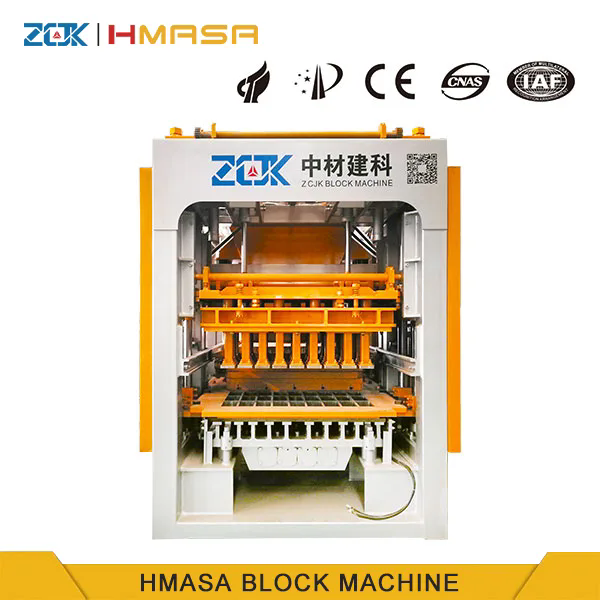
1. Overview of Automatic Brick Production Line
The Automatic Brick Production Line is an integrated manufacturing system that automates every stage of brick production—from raw material crushing and mixing to molding, drying, and firing. Unlike traditional manual systems, it relies on synchronized machinery and programmable logic controllers (PLC) to ensure precision and continuity.
This type of production system is widely adopted in modern construction material industries due to its ability to maintain stable product quality while reducing operational inefficiencies. Companies such as ZCJK have developed advanced systems tailored to different production capacities and material requirements.
2. Core Components
A complete Automatic Brick Production Line typically consists of several interconnected systems. Each plays a critical role in ensuring seamless production flow.
-
Raw Material Processing Unit: Handles crushing, screening, and proportioning of raw materials.
-
Mixing System: Ensures uniform blending of clay, cement, or fly ash with water.
-
Forming Machine: Uses hydraulic or mechanical pressure to shape bricks.
-
Conveyor System: Transfers materials between stages efficiently.
-
Drying Chamber: Removes moisture under controlled temperature conditions.
-
Firing Kiln: Harden bricks through high-temperature processing.
-
PLC Control System: Automates operations and monitors production status.
|
Component
|
Function
|
Impact on Efficiency
|
|
Mixing System
|
Blends raw materials evenly
|
Improves product consistency
|
|
Forming Machine
|
Shapes bricks under pressure
|
Increases production speed
|
|
PLC System
|
Automates workflow control
|
Reduces human error
|
3. Production Process Explained
The workflow of an Automatic Brick Production Line follows a structured sequence designed for continuous output.
-
Raw Material Preparation: Materials are crushed and screened to remove impurities.
-
Proportioning and Mixing: Ingredients are accurately measured and blended.
-
Molding: The mixture is pressed into brick shapes using high-pressure machines.
-
Drying: Formed bricks are transferred to drying chambers to reduce moisture content.
-
Firing: Bricks are hardened in kilns at high temperatures.
-
Cooling and Packaging: Finished bricks are cooled and prepared for shipment.
Each stage is synchronized to minimize downtime and maximize throughput, ensuring continuous production with minimal interruption.
4. Key Benefits for Manufacturers
Investing in an Automatic Brick Production Line offers several strategic advantages for industrial producers.
-
Higher production capacity with continuous operation
-
Reduced labor costs due to automation
-
Consistent brick quality and dimensional accuracy
-
Lower material waste through precise control systems
-
Energy-efficient production processes
-
Improved workplace safety
Manufacturers adopting systems from providers like ZCJK often report significant improvements in operational efficiency and long-term profitability.
5. Manual vs Automatic Production Comparison
|
Aspect
|
Manual Production
|
Automatic Production Line
|
|
Labor Requirement
|
High
|
Low
|
|
Production Speed
|
Slow
|
Continuous and Fast
|
|
Product Quality
|
Variable
|
Highly Consistent
|
|
Operational Cost
|
Higher long-term
|
Optimized and controlled
|
|
Scalability
|
Limited
|
Highly scalable
|
6. How to Choose the Right Production Line
Selecting the appropriate Automatic Brick Production Line requires careful evaluation of production goals and operational conditions.
-
Production Capacity: Determine daily output requirements.
-
Raw Material Type: Ensure compatibility with clay, cement, or fly ash.
-
Automation Level: Choose between semi-automatic and fully automatic systems.
-
Energy Consumption: Evaluate long-term operational efficiency.
-
Supplier Support: Consider technical service and spare parts availability.
Companies like ZCJK provide customizable solutions that can be adapted to different market demands and factory scales.
7. Maintenance and Operational Considerations
To ensure long-term efficiency, regular maintenance of an Automatic Brick Production Line is essential. Proper care minimizes downtime and extends equipment lifespan.
-
Regular lubrication of mechanical components
-
Routine inspection of hydraulic systems
-
Calibration of PLC control systems
-
Cleaning of mixers and conveyors
-
Scheduled kiln performance checks
Preventive maintenance strategies help manufacturers avoid unexpected breakdowns and maintain consistent production output.
8. Frequently Asked Questions
Q1: What materials can be used in an Automatic Brick Production Line?
A: Common materials include clay, shale, fly ash, cement, and industrial waste materials suitable for brick formation.
Q2: How much automation is typically involved?
A: Modern systems can be fully automated, including mixing, molding, conveying, and firing processes controlled by PLC systems.
Q3: Is training required to operate the system?
A: Yes, basic operator training is recommended to ensure safe and efficient operation.
Q4: What is the lifespan of such a production line?
A: With proper maintenance, it can operate efficiently for 10–20 years or more.
Q5: Can production capacity be expanded?
A: Yes, modular designs allow manufacturers to scale production by adding or upgrading components.
9. Conclusion and Industrial Insight
The Automatic Brick Production Line represents a major advancement in construction material manufacturing. By integrating automation, precision engineering, and intelligent control systems, it enables manufacturers to achieve higher productivity with lower operational complexity.
As global demand for sustainable and cost-effective building materials increases, investing in advanced production systems becomes a strategic necessity. ZCJK continues to provide innovative solutions that help manufacturers remain competitive in a rapidly evolving industry landscape.
For businesses looking to upgrade their production capabilities, adopting an automated system is not just an improvement—it is a transformation in how bricks are manufactured and delivered to the market.
To explore advanced solutions and technical consultation, contact us at ZCJK today and discover how an Automatic Brick Production Line can elevate your manufacturing efficiency.