

How Does an Elevated Fire Attack System Aquamast Improve Firefighting in Hard-to-Reach Areas?
2026-10-08
When a fire occurs in a high-rise building, narrow urban street, industrial facility, or congested site, conventional fire trucks may face serious access and elevation limitations. An Elevated Fire Attack System Aquamast provides a specialized approach by combining a pneumatic telescopic mast with an elevated water or foam delivery system. The mast can raise the firefighting monitor to a higher position, helping direct extinguishing media toward areas that may be difficult to reach from ground level. Existing Aquamast systems are designed for applications including high buildings and narrow streets, with versions capable of extending from approximately 4 m to 13 m and mounting on smaller vehicles or trailers.
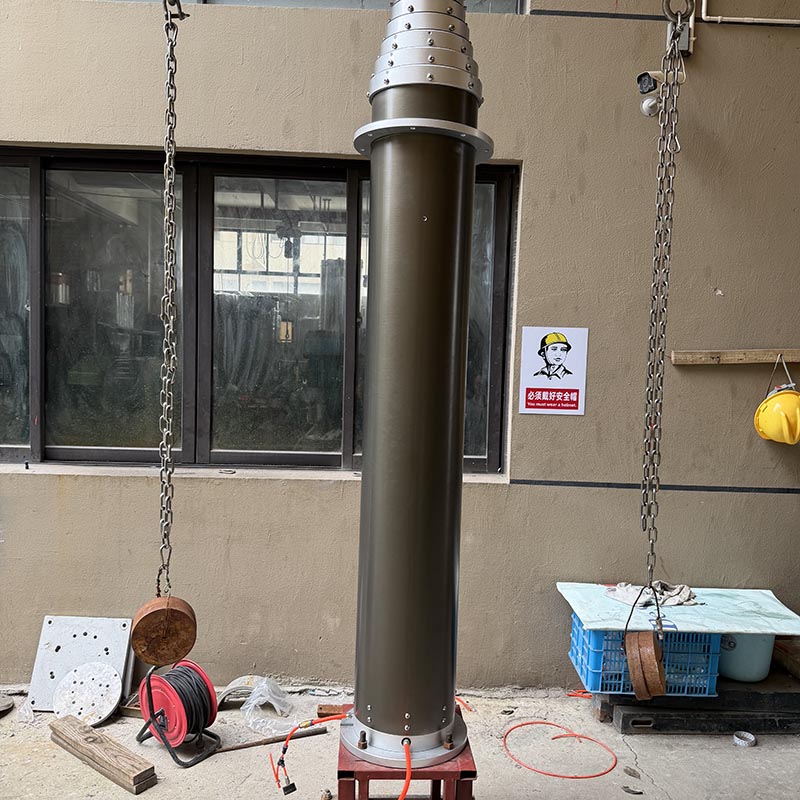
What Is an Elevated Fire Attack System Aquamast?
An Elevated Fire Attack System Aquamast is essentially an elevated firefighting platform that uses a telescopic mast to position a water cannon or fire monitor above the normal operating height of a vehicle.
Unlike a conventional ground-level attack, the system creates an elevated discharge point. Water or foam can be routed through an internal telescopic waterway and delivered to a monitor installed at the mast head. This configuration allows firefighters to approach challenging fire scenes from a more advantageous elevation.
The system can be particularly useful when:
- Large fire engines cannot enter narrow streets.
- Buildings or structures are difficult to approach directly.
- Ground-level obstacles restrict the firefighting angle.
- Additional elevation is needed without deploying a large aerial apparatus.
- Industrial or specialized sites require a compact backup firefighting solution.
For equipment manufacturers and emergency-response solution providers, this type of system represents an important combination of mobility, elevation and concentrated firefighting capability.
Why Is Elevated Fire Attack Important?
Fire behavior can make direct access extremely difficult. Flames may develop on upper floors, behind structures, or within industrial areas where conventional vehicles cannot safely position themselves.
An elevated attack system can help address these challenges by changing the position from which water or foam is discharged.
| Firefighting Challenge | Aquamast-Oriented Solution |
|---|---|
| Narrow streets | Compact vehicle or trailer installation |
| High-level fire points | Elevated monitor position |
| Limited vehicle access | Smaller mobile platforms |
| Ground obstacles | Higher discharge angle |
| Industrial hazards | Remote or elevated attack capability |
| Foam-based suppression requirements | Water or foam delivery capability |
The result is not necessarily a replacement for conventional fire engines. Instead, the system can function as a specialized or complementary firefighting tool for situations where standard equipment has limited reach or access.
How Does the System Work?
The operating principle combines pneumatic extension with an internal waterway.
-
Positioning
The vehicle, trailer, or support platform is placed at a suitable location outside the immediate hazard zone. -
Mast Extension
Compressed air extends the telescopic mast vertically. Depending on the configuration, the mast can reach several meters above the vehicle. -
Water or Foam Delivery
The internal telescopic waterway transfers firefighting media toward the top of the mast. -
Monitor Operation
A compatible fire monitor or water cannon can be installed at the mast head to direct the stream toward the target. -
Targeted Fire Attack
Operators can use the elevated position to improve the angle and reach of the firefighting stream.
The combination of an elevated mast and water-delivery pathway is the key difference between a standard telescopic mast and an Elevated Fire Attack System Aquamast. Available systems also support foam applications, while PLC-based controls and safety features are used to help manage operation.
Where Can an Aquamast System Be Used?
The flexibility of the system makes it suitable for a broad range of demanding environments.
Urban Firefighting
Dense city centers often contain narrow roads, parked vehicles, traffic congestion and buildings positioned close together. A large fire truck may have difficulty reaching the ideal operating position.
A compact elevated system can provide an additional attack option where vehicle access is restricted.
High-Rise and Commercial Buildings
Fires involving upper floors can create challenges for ground-level water streams. Raising the monitor provides a higher discharge point that can improve access to elevated fire zones.
Industrial Facilities
Factories, warehouses, refineries and other industrial sites may contain complex structures, equipment and hazardous areas. An elevated firefighting system can provide a flexible approach for directing water or foam toward selected areas.
Rural and Difficult Terrain
A smaller vehicle-mounted configuration can also be useful in locations where maneuverability is more important than the size of the firefighting vehicle. Some Aquamast configurations have been promoted for use on pickup trucks and other specialized vehicles.
What Are the Main Benefits?
The practical value of an Elevated Fire Attack System Aquamast lies in its combination of reach and compact deployment.
1. Elevated Firefighting Position
The mast raises the monitor, allowing firefighters to attack from above ground level.
2. Improved Access Flexibility
A smaller installation can operate in locations where larger firefighting appliances may have difficulty entering.
3. Mobile Configuration
The system can be integrated with trailers, pickup trucks, smaller fire vehicles and other specialized platforms, depending on the design.
4. Water and Foam Capability
The system can be configured for water or foam delivery, giving operators greater flexibility for different fire scenarios.
5. Specialized Firefighting Support
Rather than replacing established emergency equipment, it can provide an additional option for difficult-access incidents.
Why Choose Homall Industry Limited?
For buyers evaluating specialized firefighting equipment, equipment integration and application requirements are just as important as the basic mast structure. Homall Industry Limited can position its solution around the practical requirements of professional users, including mobility, elevated water delivery, operational flexibility and application-specific configuration.
For B2B buyers, the most valuable solution is rarely simply a standard product. Different customers may have different vehicle platforms, operating environments, elevation requirements and firefighting objectives. A professional supplier should therefore focus on matching the system configuration with the actual application.
This is particularly important for fire departments, industrial facilities, emergency-response organizations and specialized vehicle manufacturers seeking an Elevated Fire Attack System Aquamast for challenging environments.
How Should Buyers Evaluate an Elevated Fire Attack System?
Before purchasing, buyers should consider several technical and operational factors:
- Extended mast height
- Retracted dimensions
- Required water flow
- Compatible fire monitor
- Water and foam compatibility
- Vehicle or trailer payload
- Stability during operation
- Control and safety systems
- Operating environment
- Maintenance and after-sales support
For reference, published Aquamast specifications show that different configurations can cover approximately 4–13 m of extended height, while flow capacity varies significantly according to the mast and configuration. Buyers should therefore select equipment according to their actual firefighting scenario rather than relying on a single standard specification.
The Role of Elevated Fire Attack in Modern Emergency Response
Modern firefighting increasingly requires equipment that can operate in complex environments rather than relying solely on larger vehicles. Urban density, industrial expansion, infrastructure complexity and restricted-access locations all create situations in which conventional firefighting methods may encounter limitations.
An Elevated Fire Attack System Aquamast addresses one specific but important challenge: getting the firefighting stream to a useful height and position when conventional access is difficult.
Its compact architecture, telescopic elevation and internal waterway make it a practical concept for specialized firefighting applications. When properly integrated with an appropriate vehicle, monitor, pump and control system, it can become a valuable part of a broader emergency-response strategy.
FAQ
What is an Elevated Fire Attack System Aquamast?
It is a specialized firefighting system that uses a pneumatic telescopic mast to elevate a water or foam monitor, helping firefighters attack fires from a higher position.
How high can an Aquamast reach?
Published Aquamast configurations generally cover approximately 4 to 13 meters of extended height, depending on the specific model.
Can an Aquamast be installed on a small vehicle?
Yes. Depending on the configuration and payload requirements, Aquamast systems can be installed on smaller fire vehicles, pickup trucks, trailers and other specialized platforms.
Can it use firefighting foam?
Yes. Aquamast systems are designed to support foam as well as water in appropriate configurations.
Who can benefit from this type of system?
Fire departments, industrial facilities, emergency-response organizations, specialized vehicle manufacturers and other professional users dealing with high, narrow, congested or difficult-to-access fire scenes may benefit from an elevated firefighting solution.
For professional buyers looking for a flexible Elevated Fire Attack System Aquamast, Homall Industry Limited can provide application-oriented solutions designed around specific operational requirements. Contact us to discuss your firefighting application, equipment configuration and project requirements, and discover a solution suited to your operating environment.