

How Does Diamond Wire Saw Machinery Improve Precision Cutting in Modern Industries?
2026-06-24
Article Abstract
Diamond Wire Saw Machinery has become a critical solution in industries requiring ultra-precise cutting of hard materials such as stone, concrete, ceramics, and advanced composites. Traditional cutting methods often struggle with material waste, thermal damage, and inconsistent finishing quality. This article explains how diamond wire saw systems work, their core advantages, operational structure, industry applications, and how businesses can select the right configuration to improve productivity while reducing operational costs. It also provides a practical guide, comparison tables, and frequently asked questions to help buyers make informed decisions.
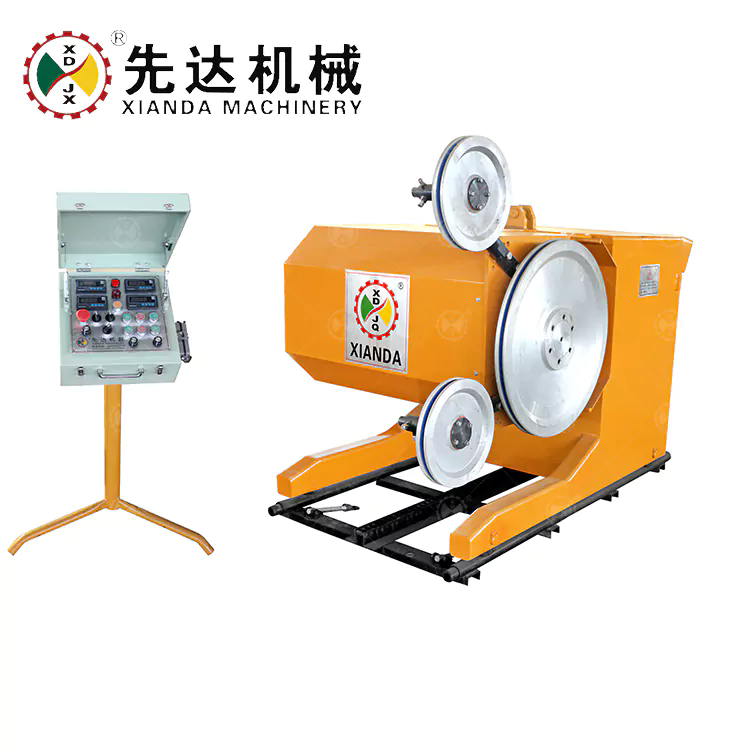
Table of Contents
- 1. Overview of Diamond Wire Saw Machinery
- 2. Working Principle and System Structure
- 3. Key Advantages Over Traditional Cutting Methods
- 4. Industrial Applications
- 5. How to Choose the Right Diamond Wire Saw Machine
- 6. Maintenance and Operational Best Practices
- 7. Technology Comparison Table
- 8. Frequently Asked Questions
- 9. Conclusion and Professional Recommendation
1. Overview of Diamond Wire Saw Machinery
Diamond Wire Saw Machinery is a high-precision cutting system that uses a wire embedded with industrial-grade diamond beads. These beads act as cutting points, allowing the machine to slice through extremely hard materials with minimal resistance and reduced waste. Unlike traditional saw blades, diamond wire technology distributes cutting force evenly, making it suitable for large-scale industrial operations.
The system is widely used in stone processing plants, construction demolition projects, mining operations, and advanced material manufacturing environments. Its adaptability to different materials makes it a preferred solution for industries demanding high accuracy and efficiency.
2. Working Principle and System Structure
The working mechanism of Diamond Wire Saw Machinery is based on a continuously moving loop of steel wire embedded with diamond segments. The wire is driven by a motorized pulley system, creating high-speed linear motion. As the wire moves across the material, the diamond particles grind and cut through the surface.
Key structural components include:
- Main drive motor: Provides cutting power and controls wire speed.
- Guiding wheels: Maintain tension and alignment of the wire.
- Diamond wire loop: The actual cutting medium embedded with industrial diamonds.
- Control system: Adjusts speed, pressure, and operational parameters.
- Cooling system: Reduces heat and extends wire lifespan.
This design ensures smooth cutting motion, reduces vibration, and improves overall accuracy, especially when working with dense or brittle materials.
3. Key Advantages Over Traditional Cutting Methods
Compared to conventional saw blades or abrasive cutting machines, Diamond Wire Saw Machinery offers several significant advantages that directly address common operational pain points.
- Higher precision: Produces smoother and more accurate cuts with minimal deviation.
- Reduced material waste: Thin wire kerf ensures maximum material utilization.
- Lower energy consumption: Efficient cutting mechanism reduces power usage.
- Minimal thermal damage: Continuous cooling prevents overheating of materials.
- Versatility: Suitable for granite, marble, reinforced concrete, and composites.
These advantages make the technology especially valuable in industries where precision and cost efficiency directly impact profitability.
4. Industrial Applications
Diamond Wire Saw Machinery is widely used across multiple industries due to its flexibility and performance stability. Below are some of the most common applications:
- Stone processing: Cutting granite, marble, and limestone blocks into slabs.
- Construction demolition: Controlled cutting of reinforced concrete structures.
- Mining industry: Extraction of large rock blocks with minimal fragmentation.
- Manufacturing: Processing ceramics, quartz, and composite materials.
- Infrastructure projects: Precision cutting in bridge and tunnel construction.
Its ability to perform in both wet and dry environments makes it a reliable solution for diverse operational conditions.
5. How to Choose the Right Diamond Wire Saw Machine
Selecting the right machine requires careful evaluation of material type, production volume, and operational environment. Businesses should consider the following factors:
- Material hardness: Harder materials require stronger wire specifications.
- Cutting depth: Determines motor power and wire length requirements.
- Automation level: CNC-controlled systems improve precision and reduce labor costs.
- Cooling method: Wet systems are preferred for heat-sensitive materials.
- Maintenance accessibility: Easier maintenance reduces downtime.
A well-matched machine not only improves efficiency but also significantly extends equipment lifespan.
6. Maintenance and Operational Best Practices
Proper maintenance is essential for ensuring long-term performance and minimizing unexpected breakdowns. Operators should follow structured maintenance routines to keep the system running efficiently.
- Regular inspection of diamond wire wear and tension levels
- Lubrication of moving components to reduce friction
- Monitoring cooling system efficiency
- Replacing worn-out wire segments promptly
- Calibrating control systems for accuracy
Failure to maintain the system properly can result in reduced cutting precision and higher operational costs over time.
7. Technology Comparison Table
| Feature | Diamond Wire Saw Machinery | Traditional Blade Saw | Abrasive Cutting System |
|---|---|---|---|
| Precision Level | Very High | Medium | Low to Medium |
| Material Waste | Minimal | Moderate | High |
| Energy Efficiency | High | Medium | Low |
| Heat Generation | Low | Medium | High |
| Material Compatibility | Very Wide | Limited | Moderate |
8. Frequently Asked Questions
Q1: What materials can Diamond Wire Saw Machinery cut?
It can cut granite, marble, reinforced concrete, ceramics, quartz, and various composite materials.
Q2: Is water required during operation?
In most cases, wet cutting is recommended to reduce heat, extend wire life, and improve cutting quality.
Q3: How long does a diamond wire last?
Lifespan depends on material hardness and usage intensity, typically ranging from several dozen to hundreds of cutting hours.
Q4: Is operator training required?
Yes, basic training is recommended to ensure safe operation and optimal machine performance.
Q5: Can it be used for large-scale industrial projects?
Yes, it is widely used in mining, construction demolition, and large stone processing operations.
9. Conclusion and Professional Recommendation
Diamond Wire Saw Machinery represents a significant advancement in industrial cutting technology. Its ability to deliver high precision, reduce waste, and operate efficiently across diverse materials makes it an essential investment for modern manufacturing and construction industries. As operational demands continue to increase, adopting advanced cutting systems becomes a strategic advantage rather than just an equipment upgrade.
For businesses seeking reliable and high-performance solutions, Xianda provides advanced Diamond Wire Saw Machinery designed to meet global industrial standards. Explore tailored configurations and expert support to enhance your production capabilities. Xianda – contact us for professional solutions and detailed product consultation.