

How Does Lashing and Securing Differ for OOG Shipping vs. Standard Container Loading
2026-07-16
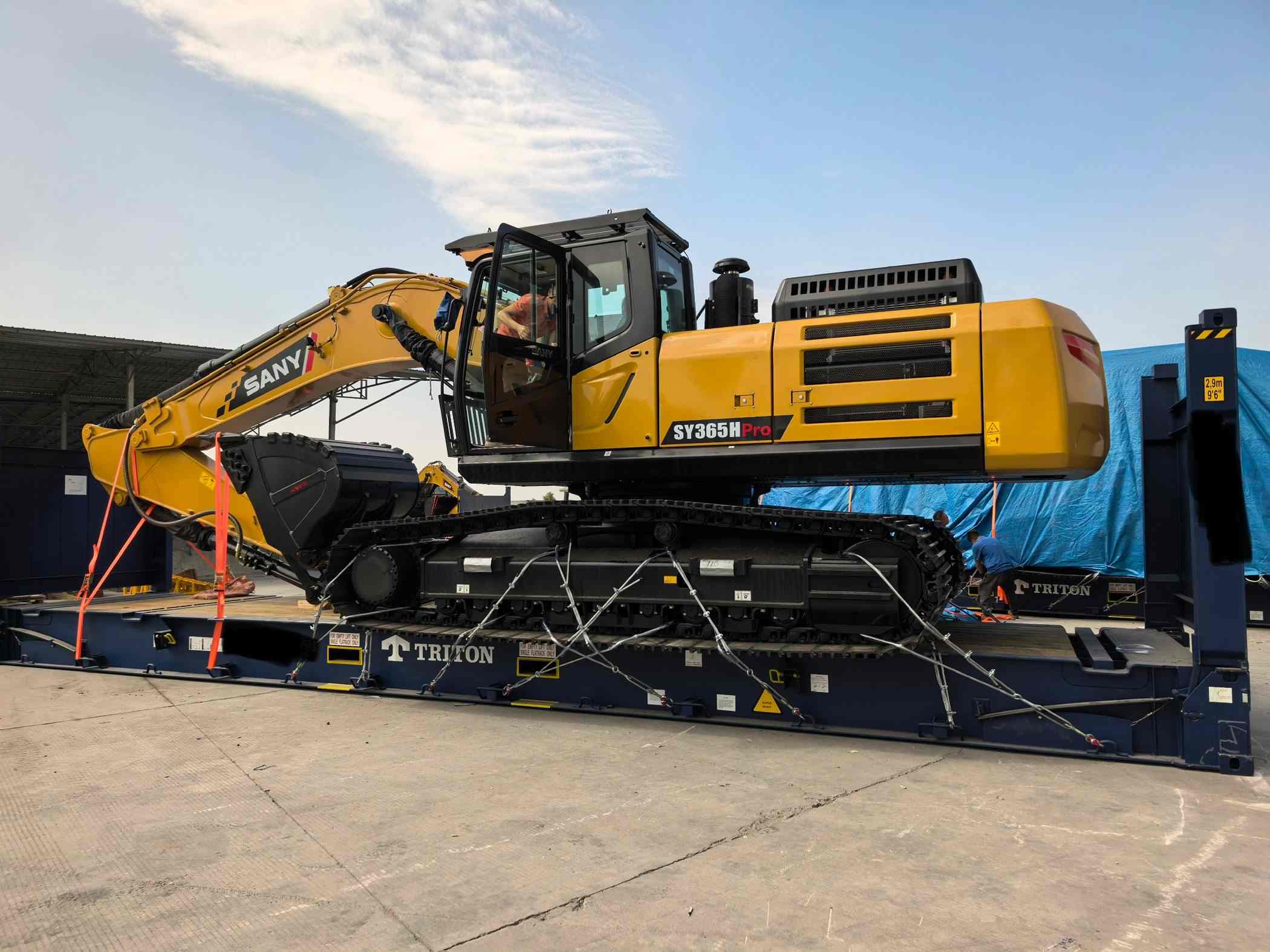
When cargo moves beyond the confines of a standard dry container, the rules of restraint change entirely. For OOG Shipping (Out of Gauge shipping), lashing and securing are not routine procedures—they are custom-engineered operations. While a standard 20ft or 40ft container relies on uniform wall strength and corner castings, OOG Shipping cargo (such as heavy machinery, yachts, or industrial spools) demands direct attachment to the vessel’s structure. At SPEED INT'L, we treat every OOG Shipping project as a unique naval engineering challenge, because a single miscalculation in lashing can shift a 50‑ton rotor mid‑Pacific.
Core Differences at a Glance
| Aspect | Standard Container Loading | OOG Shipping (Out of Gauge) |
|---|---|---|
| Attachment points | Corner castings and internal floor rings (rated 1–2 tons each) | Vessel’s D‑rings, lashing bridges, and hatch covers (rated 5–30 tons each) |
| Securing equipment | Twist locks, stackers, and polyester strapping | Chain binders, wire rope clips, heavy-duty turnbuckles, and welded stoppers |
| Load distribution | Uniform floor loading (max 2,000 kg/m²) | Point-load calculations on tank top or tween decks |
| Dynamic forces | Calculated using standard acceleration formulas (DNV GL) | Vessel‑specific motion analysis (roll, pitch, heave) with 3D simulation |
| Inspection regime | Visual check of door seals and lock rods | Multi‑point tension monitoring + ultrasonic bolt testing |
| Certification | CSC plate (container safety convention) | Class society approval (Lloyd’s, ABS, or BV) for each securing plan |
Why the Engineering Approach Must Change
In standard loading, the container itself acts as the primary structural shell. Forces are transmitted through the corner posts to the chassis or cell guides. But with OOG Shipping, the cargo becomes the structural element. For example, a 12‑meter steel press brake placed on a flat rack has no side walls to absorb transverse acceleration. Therefore, lashing must resist:
-
Transverse forces (rolling – up to 0.8g in heavy seas)
-
Longitudinal forces (pitching – up to 0.5g)
-
Vertical forces (heaving – up to 1.2g during slamming)
SPEED INT’L uses motion sensors and voyage‑specific weather routing to determine the exact number of lashing points. While a standard container uses 4 to 6 twist locks per tier, an OOG Shipping project often requires 12 to 24 independent securing points, each with calibrated pre‑tension.
Step‑by‑Step Lashing Procedure for OOG vs. Standard
| Step | Standard Container | OOG Shipping (per SPEED INT’L protocol) |
|---|---|---|
| 1. Planning | Check container TIR and stack weight | Produce 3D mooring plan + center of gravity (COG) offset report |
| 2. Equipment selection | Use carrier‑provided twist locks | Select grade‑80 chains or G‑100 shackles; verify WLL (working load limit) |
| 3. Attachment | Engage corner castings | Weld temporary stoppers or use through‑bolts on cargo feet |
| 4. Tensioning | Manual lever or semi‑automatic stacker | Hydraulic tensioners with real‑time load cells (accuracy ±2%) |
| 5. Cross‑lashing | Rarely applied | Mandatory diagonal cross‑lashing to prevent sliding and tipping |
| 6. Final verification | Visual + torque check | Independent surveyor signs off on pre‑departure lashing certificate |
3 Critical FAQs About OOG Shipping Lashing
Q1: Can I use the same polyester lashing straps for OOG Shipping that I use for standard containers?
A1: No. Polyester strapping (typically 2‑ to 5‑ton capacity) is designed for light, uniform cargo inside a container. For OOG Shipping, we require grade‑80 alloy steel chains or wire rope slings with a minimum breaking load of 8:1 over the cargo’s gross weight. Moreover, polyester stretches under cyclic wet conditions, which can loosen tension over a 20‑day voyage. Steel chains with turnbuckles allow active re‑tightening during port stops, a practice SPEED INT’L mandates for all heavy OOG Shipping bookings. Additionally, chains resist abrasion from sharp edges—a common issue with fabricated machinery—whereas straps can be cut instantly.
Q2: How do you calculate the number of lashing points needed for OOG Shipping versus a standard box?
A2: For a standard container, the calculation is formulaic: stack weight × acceleration factor ÷ WLL per twist lock (usually 4 points suffice). For OOG Shipping, we perform a full 6‑degree‑of‑freedom dynamic analysis using the vessel’s stability booklet. We factor in the cargo’s actual COG, windage area (height above deck), and the vessel’s rolling period. A rule of thumb: if a standard 20ft container needs 4 locks, a 40‑ton OOG Shipping item on a flat rack may need 16 points—but only after we run a finite element model. SPEED INT’L never guesses; we provide a stamped securing plan that over‑specifies by 25% safety margin, as per IMO CSS Code Annex 13.
Q3: What happens if a lashing point fails during transit on an OOG Shipping consignment?
A3: Unlike a standard container—where a failed twist lock might still leave three corners engaged—an OOG Shipping failure is cascading. One broken chain can shift the COG, overloading adjacent points within seconds. That is why SPEED INT’L insists on redundant securing: every main lashing has a backup sister‑chain, and we use dual‑proof load cells with remote monitoring. If a point loses tension beyond 15%, our operations centre receives an alert and instructs the master to adjust heading or speed. Post‑voyage, we require a full re‑certification of all hardware. For standard containers, a simple visual replacement suffices; for OOG Shipping, we treat every component as mission‑critical and log its serial number from dispatch to delivery.
Real‑World Impact on Stowage and Port Operations
The difference also affects port turnaround. A standard container is loaded/unloaded in 2‑3 minutes via gantry crane. OOG Shipping requires 45‑90 minutes per piece because lashing gear must be sequentially released, tagged, and inspected. At SPEED INT’L, we coordinate with terminal superintendents to schedule OOG Shipping moves during low‑traffic windows, reducing demurrage risks. Our internal data shows that proper lashing reduces cargo claim frequency by 73% compared to industry averages—a direct result of treating every OOG Shipping securing plan as a bespoke marine warranty.
Why Partner with an Experienced Forwarder
Standard container lashing is a commodity service. OOG Shipping securing is a specialist discipline that demands naval architecture knowledge, access to certified hardware, and real‑time vessel coordination. SPEED INT’L maintains dedicated lashing gangs in 12 major load ports, all trained in advanced rigging and certified under EN 12195. We also provide laser‑alignment reports before and after lashing, giving you verifiable proof of cargo stability.
Ready to Secure Your Next Out‑of‑Gauge Shipment?
Do not leave your heavy equipment to generic lashing guidelines. Contact SPEED INT’L today for a free, no‑obligation lashing plan review. Our engineers will analyse your cargo dimensions, voyage route, and vessel options—then deliver a transparent, class‑approved securing solution. Email us at [email protected] or visit our project cargo portal to request a tailored quote within 4 business hours. Your cargo’s safety is our single non‑negotiable standard.