

How Does Load Capacity Affect the Selection of Steel Structure Lifting Tools in Modular Construction
2026-05-11
When selecting Steel Structure Lifting Tools for modular construction, load capacity is the single most critical technical parameter. At Liweiyuan, engineering assessments confirm that mismatched load ratings directly cause delays, equipment damage, and site accidents. Modular construction involves lifting pre-assembled steel modules—often weighing between 5 and 50 tons—making precise load capacity alignment essential for safety and efficiency.
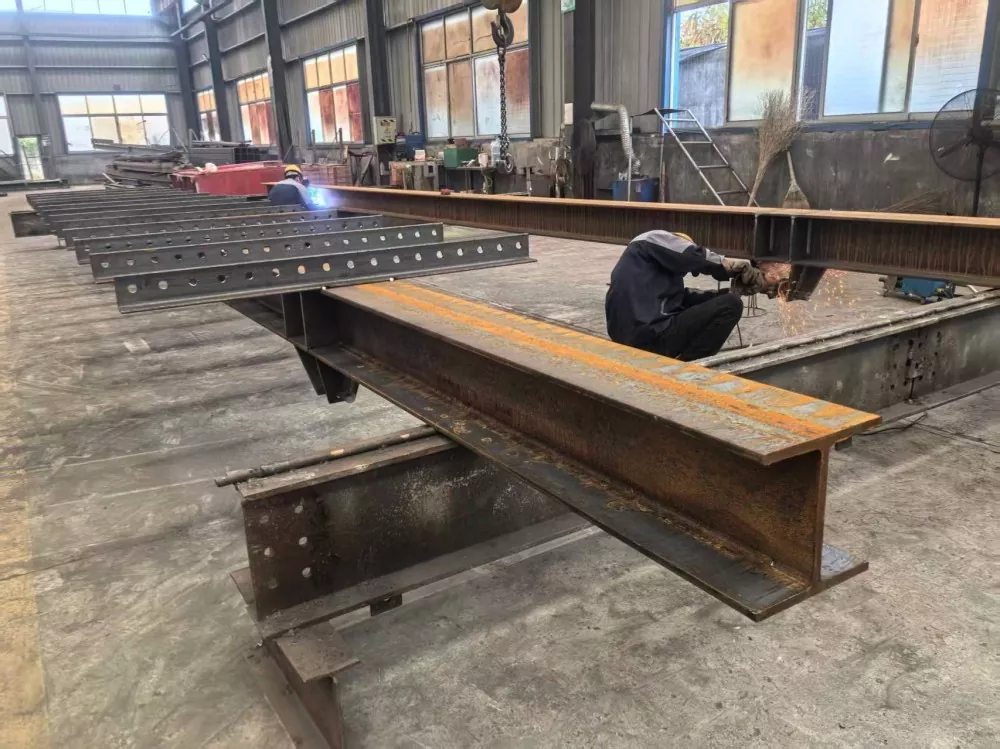
Key Factors Influenced by Load Capacity
| Load Capacity Range | Typical Modular Component | Recommended Steel Structure Lifting Tools | Safety Margin Required |
|---|---|---|---|
| 1 – 5 tons | Steel beams, bracings | Spreader beams, lifting clamps | 25% over capacity |
| 5 – 20 tons | Column assemblies | Hydraulic lifting brackets, beam trolleys | 30% over capacity |
| 20 – 50 tons | Complete room modules | Custom Liweiyuan lifting frames | 40% over capacity |
Table 1: Load capacity-based selection guide for modular projects.
Practical Implications of Load Capacity Selection
-
Undersized tools cause structural deformation of lifting eyes and sudden failure during hoisting.
-
Oversized tools add unnecessary weight and reduce crane reach, limiting modular placement accuracy.
-
Dynamic load factors from wind or swinging modules require Steel Structure Lifting Tools to handle 1.5× the static module weight.
-
Load distribution across multiple lifting points demands equal-rated tools to prevent tilting.
Liweiyuan engineers recommend always adding a 30-40% safety buffer above the module’s gross weight, not just its net steel mass. Connections, welds, and paint add 8-12% hidden weight.
FAQ: Common Questions About Steel Structure Lifting Tools
Question 1: Can the same Steel Structure Lifting Tools be used for different module weights in one project?
Answer: No. Liweiyuan advises against using identical tools for modules with more than 15% weight variation. Each lifting tool’s rated capacity applies to a fixed load range. Exceeding this range risks bending the main shaft or failing the locking mechanism. For projects with variable module weights, use adjustable spreader beams with visual load indicators or deploy dedicated tools per module type.
Question 2: How do I calculate the real load capacity needed for an asymmetric steel module?
Answer: For asymmetric modules, measure the center of gravity (COG) offset first. Multiply the module’s total weight by the highest corner load factor, which often reaches 70% of total weight on one lifting point. Then add a 1.2 dynamic coefficient. Example: a 10-ton asymmetric module may require Steel Structure Lifting Tools rated at 10 × 0.7 × 1.2 = 8.4 tons minimum per primary point, but Liweiyuan recommends 12-ton tools for safety.
Question 3: What certifications verify load capacity claims for Steel Structure Lifting Tools in modular construction?
Answer: Reputable tools must carry a legible load rating tag plus third-party proof load test certificates. Required standards include ASME B30.20 (USA), EN 13155 (Europe), or GB/T 27548 (China). Liweiyuan provides full load test reports for every tool, showing 2.0× safe working load (SWL) proof tests. Without documented traceability to a certified testing machine, load capacity claims are invalid.
Conclusion and Professional Recommendation
Load capacity dictates not only which Steel Structure Lifting Tools you can use but also the layout of lifting points, crane selection, and crew training requirements. Liweiyuan integrates high-visibility load indicators and anti-slip locking systems into all modular lifting solutions, reducing selection errors.
For upcoming modular high-rise projects, always submit module weight data including finishes and MEP attachments. A 5% miscalculation in load capacity can multiply into 40% higher equipment costs plus schedule overruns.
Contact us today for a customized load capacity chart and Steel Structure Lifting Tools specification sheet tailored to your modular construction sequence. Reach Liweiyuan through our website or request an on-site engineering consultation.