

How does Metal Hardware Inspection Line Improve Manufacturing Quality and Efficiency?
2026-06-18
Abstract
A Metal Hardware Inspection Line is a critical automation solution designed to ensure consistent quality, dimensional accuracy, and defect detection across mass-produced metal components. In modern manufacturing environments where precision and speed must coexist, inspection systems have evolved from manual sampling methods to fully integrated automated lines combining sensors, vision systems, and intelligent sorting mechanisms. This article explores how such inspection lines work, the problems they solve, and why they are essential for industries relying on metal fasteners, stamped parts, and precision hardware. It also highlights key technologies, operational workflows, and practical benefits for manufacturers aiming to reduce defects and improve production efficiency.
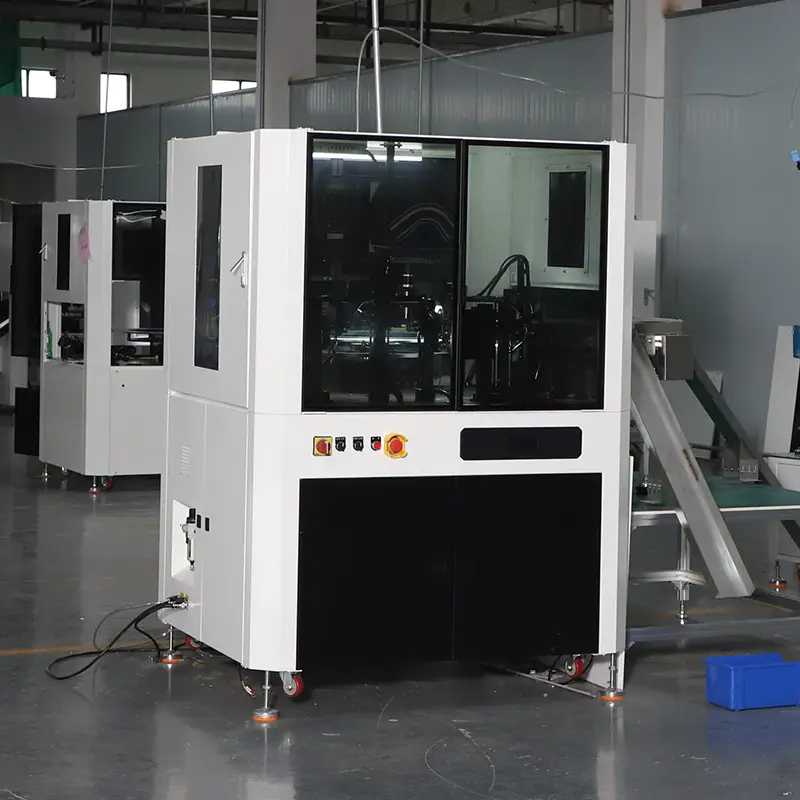
Table of Contents
- Outline
- Introduction
- Common Quality Challenges in Metal Hardware Production
- Core Structure of an Inspection Line
- Operational Workflow Explained
- Key Inspection Technologies
- Industrial Benefits and ROI
- Typical Industry Applications
- Maintenance and Stability Considerations
- Industrial Solutions by LANCE
- FAQ
- Conclusion
Outline
This article presents a structured breakdown of Metal Hardware Inspection Lines, covering operational principles, inspection technologies, manufacturing challenges, and value creation. It is designed to help decision-makers, engineers, and procurement teams understand how automated inspection systems improve production reliability while minimizing cost and waste.
Introduction
In metal hardware manufacturing, even a minor defect such as thread deviation, surface crack, or dimensional error can lead to product failure in downstream assembly or end-use environments. Traditional manual inspection methods are no longer sufficient for high-volume production lines due to inconsistencies and labor limitations.
A Metal Hardware Inspection Line integrates automation, machine vision, and precision measurement systems to evaluate every single part moving through the production flow. This ensures real-time detection of defects and immediate sorting of non-conforming items without interrupting production speed.
Common Quality Challenges in Metal Hardware Production
Manufacturers face multiple recurring issues that directly impact yield and operational cost:
- Inconsistent product dimensions due to tool wear
- Surface defects such as scratches, burrs, and cracks
- Thread inaccuracies in fasteners and bolts
- Human error in manual inspection processes
- High rejection cost after downstream assembly
These challenges make automated inspection not just an upgrade, but a necessity for competitive manufacturing environments.
Core Structure of an Inspection Line
A modern Metal Hardware Inspection Line is composed of multiple integrated modules, each serving a specific inspection or handling function:
| Module | Function |
|---|---|
| Feeding System | Automatically loads hardware components into the inspection line |
| Alignment Unit | Positions parts for accurate measurement and imaging |
| Vision Inspection Station | Detects surface defects and shape anomalies |
| Dimensional Measurement Unit | Measures length, diameter, thread pitch, and tolerances |
| Sorting Mechanism | Separates qualified and defective products |
Operational Workflow Explained
The inspection process follows a continuous, automated sequence designed for high throughput and precision:
- Parts are fed into the system through a vibration or conveyor feeder.
- Each component is aligned and stabilized for inspection.
- High-resolution cameras capture multiple angles of the hardware.
- Measurement sensors evaluate dimensional accuracy in milliseconds.
- AI-based algorithms compare results against preset standards.
- Defective parts are automatically rejected, while qualified parts proceed to packaging or assembly.
This workflow eliminates manual bottlenecks and ensures 100% inspection coverage in real time.
Key Inspection Technologies
The effectiveness of a Metal Hardware Inspection Line depends on the integration of advanced technologies:
- Machine Vision Systems: High-speed imaging for surface and structural analysis
- Laser Measurement: Non-contact dimensional accuracy checks
- AI Recognition Algorithms: Pattern recognition for defect classification
- 3D Profiling: Depth and contour analysis of complex parts
- Automated Sorting Arms: Precision separation of products
These technologies work together to ensure consistent quality control without slowing production speed.
Industrial Benefits and ROI
Implementing an automated inspection system delivers measurable advantages across production and supply chain performance:
- Reduction in defect escape rate
- Improved production efficiency and throughput
- Lower labor dependency in quality control
- Enhanced customer satisfaction and product reliability
- Reduced material waste and rework costs
From a financial perspective, many manufacturers observe a significant return on investment within the first production cycle due to reduced scrap and improved operational consistency.
Typical Industry Applications
Metal hardware inspection systems are widely used across multiple industries:
- Automotive fasteners and components
- Construction hardware such as bolts and anchors
- Aerospace precision fittings
- Electronics metal casings and connectors
- Industrial machinery parts
Each application requires specific inspection parameters depending on tolerance and safety requirements.
Maintenance and Stability Considerations
To maintain long-term operational reliability, inspection lines require structured maintenance practices:
- Regular calibration of sensors and vision systems
- Cleaning of optical lenses and measurement surfaces
- Software updates for AI inspection models
- Mechanical inspection of conveyors and sorting arms
Preventive maintenance ensures consistent accuracy and avoids unexpected production downtime.
Industrial Solutions by LANCE
As a specialized provider in automated inspection systems, LANCE delivers advanced Metal Hardware Inspection Line solutions tailored to modern manufacturing requirements. The systems are engineered to support high-speed inspection, multi-defect detection, and stable long-term operation in demanding industrial environments.
By integrating precision hardware, intelligent software, and modular design, LANCE helps manufacturers achieve higher production confidence while reducing quality risks across global supply chains.
FAQ
Q1: What types of defects can be detected?
Surface cracks, dimensional deviations, thread defects, and coating irregularities can all be identified.
Q2: Can the inspection line handle different product types?
Yes, systems can be customized for various hardware sizes and shapes with adjustable settings.
Q3: Is manual inspection completely replaced?
In most cases, yes. Manual inspection is only used for sampling or verification purposes.
Q4: How fast is the inspection process?
Modern systems can inspect multiple components per second depending on configuration.
Conclusion
A Metal Hardware Inspection Line is no longer an optional upgrade but a strategic requirement for manufacturers aiming to maintain consistency, reduce costs, and meet stringent quality expectations. By combining automation, intelligent analysis, and precision engineering, these systems ensure every component meets required standards before reaching the customer.
For manufacturers seeking to enhance production stability and quality assurance capabilities, adopting a fully automated inspection system represents a decisive step toward industrial competitiveness.
LANCE provides industry-grade solutions designed to meet these challenges with reliability and performance.
For more information or tailored system design support, contact us today to explore how LANCE can optimize your Metal Hardware Inspection Line solution.