

How Does Zn-Al-Mg Steel Compare with Galvalume for Solar Mounting Rails and Brackets
2026-11-16
Selecting the right material for rails and brackets directly affects the durability, maintenance cost, and lifetime performance of a photovoltaic array. Energet Solar engineers frequently evaluate Zn-Al-Mg Steel for Solar Mounting against Galvalume (Al-Zn coated steel) because both coatings are widely available, cost-effective, and suitable for cold-formed structural profiles. The comparison below summarizes metallurgical differences, corrosion behavior, fabrication considerations, and total cost of ownership to support specification decisions.
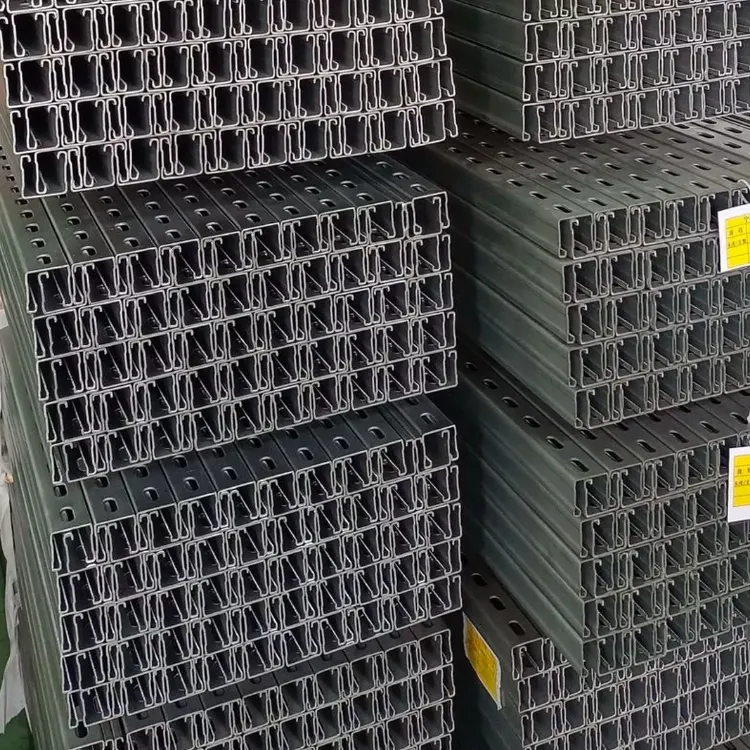
Coating Composition and Metallurgy
| Property | Zn-Al-Mg Steel | Galvalume (Al-Zn) |
|---|---|---|
| Typical coating composition | Zn with ~1–3% Mg and ~1–6% Al | ~55% Al, ~43.4% Zn, ~1.6% Si |
| Microstructure | Fine eutectic with MgZn₂ phases | Dendritic Al-rich matrix with Zn-rich interdendritic regions |
| Cut-edge protection | Magnesium compounds suppress edge corrosion | Limited sacrificial protection at cut edges |
| Typical coating mass | 60–275 g/m² (both sides) | 100–185 g/m² (both sides) |
| Standard reference | EN 10346, ASTM A1046 | ASTM A792, EN 10346 |
The magnesium addition in Zn-Al-Mg Steel for Solar Mounting promotes formation of protective simonkolleite and magnesium-containing layered double hydroxide films, which stabilize the surface in chloride-bearing atmospheres.
Corrosion Performance in Solar Environments
Solar mounting rails and brackets are exposed to UV, thermal cycling, rain runoff, and airborne chlorides. Key comparative observations:
-
Salt spray (ASTM B117): Zn-Al-Mg Steel typically shows 2–4× longer time to red rust than Galvalume at equivalent coating mass, particularly at scribed and cut edges.
-
Cut-edge and drilled-hole performance: Field drilling and bolting create exposed steel; Zn-Al-Mg Steel for Solar Mounting benefits from Mg-enhanced sacrificial action that delays edge creep.
-
Coastal and agricultural sites: Ammonia and chloride exposure favor Zn-Al-Mg Steel, where Galvalume may exhibit edge undercutting.
-
High-temperature service: Galvalume retains an advantage in prolonged elevated-temperature exposure above approximately 300 °C, which is rarely relevant for module rails.
Fabrication and Compatibility
| Consideration | Zn-Al-Mg Steel | Galvalume |
|---|---|---|
| Roll forming | Good; slightly higher springback | Good; mature process window |
| Welding | Requires Zn-Al-Mg compatible consumables and coating removal at weld zone | Similar pre-weld coating removal needed |
| Dissimilar metal contact | Isolate from copper and bare steel with EPDM or coated washers | Same isolation practice required |
| Coating repair | Zinc-rich or Mg-containing repair paints recommended | Zinc-rich repair paints |
| Availability of pre-painted coil | Broad and expanding | Broad |
Energet Solar specifies coating mass and cut-edge protection based on site corrosivity category (C3–C5 per ISO 9223) and provides matched fasteners and isolation washers to prevent galvanic issues.
Total Cost of Ownership
| Cost Factor | Zn-Al-Mg Steel | Galvalume |
|---|---|---|
| Initial material cost | Slightly higher | Lower |
| Maintenance frequency | Lower in C4–C5 environments | Higher in chloride zones |
| Expected service life (C4) | 25–30+ years | 15–25 years |
| Lifecycle cost for coastal utility projects | Often lower | Higher due to inspection and replacement |
For most rooftop and ground-mount projects in moderate to severe corrosivity categories, Zn-Al-Mg Steel for Solar Mounting delivers a favorable lifecycle cost despite a modest material premium.
Frequently Asked Questions
Is Zn-Al-Mg Steel suitable for coastal solar mounting projects?
Yes, Zn-Al-Mg Steel for Solar Mounting performs well in coastal environments because magnesium-rich corrosion products stabilize the coating surface and slow chloride-driven degradation, especially at cut edges and fastener holes.
Can Zn-Al-Mg Steel rails be welded on site?
Site welding is discouraged; prefabrication with controlled coating removal and compatible consumables is preferred, and bolted connections with isolation washers are the standard approach for Zn-Al-Mg Steel for Solar Mounting to preserve coating integrity.
How does coating mass affect the durability of Zn-Al-Mg Steel brackets?
Higher coating mass directly extends time to substrate corrosion, so specify coating mass according to ISO 9223 corrosivity category and verify cut-edge protection, since Zn-Al-Mg Steel for Solar Mounting performance depends on both coating mass and detailing quality.
Does Zn-Al-Mg Steel require different fasteners than Galvalume?
Fasteners must be compatible with the coating system; use coated or stainless steel fasteners with EPDM washers and avoid direct copper contact, and Energet Solar supplies matched fastener kits for Zn-Al-Mg Steel for Solar Mounting to prevent galvanic corrosion.
Contact Us
Energet Solar supports project teams with material selection, coating specification, structural verification, and matched fastener systems for Zn-Al-Mg Steel for Solar Mounting. Contact our engineering team to request corrosion data, sample rails, or a lifecycle cost comparison for your next photovoltaic project.