

How Is the Global Dust Removal Machine Market Evolving Across Industrial Applications?
2025-12-23
Abstract
Dust Removal Machines play a critical role in industrial production environments where particulate matter, airborne contaminants, and process-generated dust directly affect equipment performance, workplace safety, and regulatory compliance. This article provides a comprehensive professional analysis of Dust Removal Machines from an engineering and operational perspective.
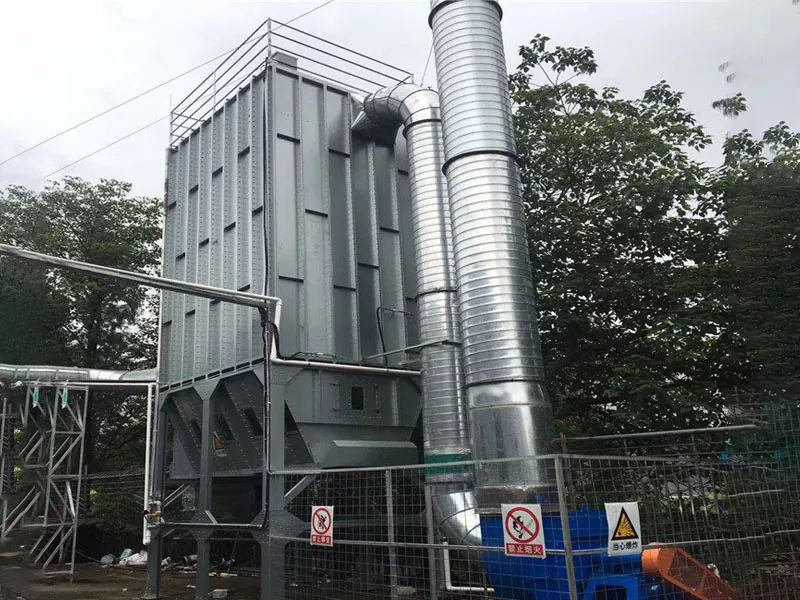
Table of Contents
- Article Outline
- Product Overview and Core Objective
- Technical Parameters and Configuration
- How Does a Dust Removal Machine Work?
- How Are Dust Removal Machines Applied Across Industries?
- Dust Removal Machine FAQs
- How Will Dust Removal Technology Develop in the Coming Years?
- Brand Perspective and Contact Information
- References
Article Outline
This article is structured into four major content nodes:
- Foundational understanding of Dust Removal Machines and their industrial role
- Technical parameters, system composition, and operational logic
- Application scenarios and frequently asked professional questions
- Industry development direction and brand-level service perspective
Product Overview and Core Objective
A Dust Removal Machine is an industrial environmental control device designed to capture, separate, and collect airborne dust particles generated during manufacturing, processing, or material handling operations. These machines are widely deployed in sectors such as metal fabrication, woodworking, mining, cement production, chemical processing, and electronics manufacturing.
The central objective of a Dust Removal Machine is to maintain controlled air quality within production spaces by reducing particulate concentration to acceptable levels. This directly supports equipment longevity, production stability, workforce health, and adherence to environmental and occupational safety standards. From an engineering standpoint, dust removal systems are designed around airflow management, filtration efficiency, pressure balance, and particle separation mechanics.
This article focuses on how Dust Removal Machines are designed, how they operate under different working conditions, and how users can evaluate system performance using measurable technical indicators.
Technical Parameters and Configuration
Understanding the technical parameters of a Dust Removal Machine is essential for correct system selection and long-term operational efficiency. Below is a consolidated overview of typical industrial-grade Dust Removal Machine specifications.
| Parameter | Typical Range / Description |
|---|---|
| Airflow Capacity | 1,000–100,000 m³/h, depending on application scale |
| Filtration Efficiency | ≥99% for particles ≥1 micron |
| Filter Media Type | Cartridge filter, bag filter, HEPA composite options |
| Operating Pressure | 1,500–3,000 Pa static pressure |
| Cleaning Method | Pulse-jet compressed air, mechanical vibration, reverse airflow |
| Dust Discharge | Manual drawer, rotary valve, screw conveyor |
| Power Supply | 380V / 50–60Hz industrial standard |
| Control System | PLC or intelligent control panel with pressure monitoring |
These parameters collectively determine the suitability of a Dust Removal Machine for specific production environments. Engineering evaluation typically considers dust particle size distribution, generation rate, temperature, humidity, and explosiveness.
How Does a Dust Removal Machine Work?
A Dust Removal Machine operates through a coordinated process of airflow induction, particulate separation, filtration, and discharge. Understanding this process helps users evaluate performance consistency and system reliability.
First, contaminated air is drawn into the system through hoods or ducting positioned near dust generation sources. The induced airflow is generated by an industrial centrifugal fan designed to maintain stable negative pressure.
Second, larger particles are often separated through inertial or centrifugal mechanisms before reaching the primary filter stage. This pre-separation reduces filter load and extends service life.
Third, fine particulate matter is captured by filter media designed to trap particles through surface filtration or depth filtration mechanisms. Periodic cleaning cycles remove accumulated dust from the filter surface.
Finally, collected dust is discharged into designated containers or continuous discharge systems for safe handling or recycling.
How Are Dust Removal Machines Applied Across Industries?
Dust Removal Machines are adapted to diverse industrial environments based on dust characteristics and production workflows.
In metal processing facilities, dust removal systems manage welding fumes, grinding dust, and metal particles that can cause equipment abrasion and health risks. In woodworking operations, systems handle high-volume organic dust with strict fire prevention considerations.
In cement and mining industries, Dust Removal Machines are designed for continuous heavy-load operation with high-temperature and abrasive dust. In electronics and pharmaceutical manufacturing, systems emphasize ultra-fine particle control and cleanroom compatibility.
Dust Removal Machine FAQs
Q: How is the appropriate airflow capacity determined for a Dust Removal Machine?
A: Airflow capacity is calculated based on dust generation rate, capture velocity requirements at emission points, duct length, and system pressure loss. Engineering calculations ensure sufficient air volume without excessive energy consumption.
Q: How often should filters in a Dust Removal Machine be replaced?
A: Filter replacement frequency depends on dust concentration, operating hours, and cleaning efficiency. Under stable industrial conditions, filters may last from 12 to 36 months with proper maintenance and monitoring.
Q: How does a Dust Removal Machine support regulatory compliance?
A: By maintaining particulate emissions below permissible exposure limits, dust removal systems help facilities comply with occupational safety regulations and environmental emission standards through measurable air quality control.
How Will Dust Removal Technology Develop in the Coming Years?
Dust Removal Machine technology continues to evolve toward higher automation, energy efficiency, and system integration. Intelligent control systems increasingly use differential pressure sensors and adaptive cleaning algorithms to optimize filter performance.
Energy recovery designs, modular system layouts, and digital monitoring platforms are becoming standard considerations in new installations. These developments reflect industry demand for operational transparency, predictive maintenance, and reduced lifecycle costs.
From a market perspective, global industrial expansion and stricter environmental regulations are driving sustained demand for advanced dust control solutions across both emerging and established manufacturing regions.
Brand Perspective and Contact Information
As an industrial solution provider, EPIC focuses on delivering Dust Removal Machines engineered for reliability, adaptability, and long-term operational stability. Through continuous optimization of system design and component selection, EPIC supports diverse industrial applications with consistent performance standards.
Organizations seeking tailored dust control solutions, technical consultation, or system optimization support are encouraged to contact the EPIC team for detailed project evaluation and professional assistance.
Contact Us: Reach out to EPIC to discuss Dust Removal Machine configurations, application requirements, and technical support options suited to your production environment.