

How Is the Tea Weighing Machine Reshaping Precision Packaging in the Global Tea Industry?
2026-01-08
Article Abstract
The tea weighing machine has become a critical component in modern tea processing and packaging lines, enabling accurate portion control, consistent quality output, and scalable production. This article provides a comprehensive overview of tea weighing machines, focusing on their working principles, detailed technical parameters, operational configurations, and real-world application scenarios.
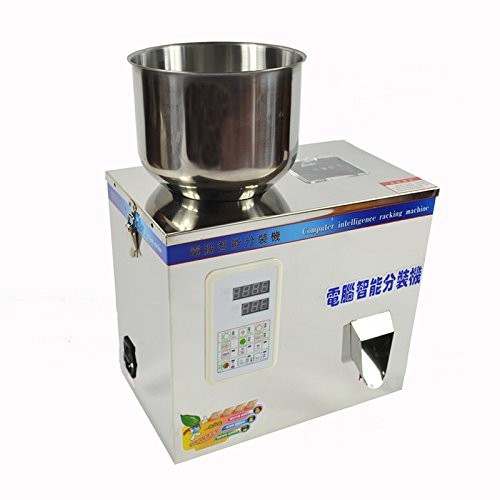
Table of Contents
- 1. How Does a Tea Weighing Machine Support Standardized Tea Packaging?
- 2. How Are Technical Parameters Defined for Professional Tea Weighing Machines?
- 3. How Is a Tea Weighing Machine Applied Across Different Tea Categories?
- 4. How Should Buyers Evaluate Tea Weighing Machines for Long-Term Use?
1. How Does a Tea Weighing Machine Support Standardized Tea Packaging?
A tea weighing machine is a specialized piece of packaging equipment designed to measure, portion, and dispense precise quantities of tea leaves into containers or packaging materials. Unlike general-purpose weighing systems, tea weighing machines are engineered to accommodate the unique physical characteristics of tea, including irregular leaf shapes, low bulk density, fragility, and sensitivity to static electricity.
The primary objective of a tea weighing machine is to ensure consistency across every packaged unit. Whether used for loose leaf tea, broken tea, granular blends, or herbal infusions, accurate weighing directly impacts product compliance, brand credibility, and cost control. Overfilling increases raw material loss, while underfilling can lead to regulatory non-compliance and customer dissatisfaction.
In industrial environments, tea weighing machines are typically integrated with vertical or horizontal packaging machines, forming a complete automatic packaging line. The weighing system acts as the upstream control point, determining the final package weight before sealing. This integration allows for continuous operation, reduced labor dependency, and stable throughput even under high production demands.
From a process control perspective, tea weighing machines also contribute to data consistency. Many systems are equipped with digital controllers that record weight accuracy, cycle speed, and fault alerts. These data points support quality audits, traceability requirements, and preventive maintenance planning.
2. How Are Technical Parameters Defined for Professional Tea Weighing Machines?
Technical parameters determine whether a tea weighing machine can meet specific production requirements. Professional buyers evaluate these parameters not in isolation, but in relation to tea type, target package weight, production speed, and available installation space.
The following table outlines typical technical parameters found in industrial-grade tea weighing machines:
| Parameter | Specification Range | Description |
|---|---|---|
| Weighing Range | 5 g – 1000 g | Supports small sachets to bulk tea packages |
| Weighing Accuracy | ±0.1 g to ±1.0 g | Depends on tea form and vibration control |
| Weighing Speed | 10 – 60 cycles/min | Measured per discharge cycle |
| Hopper Material | Food-grade SUS304 / SUS316 | Ensures hygiene and corrosion resistance |
| Control System | PLC with touch screen | Allows parameter storage and recipe switching |
| Power Supply | 220V / 380V, 50–60Hz | Adaptable to regional electrical standards |
In addition to these core parameters, auxiliary configurations such as vibration amplitude control, anti-static treatment, dust collection interfaces, and quick-release hoppers significantly influence performance stability. Machines designed for tea applications often include low-impact feeding mechanisms to preserve leaf integrity.
Parameter optimization is particularly important for premium teas, where visual appearance and leaf structure are closely associated with perceived quality. In such cases, slower feeding speeds and higher accuracy tolerances are prioritized over maximum throughput.
3. How Is a Tea Weighing Machine Applied Across Different Tea Categories?
Tea weighing machines are not limited to a single tea format. Their adaptability across categories is a key factor driving widespread adoption in both traditional and emerging tea markets.
For loose leaf tea, the machine must handle long, twisted, or curled leaves without causing breakage. Multi-stage vibration feeding is commonly used to guide leaves gently into the weighing hopper. For broken or CTC tea, higher speeds can be achieved due to more uniform particle size.
Herbal and blended teas present additional challenges. Ingredients such as dried flowers, roots, and fruit pieces vary significantly in density and shape. Advanced tea weighing machines allow for parameter adjustments that compensate for these variations, ensuring consistent final weights even with complex blends.
In single-serve packaging applications, such as pyramid tea bags or sachets, micro-weighing precision becomes essential. Machines configured for low-weight accuracy are paired with forming and sealing equipment to maintain continuous flow without manual intervention.
Bulk tea packaging for food service or export markets relies on higher-capacity weighing systems. In these scenarios, stability and repeatability are prioritized to maintain efficiency during long production runs.
Tea Weighing Machine Common Questions and Answers
Q: How does a tea weighing machine maintain accuracy with irregular tea leaves?
A: Accuracy is achieved through controlled vibration feeding, high-resolution load cells, and adaptive algorithms that adjust feed timing based on real-time weight detection.
Q: How often should a tea weighing machine be calibrated?
A: Calibration frequency depends on production intensity, but most industrial environments perform verification daily and full calibration monthly to ensure compliance.
Q: How does humidity affect tea weighing performance?
A: High humidity can cause tea leaves to clump or adhere to surfaces. Professional machines incorporate anti-stick coatings and enclosed structures to minimize environmental impact.
4. How Should Buyers Evaluate Tea Weighing Machines for Long-Term Use?
Selecting a tea weighing machine is a long-term investment decision. Beyond initial specifications, buyers must assess equipment durability, supplier support capability, and upgrade potential. Machines operating in continuous shifts must maintain accuracy without frequent downtime.
Ease of cleaning and maintenance is particularly important in tea processing, where cross-contamination between tea varieties must be avoided. Tool-free disassembly and modular hopper design reduce cleaning time and improve operational hygiene.
From a compliance perspective, machines should meet international food safety standards and support traceability documentation. Digital control systems that store operational logs provide added value during inspections.
As tea consumption patterns evolve, flexibility becomes a decisive factor. Machines capable of handling multiple packaging formats and weight ranges allow producers to respond quickly to market changes without replacing core equipment.
Within this context, Dongguan Sammi Packing Machine Co., Ltd. has established a reputation for developing tea weighing machines that balance precision, durability, and adaptability. By aligning equipment design with practical production requirements, the brand supports tea manufacturers seeking stable and scalable packaging solutions.
For organizations planning to upgrade or expand tea packaging operations, a detailed consultation can clarify configuration options and system compatibility. Contact us to discuss specific production goals and technical requirements, and to explore tailored tea weighing solutions that align with long-term operational strategies.