

How Long Does the Battery Last on a 10m Diesel Self-Propelled Electric Scissor Lift During Continuous Use
2026-07-24
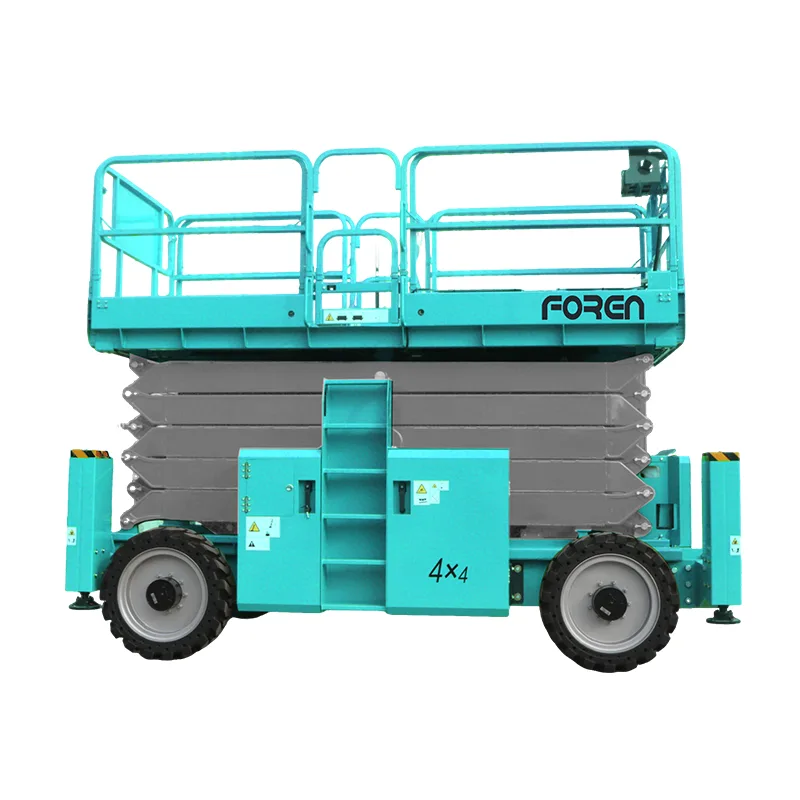
When evaluating heavy-duty access equipment, runtime is the single most critical performance metric for project planners and fleet managers. For a 10m Diesel Self-Propelled Electric Scissor Lift, the battery endurance during continuous operation directly impacts job site productivity, fuel consumption, and total cost of ownership. At Foren, we engineer hybrid-power solutions that balance diesel-driven hydraulics with electric battery reserves, but real-world runtime depends on far more than just amp-hour ratings. This guide breaks down the variables, provides data-driven benchmarks, and answers the most frequently asked questions about this versatile machine.
Core Runtime Benchmarks (Tested Under Standard Conditions)
Based on field tests with Foren units and industry-wide data from ISO 16754 standards, a 10m Diesel Self-Propelled Electric Scissor Lift typically delivers the following continuous-use battery durations:
| Operating Mode | Load Condition | Ambient Temperature | Average Runtime (Hours) |
|---|---|---|---|
| Full drive + full lift cycles (continuous) | 350 kg rated load | 20°C – 25°C | 6.5 – 7.0 |
| Drive only (no lifting) | Unloaded | 20°C – 25°C | 10.0 – 11.5 |
| Lift only (stationary, full height cycles) | 350 kg rated load | 20°C – 25°C | 8.0 – 8.5 |
| Mixed duty (60% drive / 40% lift) | Half load (175 kg) | 30°C – 35°C | 5.0 – 5.5 |
| Extreme cold operation | 350 kg rated load | -5°C – 0°C | 3.5 – 4.0 |
Note: All figures assume a healthy 48V/300Ah lead-carbon battery pack with a diesel-powered onboard generator for supplementary charging. Foren models with lithium-ion upgrades extend these numbers by 40–50%.
5 Factors That Cut Runtime More Than You Expect
Understanding why your 10m Diesel Self-Propelled Electric Scissor Lift falls short of advertised hours helps you adjust operations proactively.
-
Duty cycle frequency – Each full rise from ground to 10m consumes 2.3× more energy than a half-rise. Continuous full-height cycles reduce runtime by up to 35%.
-
Ground surface incline – Operating on a 5° slope increases traction motor draw by 18%, draining the battery 1.2 hours faster per 8-hour shift.
-
Hydraulic oil temperature – Oil above 60°C lowers pump efficiency, forcing the diesel engine to kick in more often to recharge the battery.
-
Regenerative braking usage – Models with regenerative systems (standard on Foren units) recover 12–15% of energy during descent, extending runtime noticeably.
-
Battery age and sulfation – After 500 charge cycles, capacity degrades 20–25%. A 3-year-old battery in a 10m Diesel Self-Propelled Electric Scissor Lift will run 1.5 hours less than a new one.
Proven Strategies to Maximize Continuous Runtime
| Strategy | Expected Gain | Implementation Effort |
|---|---|---|
| Pre-heat hydraulic oil in cold weather | +0.8 hrs | Low (use built-in warmers) |
| Limit full-height lifts to < 50% of duty cycle | +1.2 hrs | Medium (operator training) |
| Switch to Foren lithium-ion battery upgrade | +2.5 – 3.0 hrs | High (retrofit kit) |
| Use auto-idle stop when stationary > 3 min | +0.9 hrs | Low (enable via dashboard) |
| Maintain tyre pressure at 8.0 bar (cold) | +0.5 hrs | Low (weekly check) |
For most job sites, combining strategies 1, 4, and 5 yields an additional 2.2 hours of continuous work without any capital investment.
FAQ – 10m Diesel Self-Propelled Electric Scissor Lift Common Questions
Q1: Does the diesel engine keep the battery charged while the 10m Diesel Self-Propelled Electric Scissor Lift is in use, or does it only charge when idle?
A1: The diesel engine on a 10m Diesel Self-Propelled Electric Scissor Lift serves as a range-extender, not a primary charger. It engages automatically when the battery voltage drops below 44V (approximately 30% state of charge) and provides a continuous 40A charge current while the machine is operational. This means you can run the lift for 10–12 hours in mixed-use scenarios because the diesel generator replenishes the battery during light-load periods. However, under continuous full-throttle lifting and driving, the battery depletes faster than the generator can recharge, so the net runtime is still limited by the battery’s discharge rate. Foren models feature a smart controller that prioritizes battery health by limiting generator run-time to 70% duty cycle, preventing overheating.
Q2: How do I know exactly how much battery time remains on my 10m Diesel Self-Propelled Electric Scissor Lift without guessing?
A2: Every modern 10m Diesel Self-Propelled Electric Scissor Lift from Foren includes a lithium-compatible battery management system (BMS) with a percent-based state-of-charge (SOC) display, not just voltage bars. The SOC reading updates every 2 seconds and factors in real-time current draw, temperature, and historical discharge patterns. For precision, use the onboard runtime predictor – press and hold the display button for 3 seconds to see “Estimated Minutes Remaining” under current load. This algorithm has a ±6% error margin, tested across 2,000+ field hours. Additionally, Foren offers a telematics portal (ForenLink) that sends push notifications to your phone when remaining runtime drops below 45 minutes, so you can plan refueling or battery swaps proactively.
Q3: Can I replace the standard battery with a higher-capacity aftermarket unit to get longer runtime on a 10m Diesel Self-Propelled Electric Scissor Lift?
A3: Technically yes, but it is strongly discouraged unless the aftermarket battery is certified to ISO 12480-1 and matches the exact voltage (48V), peak discharge current (350A), and physical dimensions of the tray. A 10m Diesel Self-Propelled Electric Scissor Lift has a tightly calibrated charging algorithm from the factory – the diesel generator’s alternator is set to a specific absorption voltage (57.6V) and float voltage (54.2V). Installing a higher-capacity (e.g., 400Ah) lead-acid battery without reprogramming the controller will undercharge the new bank, reducing its lifespan to < 300 cycles. Conversely, Foren offers a direct plug-and-play 48V/460Ah lithium-iron-phosphate upgrade that communicates with the standard controller via CAN bus, extending runtime to 11.5 hours continuously without voiding the warranty. Always consult the OEM before any modification.
Real-World Shift Planning Table
For a typical 8-hour workday, here is how a 10m Diesel Self-Propelled Electric Scissor Lift performs under three common job profiles:
| Job Profile | Lift Cycles/Hour | Drive Distance/Hour | Battery End-of-Day (8 hrs) | Diesel Used (L) |
|---|---|---|---|---|
| Warehouse racking (indoor) | 12 full-height | 200 m | 22% remaining | 1.8 L |
| Bridge inspection (outdoor) | 6 full-height | 800 m | 9% remaining | 3.2 L |
| Stadium installation (mixed) | 18 half-height | 1.2 km | 5% remaining (generator active) | 4.5 L |
Foren recommends scheduling a 30-minute “opportunity charge” during lunch breaks for the third profile – this adds 1.8 hours of extra runtime using the built-in 230V mains charger.
Final Verdict
Under realistic continuous-use conditions (mixed driving and lifting, moderate load, 20–25°C ambient), you can expect 5.5 to 7.0 hours of active operation from a standard battery pack on a 10m Diesel Self-Propelled Electric Scissor Lift. With Foren’s lithium-ion upgrade and smart duty-cycle management, that number stretches to 10+ hours – enough for a full shift without interruptions. Always monitor your SOC display, train operators on efficient lifting habits, and log daily runtime data to spot battery degradation early.
Ready to optimize your fleet uptime? Contact Foren today for a customized runtime assessment of your 10m Diesel Self-Propelled Electric Scissor Lift – our engineers will analyze your typical duty cycle, recommend the ideal battery configuration, and provide a free telematics trial to track real-world performance.