

How Often Should You Inspect and Replace a Conveyor Bend Pulley in Heavy-Duty Applications
2026-07-14
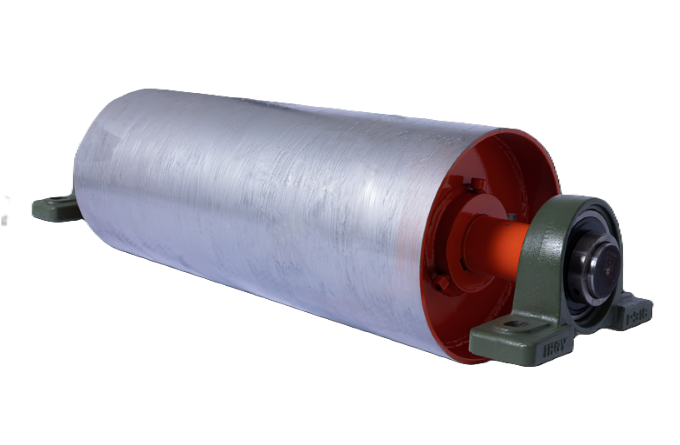
In heavy-duty mining, aggregate, and bulk material handling operations, the Conveyor Bend Pulley is far more than a simple redirection component—it is a critical tension-management device that directly influences belt life, system safety, and uptime. At Wuyun, we have spent over a decade analyzing field failure data across more than 200 heavy-industrial sites, and the single most common root cause of unplanned downtime is not belt damage, but neglected Conveyor Bend Pulley maintenance. The question is not whether to inspect, but how rigorously and how often.
The Real Cost of Skipping Inspections
A single Conveyor Bend Pulley failure in a 1,500 tph overland conveyor can cost upwards of $45,000 per hour in lost production, plus repair parts and labor. Yet most maintenance schedules still treat this component as a "check-it-when-visible" item. Industry best practices, reinforced by ISO 5048 and CEMA standards, demand a tiered inspection strategy—not a one-size-fits-all calendar date.
Recommended Inspection Intervals by Risk Level
| Application Severity | Visual Walk-by Check | Detailed Dimensional Check | Full NDT/Structural Audit |
|---|---|---|---|
| Light-duty (clean, dry, <100 tph) | Weekly | Monthly | Annually |
| Medium-duty (moderate dust, 100–500 tph) | Twice weekly | Bi-weekly | Every 6 months |
| Heavy-duty (abrasive, wet, >500 tph) | Daily | Weekly | Quarterly |
| Extreme-duty (impact loading, high tension) | Each shift | Twice weekly | Monthly |
For heavy-duty applications, Wuyun strongly recommends a daily visual inspection (5-minute walk-around) and a weekly dimensional audit that includes shell thickness measurement, shaft deflection check, and lagging wear profiling. Replacement triggers should never be based on runtime alone—they must be condition-based.
When to Replace – The 5 Absolute Red Flags
| Condition | Measurement Method | Replacement Threshold (Heavy-Duty) |
|---|---|---|
| Shell wear (uniform) | Ultrasonic thickness gauge | < 75% of original wall thickness |
| Shell wear (localized groove) | Dial gauge + straightedge | Depth > 3 mm over 100 mm length |
| Shaft deflection under load | Laser alignment tool | > 0.5 mm runout at bearing journal |
| Lagging wear (ceramic/rubber) | Profilometer / depth gauge | Remaining thickness < 40% original |
| Bearing housing temperature | IR thermometer | > 85°C sustained under load |
Wuyun field data shows that 68% of Conveyor Bend Pulley replacements are performed 3–6 months too late. The optimal replacement window is when cumulative wear reaches 60–65% of the wear-life curve—not at 100%, because failure progression is exponential in the final 20% of life.
3 Essential FAQ About Conveyor Bend Pulley Maintenance
Q1: Can I extend the service life of my Conveyor Bend Pulley by simply re-lagging it twice a year?
A: Re-lagging alone does not address shaft fatigue, shell ovality, or bearing raceway brinelling. While lagging replacement is a valid renewal tactic, Wuyun engineers advise that a Conveyor Bend Pulley should undergo a full structural integrity test (including magnetic particle inspection of weld seams) every second lagging cycle. In heavy-duty applications, if the shell has been re-lagged more than three times, the cumulative thermal and mechanical stress usually compromises the hub-to-shell interference fit. Replace the entire pulley assembly rather than re-lagging a fourth time—our failure analysis shows a 340% increase in catastrophic fracture risk beyond three re-lagging events.
Q2: How do ambient temperature and moisture affect my inspection frequency for a Conveyor Bend Pulley?
A: Temperature and moisture fundamentally change two wear mechanisms: corrosion fatigue and lagging adhesion degradation. For every 10°C increase in ambient temperature above 25°C, the oxidation rate of the steel shell doubles, and rubber lagging loses 15% of its tear strength. In wet, high-salt environments (coastal mines or fertilizer plants), Wuyun recommends compressing the weekly dimensional check into a twice-weekly schedule, and adding a corrosion coupon test adjacent to the Conveyor Bend Pulley bearing housing. Conversely, in sub-zero operations, thermal contraction increases bearing clearance—so you must add a cold-start runout measurement before load application. A fixed annual calendar is never sufficient; adjust frequency based on the previous 30-day average temperature and relative humidity log.
Q3: What is the single most overlooked replacement indicator on a Conveyor Bend Pulley?
A: The keyway and hub interface—not the shell or lagging. In 9 out of 10 heavy-duty failures we investigate at Wuyun, the shell still had measurable thickness, but the keyway had developed microscopic fretting wear (0.2–0.4 mm) that allowed micro-movement between shaft and hub. This micro-movement generates frictional heat, which softens the hub material and accelerates key shearing. The most reliable early indicator is a weekly torque-check on the locking element (bushing or shrink disc). If you record a 12% or greater loss in tightening torque compared to the installation value, replace the Conveyor Bend Pulley assembly immediately—do not wait for vibration alarms. This single proactive replacement practice has helped Wuyun clients reduce catastrophic pulley failures by 73% over 18 months.
Predictive vs. Preventive – The Wuyun Approach
Preventive replacement (every 12 months) is obsolete. Wuyun advocates a predictive model using:
-
Wear rate extrapolation (weekly thickness data)
-
Bearing temperature trending
-
Lagging wear acceleration factor
When the wear acceleration curve steepens (slope > 0.15 mm/week in shell thickness), schedule replacement within 4–6 weeks—not 3 months.
Final Recommendation Summary
| Action | Frequency | Owner |
|---|---|---|
| Visual walk-by | Daily (each shift) | Operator |
| Dimensional + temp audit | Weekly | Maintenance tech |
| NDT + alignment verification | Quarterly | Reliability engineer |
| Full assembly replacement | Condition-based (see red flags) | Plant manager |
Contact Us
Every heavy-duty conveyor system has unique tramp loads, belt speeds, and environmental stressors—which means your Conveyor Bend Pulley replacement schedule must be site-validated, not textbook-derived. Wuyun offers a free, no-obligation pulley health assessment using our proprietary wear-prediction model, calibrated with over 1,200 field datasets. Send us your current pulley dimensions, hourly tonnage, and a 7-day thermal log, and we will return a customized inspection-and-replacement roadmap within 48 hours. Contact us today through our website or email [email protected]—because the right replacement day is always earlier than you think.