

How to Choose a Circular Coil Winding Machine That Delivers Stable Output?
2025-12-12
A Circular Coil Winding Machine is engineered for producing precision-wound circular coils used across motors, inductors, transformers, generators, EV components, automation assemblies, and other electromagnetic devices. These coils must meet exacting requirements for dimensional accuracy, winding tension, winding distribution, repeatability, insulation integrity, and production throughput. Choosing the correct equipment is a critical operational decision because the winding process directly influences electrical performance, failure rate, thermal dissipation, and long-term reliability of the end component.
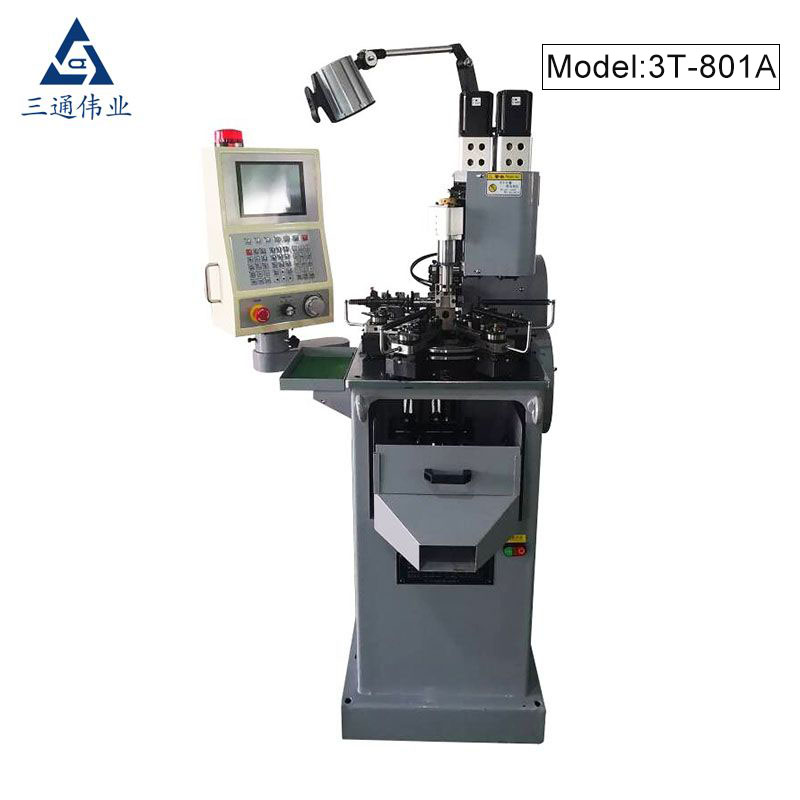
What Technical Specifications Should Be Examined When Comparing Circular Coil Winding Machines?
A well-engineered winding machine integrates mechanical precision, stable servo control, intelligent monitoring, and material-adapted tension systems. Evaluating these parameters allows buyers to determine whether a machine can maintain consistency under continuous production loads.
Key Technical Parameters Overview
| Parameter Category | Description |
|---|---|
| Coil Diameter Capacity | Typical support ranges from 10 mm to 800 mm depending on model configuration. Larger industrial models allow wide-format circular coils for motors and stators. |
| Wire Type Compatibility | Copper wire (enamelled), aluminum wire, litz wire, and specialty conductive wires designed for high-frequency or high-temperature applications. |
| Wire Diameter Range | Usually 0.1 mm to 3.0 mm; heavy-gauge variants available for industrial winding requirements. |
| Winding Speed | 300–2000 RPM depending on coil size and wire type. Multi-mode speed control maintains tension accuracy during acceleration/deceleration. |
| Tension Control System | Mechanical tensioners, magnetic tension control, closed-loop servo tension systems, and automatic tension compensation for wire elasticity. |
| Control Interface | PLC systems, touchscreen interfaces, multi-program storage, auto-indexing, and precise stepper/servo integration. |
| Winding Accuracy | ±0.01–0.05 mm positioning accuracy depending on machine grade. |
| Automation Level | Options include manual, semi-automatic, and fully automatic with robotic loading/unloading. |
| Safety & Monitoring | Overload detection, wire break sensors, emergency stop, real-time speed/tension monitoring. |
| Power Supply | 220V/380V industrial-grade electrical systems, customizable for regional standards. |
These specifications provide a foundation for comparing equipment objectively. For operations that require consistent winding density and complex coil structures, priority should be given to servo-driven systems with advanced tension compensation and digital control logic.
How Does Production Workflow Influence the Selection of a Circular Coil Winding Machine?
Manufacturing environments differ widely across industries; therefore, the optimal machine configuration depends on factors such as coil complexity, batch size, workforce skill levels, and required operational uptime. A structured approach helps determine whether a machine aligns with the plant’s production model.
1. Production Volume Strategy
High-volume production environments require:
-
Rapid cycle times
-
Continuous operation stability
-
Automated tension correction
-
Easy integration with conveyor lines or robotic arms
Small-batch or prototyping environments require:
-
Quick program switching
-
High versatility for coil geometries
-
Adaptability for R&D modifications
2. Coil Design Requirements
Different industries place varying demands on coil geometry:
-
Motor coils need uniform winding and high mechanical strength
-
Sensor coils need precise layer control
-
Inductors need consistent inductance values
-
High-frequency coils require minimal distortion and insulation damage
Each of these demands specific wire handling, spindle control, and optimized traverse movement to prevent gaps or overlaps.
3. Workforce Integration
Evaluate the operator skill level:
-
Plants with highly skilled operators may prefer machines with manual fine-tuning options
-
Plants with limited skilled labor benefit from automated, recipe-based systems that reduce human intervention
4. Maintenance and Serviceability
The best industrial machines adopt a modular structure, including:
-
Replaceable winding heads
-
Easy-access wire routing mechanisms
-
Diagnostic tools and error logs
-
Availability of spare parts
A winding machine should be selected not only for its performance but also for maintenance accessibility to reduce downtime and operational cost.
How Are Intelligent Control Systems Shaping the Future of Circular Coil Winding?
The industry is moving toward advanced automation driven by digitalization, precision monitoring, and real-time analytics. The adoption of these technologies allows manufacturers to improve quality consistency and respond quickly to production variations.
1. Servo-Driven Motion Systems
Modern machines adopt multi-axis servo systems that enable stable acceleration, smooth winding transitions, and precise traverse coordination. This technology reduces wire stress, improves winding density, and maintains repeatability across long production cycles.
2. Data-Driven Quality Control
Smart machines integrate:
-
Real-time tension monitoring
-
Automatic parameter correction
-
Production data logging
-
Statistical process control analysis
These features support traceability and help plants maintain compliance with industry quality standards.
3. Automation and Robotics
The next generation of machines is increasingly paired with robotic mechanisms:
-
Automated coil loading/unloading
-
Wire feeding automation
-
Visual inspection systems
-
Reduced manual handling
This technology helps reduce labor dependency while enhancing precision and throughput.
4. Modular Expansion and Customization
Manufacturers are demanding machines that adapt to multiple coil formats. The modularization trend allows:
-
Quick interchange of winding heads
-
Support for complex coil shapes
-
Flexible upgrade paths without replacing the entire machine
This adaptability extends machine lifespan and supports multi-product production lines.
How to Verify Coil Winding Stability and Machine Performance Before Purchase?
Before finalizing procurement, buyers should evaluate machine performance through a structured validation process. Manufacturers typically provide sample-winding tests, performance reports, or online demonstrations.
1. Conduct a Sample Winding Test
Request the following data from the manufacturer:
-
Winding layer distribution
-
Inductance value uniformity
-
Wire tension stability curves
-
Finished coil surface consistency
-
High-magnification defect inspection
These metrics reveal whether the machine can maintain quality across long runs.
2. Evaluate Actual Production Speed
The advertised RPM is not the same as effective working speed. Verify:
-
Load/unload time
-
Wire feeding stability
-
Traverse speed transition performance
-
Cycle repeatability
3. Inspect Machine Build Quality
Key structural elements include:
-
Stability of the spindle assembly
-
Durability of bearings and shafts
-
Construction material for the machine frame
-
Quality of servo motors and PLC control units
A robust structure reduces vibration and enhances coil uniformity.
4. Assess Software Interface and Programming Logic
A well-designed system should provide:
-
Recipe management for different coil types
-
Easy parameter modification
-
Real-time diagnostics
-
Alarm history
-
Multi-language interface
Ease of use contributes directly to lower training costs and fewer operator errors.
Common Questions About Circular Coil Winding Machines
Q1: What factors influence winding accuracy during continuous production?
A1: Winding accuracy depends on tension control precision, servo coordination between spindle and traverse movement, coil fixture stability, wire rigidity, and environmental conditions such as humidity and vibration. Advanced machines use closed-loop servo tension systems and adaptive speed modulation to maintain consistent winding distribution even during rapid acceleration and deceleration.
Q2: How long is the typical service life of a Circular Coil Winding Machine under industrial use?
A2: With proper maintenance, high-quality industrial winding machines typically last 8–15 years or longer. Service life is influenced by mechanical build quality, frequency of operation, lubrication of moving parts, wire type abrasiveness, tension loads, and availability of original spare components. Machines equipped with modular parts and robust servo systems generally achieve longer operational endurance.
A Circular Coil Winding Machine is a foundational asset in coil manufacturing, influencing product performance, defect rates, electrical efficiency, and long-term reliability. Selecting the right machine requires balancing technical specifications, production design, automation level, and cost efficiency. By evaluating parameters such as wire compatibility, tension accuracy, servo performance, process control, and system expandability, buyers can align the equipment with both current and future production requirements.
For organizations seeking stable performance, consistent winding accuracy, and scalable automation, equipment from Santong offers a comprehensive range of industrial-grade solutions. The brand’s approach emphasizes mechanical precision, intelligent control, and long-cycle reliability suitable for professional manufacturing settings.
For consultation, specification support, or customization requirements, contact us to obtain detailed guidance tailored to your production environment.