

How to Choose and Use Food Grade Lyophilizer for Optimal Food Preservation?
2025-12-29
Abstract: This article provides a complete guide on Food Grade Lyophilizers, including technical specifications, operational guidance, and practical considerations for food processing professionals. It emphasizes key parameters, how to optimize usage, and answers critical questions regarding lyophilization in food applications.
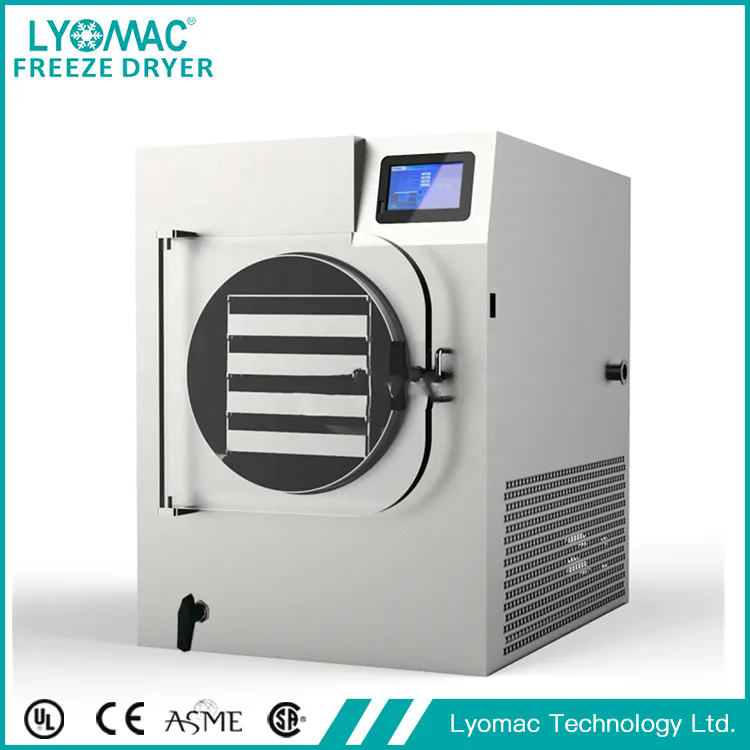
Table of Contents
- 1. Introduction to Food Grade Lyophilizer
- 2. Technical Specifications and Operational Overview
- 3. Common Questions About Food Grade Lyophilizer
- 4. Brand Highlight and Contact Information
1. Introduction to Food Grade Lyophilizer
The Food Grade Lyophilizer, also known as a freeze dryer, is a specialized device designed to remove moisture from food products through sublimation, preserving taste, nutrients, and texture. This equipment is widely utilized in the food industry to extend shelf life, facilitate storage, and maintain product quality. The purpose of this article is to guide food processors, manufacturers, and culinary innovators on selecting, operating, and troubleshooting Food Grade Lyophilizers efficiently.
Lyophilization is particularly important for sensitive food products, such as fruits, vegetables, dairy, and prepared meals, where thermal processing can degrade flavor or nutritional content. Understanding the critical parameters and operational processes ensures maximum efficiency and product integrity.
2. Technical Specifications and Operational Overview
When selecting a Food Grade Lyophilizer, it is crucial to evaluate the following core specifications:
| Parameter | Description | Typical Value |
|---|---|---|
| Freezing Temperature | The lowest temperature the unit can achieve to freeze the product thoroughly | -50°C to -80°C |
| Vacuum Range | Pressure range required for sublimation in the drying chamber | 0.01 to 0.1 mbar |
| Drying Capacity | Maximum food weight the system can process per batch | 5 kg to 50 kg per cycle |
| Chamber Material | Construction material to ensure food safety and hygiene | Stainless steel 316 |
| Control System | Type of interface and automation level for precise freeze drying | Touchscreen PLC with programmable cycles |
| Energy Consumption | Average power usage per drying cycle | 1.5 kW to 5 kW |
| Dimensions | External footprint of the unit for installation planning | 1000x800x1500 mm (varies by model) |
Food Grade Lyophilizers operate by first freezing the food, then reducing the pressure inside the chamber, and finally applying gentle heat to allow sublimation. This precise sequence maintains food integrity while removing up to 98% of moisture. Operators should monitor vacuum levels, chamber temperature, and product weight to ensure consistent quality.
3. Common Questions About Food Grade Lyophilizer
Q1: How does a Food Grade Lyophilizer preserve nutrients better than conventional drying?
A1: Unlike conventional drying, which uses high heat and can degrade sensitive vitamins, proteins, and flavors, a Food Grade Lyophilizer freezes the food first and removes water by sublimation under low pressure. This process minimizes thermal stress, preserves the cellular structure, and retains up to 95% of nutrients, color, and aroma.
Q2: How to determine the optimal cycle time for different food products?
A2: Optimal cycle time depends on the water content, density, and surface area of the food. High-moisture fruits typically require longer drying phases, whereas low-moisture herbs need shorter cycles. Conducting small-scale tests while monitoring chamber pressure and temperature helps in establishing precise cycles for each food type.
Q3: How can maintenance be performed to ensure long-term efficiency?
A3: Regular maintenance includes cleaning the condenser and chamber, inspecting vacuum seals, and monitoring pump performance. Replacing filters and lubricating moving parts prevent breakdowns. It is also recommended to run validation cycles after maintenance to ensure temperature and pressure readings are accurate for consistent food quality.
4. Brand Highlight and Contact Information
LYOMAC is a trusted manufacturer of Food Grade Lyophilizers, delivering high-quality, precision-engineered freeze dryers for food processing industries worldwide. Their units are designed with advanced automation, energy efficiency, and durable stainless steel construction to meet international hygiene standards.
For more information or to discuss customized solutions, contact us directly. LYOMAC specialists are available to provide guidance on equipment selection, operational training, and after-sales support.