Abstract
Concrete block production has become a core component of modern construction supply chains, driven by rapid urbanization, infrastructure expansion, and increasing demand for cost-efficient building materials.
Selecting the right Concrete Block Making Machine directly influences production efficiency, product quality, operational cost, and long-term profitability.
This article provides a structured guide to understanding machine types, technical considerations, production requirements, and common purchasing challenges faced by investors and manufacturers.
1. Introduction to Concrete Block Production
Concrete blocks are widely used in residential, commercial, and industrial construction due to their durability, fire resistance, and cost-effectiveness.
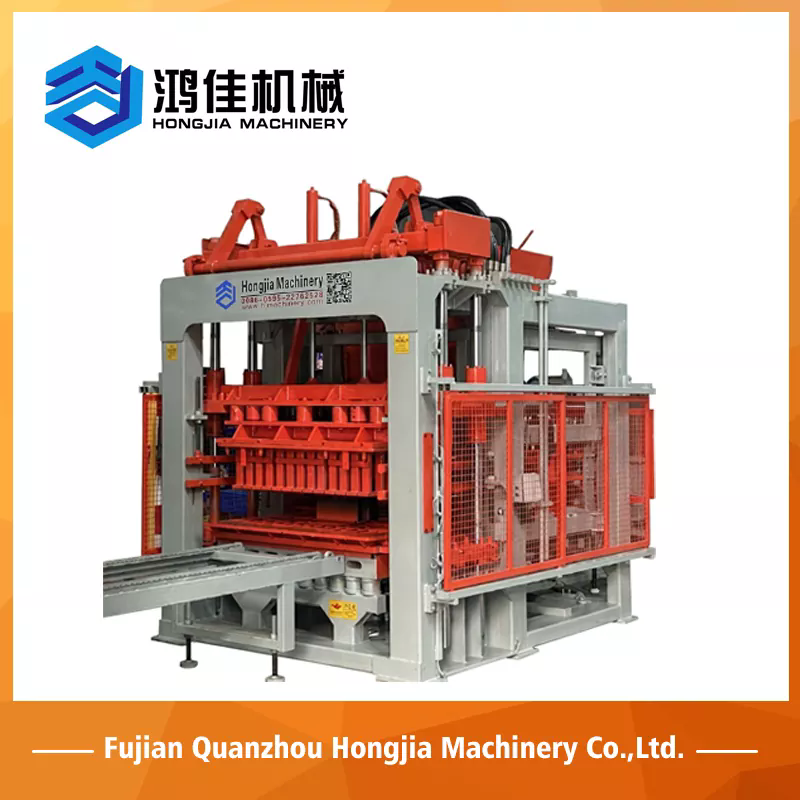
The manufacturing process relies heavily on a Concrete Block Making Machine, which automates mixing, molding, compaction, and shaping of raw materials such as cement, sand, stone aggregates, and water.
With increasing demand for standardized building materials, manual production methods are no longer sufficient. Automated and semi-automated systems have become essential for achieving consistent quality and higher output rates.
2. Types of Concrete Block Making Machine
Different production scales require different machine configurations. Understanding these types helps investors match equipment with business goals.
-
Manual Machines: Suitable for small-scale production with limited investment. Labor-intensive but cost-effective for startups.
-
Semi-Automatic Machines: Combine manual input with automated pressing and vibration systems, balancing efficiency and cost.
-
Fully Automatic Machines: High-output systems with PLC control, conveyor integration, and minimal human intervention.
-
Pallet-Free Systems: Advanced configuration eliminating traditional pallet usage, reducing operational cost and space requirements.
Each type of machine serves a different production scale and budget level, making it essential to evaluate long-term expansion plans before selection.
3. Key Factors Before Choosing Equipment
Selecting the right machine involves more than comparing prices. Below are critical technical and operational considerations:
-
Production Capacity: Output per hour or per shift must align with market demand.
-
Automation Level: Higher automation reduces labor dependency and improves consistency.
-
Mold Flexibility: Ability to produce different block sizes and shapes increases product diversity.
-
Raw Material Compatibility: Machine should support local material variations.
-
Energy Consumption: Efficient hydraulic and vibration systems reduce operational costs.
-
After-Sales Support: Spare parts availability and technical support are critical for long-term operation.
Ignoring these factors often leads to production inefficiencies and unexpected maintenance costs.
4. Machine Comparison Overview
|
Machine Type
|
Output Capacity
|
Labor Requirement
|
Investment Level
|
Best Use Case
|
|
Manual
|
Low
|
High
|
Low
|
Small workshops
|
|
Semi-Automatic
|
Medium
|
Medium
|
Moderate
|
Growing businesses
|
|
Fully Automatic
|
High
|
Low
|
High
|
Industrial production lines
|
|
Pallet-Free System
|
Very High
|
Very Low
|
High
|
Large-scale export manufacturers
|
5. Improving Production Efficiency
Efficiency is not only determined by machine capability but also by operational management. Several strategies can significantly improve output quality and consistency:
-
Optimize raw material mixing ratios to ensure stable compression strength.
-
Use high-quality molds to reduce wear and improve block precision.
-
Implement scheduled maintenance to avoid unexpected downtime.
-
Train operators to understand machine pressure settings and cycle timing.
-
Integrate automated stacking and curing systems for smoother workflow.
Manufacturers like Fujian Quanzhou Hongjia Machinery Co., Ltd. design equipment with optimized hydraulic systems and intelligent control units to help operators achieve stable production efficiency with minimal manual intervention.
6. Maintenance and Operational Stability
Long-term performance of a Concrete Block Making Machine depends heavily on maintenance routines. Machines operating under high pressure and vibration require systematic care.
Key maintenance practices include:
-
Regular lubrication of hydraulic components
-
Inspection of vibration motors and electrical systems
-
Cleaning of molds after each production cycle
-
Calibration of pressure and alignment systems
-
Replacement of worn-out parts before failure occurs
Preventive maintenance reduces downtime and ensures consistent product quality across production cycles.
7. Common Purchasing Mistakes
Many investors face challenges not because of technology limitations, but due to incorrect purchasing decisions. Common mistakes include:
-
Choosing machines based solely on price without evaluating long-term durability
-
Ignoring local raw material compatibility
-
Underestimating production demand growth
-
Overlooking spare parts availability
-
Failing to assess manufacturer credibility
Avoiding these mistakes ensures stable production and better return on investment.
8. Role of Reliable Manufacturer
The role of a machine manufacturer extends far beyond equipment delivery. A reliable partner provides technical consultation, installation guidance, training, and ongoing support.
Fujian Quanzhou Hongjia Machinery Co., Ltd. is recognized for engineering durable and efficient block making systems designed for diverse construction demands. Their production philosophy focuses on stability, automation, and adaptability to global market requirements.
Choosing a trusted manufacturer ensures not only equipment quality but also long-term operational sustainability.
9. FAQ
Q1: What is the lifespan of a Concrete Block Making Machine?
With proper maintenance, a high-quality machine can operate efficiently for 10–20 years depending on usage intensity.
Q2: Can one machine produce different block types?
Yes. By changing molds, modern machines can produce hollow blocks, solid blocks, pavers, and interlocking bricks.
Q3: How much space is required for installation?
Space requirements vary by model, but fully automatic production lines generally require larger factory layouts including curing areas.
Q4: Is automation necessary for small businesses?
Not always. Small businesses may start with semi-automatic systems and upgrade as demand increases.
Q5: What affects block quality most?
Raw material quality, compression pressure, vibration system efficiency, and mold precision all significantly influence final block quality.
In conclusion, selecting the right Concrete Block Making Machine requires a balanced evaluation of production needs, automation level, and long-term operational strategy. A well-informed decision can significantly enhance productivity and profitability in the construction materials industry.
For professional guidance, equipment details, and customized solutions, Fujian Quanzhou Hongjia Machinery Co., Ltd. offers comprehensive support tailored to global construction demands.
Contact us today to explore advanced solutions and upgrade your concrete block production capabilities with reliable industrial technology.