

Laser cut bulk metal garage cabinets offer a practical way to organize tools, automotive supplies, maintenance equipment, and household storage in demanding environments. However, purchasing cabinets in bulk involves more than comparing unit prices. Buyers need to evaluate material thickness, cutting precision, structural strength, corrosion protection, storage capacity, shipping requirements, and consistency between production batches. This guide explains how to select, specify, and maintain metal garage cabinets that meet real storage needs while controlling long-term costs. Whether you are furnishing a repair workshop, supplying a distributor, or developing a customized storage product line, understanding these factors can help you make a more confident purchasing decision.
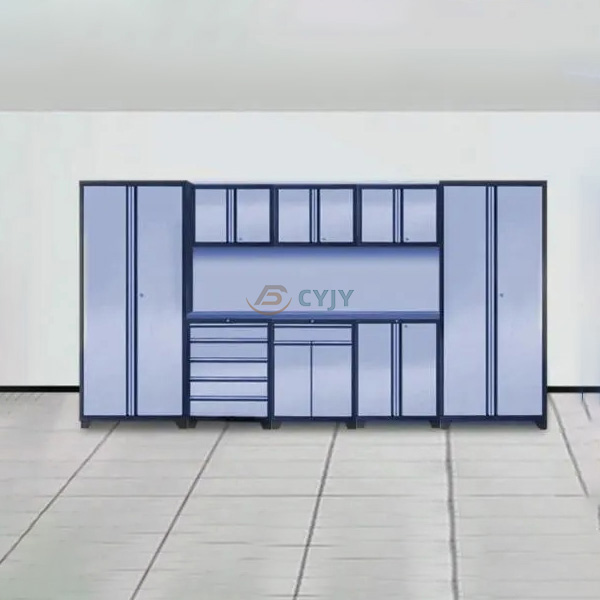
1. Understanding Laser Cut Bulk Metal Garage Cabinets
A garage often serves several purposes at once. It may function as a vehicle parking area, a repair station, a tool room, or a storage space for seasonal equipment. Without a suitable organization system, loose tools, spare parts, lubricants, and accessories can quickly occupy valuable floor space.
Laser cut bulk metal garage cabinets address these problems by combining durable metal construction with accurately manufactured panels. Laser cutting uses a focused energy beam to cut sheet metal according to a programmed design. The resulting components can then be bent, welded, coated, and assembled into cabinets of different sizes and configurations.
The term bulk metal garage cabinets generally refers to multiple cabinets purchased for a commercial project, wholesale distribution, a chain of workshops, or a large residential development. Bulk purchasing can improve consistency across installations, but only when specifications are clearly defined before production begins.
What makes these cabinets useful?
- Organized storage: Shelves, drawers, and compartments help separate tools, hardware, and consumables.
- Durable construction: Properly selected steel panels and reinforced joints can withstand regular workshop use.
- Space efficiency: Tall cabinets and wall-mounted units make better use of vertical space.
- Controlled access: Lockable doors help restrict access to tools and selected supplies.
- Repeatable production: Digital cutting programs help manufacturers reproduce matching panels across large orders.
- Custom configurations: Cabinet dimensions, door layouts, ventilation openings, and finishes can be tailored to project requirements.
For purchasing teams, the key question is not simply whether a cabinet looks strong. It is whether the complete cabinet system can safely accommodate the intended load, fit the available space, and maintain reliable performance throughout its expected service life.
2. How Laser Cutting Improves Cabinet Quality
Cabinet quality begins before assembly. If panels have inconsistent dimensions, poorly positioned holes, or irregular edges, even a well-designed cabinet may be difficult to assemble. Doors can become misaligned, drawers may bind, and fasteners may not fit as intended.
Laser cutting helps reduce these problems by translating digital drawings into repeatable cutting paths. When the equipment is correctly configured and the material is suitable, manufacturers can produce detailed panel profiles, mounting holes, ventilation slots, and interlocking features with consistent geometry.
More consistent panel dimensions
Accurate dimensions are especially important when hundreds of cabinets must share the same design. A consistent panel layout supports more predictable bending and assembly, making it easier to maintain door gaps, shelf alignment, and mounting positions across production batches.
Greater design flexibility
Different workshops have different storage requirements. Some need narrow cabinets for small garages, while others require wide units for power tools, automotive components, or bulky equipment. Laser cutting allows manufacturers to adjust panel geometry without relying on a dedicated cutting die for every design change.
It can also accommodate practical features such as:
- Adjustable shelf mounting holes.
- Ventilation openings where the stored items and environment permit them.
- Precise hinge and lock mounting positions.
- Reinforcement brackets and fastening points.
- Custom panel openings and cable access features when required.
Better material utilization
Manufacturers can arrange multiple component outlines on a sheet through a process called nesting. Efficient nesting can reduce unused material, particularly in high-volume orders with repeatable component designs. Actual savings depend on sheet dimensions, part geometry, cutting settings, and the amount of scrap generated.
Laser cutting is only one part of the process
A precise cutting operation cannot compensate for poor bending, weak welds, inadequate fasteners, or an unsuitable finish. The complete manufacturing process may include laser cutting, deburring, CNC bending, welding or mechanical fastening, pretreatment, powder coating, hardware installation, and final inspection.
3. Common Bulk Purchasing Challenges and How to Avoid Them
Ordering metal garage cabinets in bulk introduces risks that may be less obvious when purchasing a single unit. A small design problem can be repeated across an entire shipment, turning an inexpensive oversight into a costly project delay.
Challenge 1: Comparing prices without comparing specifications
Two cabinets may look almost identical in photographs but differ significantly in steel thickness, reinforcement, usable shelf capacity, hardware quality, and coating performance. A lower quotation may reflect a lighter construction rather than a more efficient manufacturing process.
How to avoid it: Request a written specification covering dimensions, material grade, nominal thickness, load ratings, finish, locking system, accessories, packaging, and inspection requirements. Compare quotations against the same specification instead of relying on product images alone.
Challenge 2: Inconsistent quality between batches
Bulk buyers often need to replenish stock or install cabinets across multiple locations. If later batches have different dimensions, colors, or hardware, the result can be inconsistent product presentation and difficult replacement work.
How to avoid it: Approve a reference sample, confirm drawing revisions, and document the permitted material and finish variations. For repeat orders, ask the supplier to retain the approved specification and apply the same inspection criteria.
Challenge 3: Cabinets that cannot handle actual loads
Tools, automotive components, and power equipment can be considerably heavier than ordinary household items. A cabinet with insufficient shelf support may sag, while an overloaded unit may become unstable.
How to avoid it: Estimate the weight of stored items and request clearly defined shelf and total cabinet load ratings. Confirm whether these ratings apply to evenly distributed loads, concentrated loads, or both. Follow the manufacturer's loading instructions.
Challenge 4: Rust, scratches, and premature finish failure
Garages can expose metal surfaces to condensation, road salt, cleaning agents, oils, and temperature changes. Scratched coatings and poorly protected edges can become vulnerable points for corrosion.
How to avoid it: Match the surface finish to the operating environment. Inspect coating coverage at edges, corners, welds, and concealed areas. If the cabinets will be installed in damp or corrosive locations, discuss appropriate materials, pretreatment, and additional protection with the supplier.
Challenge 5: Unexpected freight and installation costs
Large metal cabinets can be expensive to transport because of their size and weight. Fully assembled units may occupy substantial shipping volume, while flat-packed units may require more assembly labor at the destination.
How to avoid it: Compare total landed cost rather than unit price alone. Include packaging, freight, duties where applicable, unloading equipment, assembly labor, and potential replacement parts in the purchasing calculation.
4. Choosing Materials and Surface Finishes
Material selection affects cabinet strength, weight, corrosion resistance, cost, and appearance. There is no single material that is best for every garage. The right choice depends on what the cabinets will store, how frequently they will be used, and the conditions in which they will operate.
Cold-rolled steel
Cold-rolled steel is a common option for indoor garage and workshop cabinets. It provides a practical balance of strength, formability, and cost. Its performance depends on the selected grade, thickness, reinforcement, fabrication quality, and surface protection.
Galvanized steel
Galvanized steel has a zinc-based protective layer that can improve corrosion resistance. It may be useful in environments where ordinary unprotected steel would deteriorate more quickly. The suitability of additional coating or finishing operations should be confirmed for the specific material.
Stainless steel
Stainless steel can be appropriate for environments requiring enhanced corrosion resistance or frequent cleaning. However, the appropriate grade must be matched to the actual exposure conditions. Stainless steel generally costs more than standard carbon steel, so its benefits should justify the additional expense.
Powder coating and other finishes
Powder coating is widely used for metal storage cabinets because it provides a uniform decorative surface and a protective barrier when correctly applied. Performance depends on surface preparation, coating formulation, film thickness, curing, and handling after production.
| Material or Finish | Key Advantages | Points to Consider |
|---|---|---|
| Cold-rolled steel | Strength, formability, broad availability | Requires suitable corrosion protection |
| Galvanized steel | Improved resistance to corrosion in suitable environments | Check coating compatibility with subsequent finishing |
| Stainless steel | Enhanced corrosion resistance for suitable applications | Higher material and fabrication costs |
| Powder coating | Consistent color and a durable finished surface | Requires proper pretreatment, curing, and handling |
| Protective plating | Can provide a functional or decorative surface layer | Specify the process and environmental suitability |
For bulk orders, specify the material and finish in measurable terms whenever possible. Include the required color reference, acceptable appearance, coating inspection criteria, and any restrictions on visible defects. This reduces misunderstandings between purchasing teams and manufacturers.
5. Essential Design Features for Everyday Use
A cabinet should be designed around the items it will hold, not simply around the available sheet metal. A thoughtful internal layout can improve access, reduce wasted space, and make daily work more efficient.
Adjustable shelves
Adjustable shelves accommodate changing storage requirements. They are useful when a cabinet needs to hold a mixture of small containers, hand tools, larger accessories, and boxed equipment. Confirm the shelf load rating and the security of the adjustment mechanism.
Drawers and compartment organizers
Drawers help organize smaller tools, fasteners, measuring instruments, and accessories. For frequently used equipment, consider drawer travel, handle design, slide quality, and the load rating of each drawer. Internal dividers can reduce clutter and make missing items easier to identify.
Secure doors and reliable hinges
Door alignment affects both appearance and usability. Hinges should support the weight of the doors, while locks should match the required level of access control. For commercial facilities, buyers may also need keyed-alike locks or a defined replacement-key process.
Reinforcement and stability
Large cabinets and units storing heavy objects may require reinforced shelves, folded edges, support ribs, or a stronger base. Tall cabinets should be assessed for tipping risk, especially when drawers can be opened or heavy items are stored high up.
Ventilation and safe storage
Ventilation openings may help in some applications, but they are not appropriate for every stored item. Chemicals, flammable materials, batteries, and other potentially hazardous products may require dedicated storage equipment and compliance with applicable safety rules. General-purpose garage cabinets should not automatically be treated as fire-rated or chemical-safety cabinets.
Modular configurations
A modular system may combine tall cabinets, wall cabinets, workbenches, drawer units, and open shelving. Before placing a large order, confirm the dimensions of each module, clearance for doors and drawers, connection methods, and the space required for installation.
6. Comparing Cabinet Options for Different Needs
The best cabinet configuration depends on the application, available floor space, stored load, and budget. The following comparison can help buyers narrow their requirements before requesting quotations.
| Cabinet Type | Best Suited For | Main Purchasing Priority |
|---|---|---|
| Tall storage cabinet | Long-handled tools, boxes, bulky accessories | Stability, shelf capacity, usable height |
| Drawer cabinet | Hand tools, fasteners, small components | Drawer load, slide durability, organization |
| Wall-mounted cabinet | Compact garages and workbench storage | Secure wall fixing and mounting compatibility |
| Heavy-duty workshop cabinet | Repair shops and demanding workspaces | Reinforcement, load ratings, wear resistance |
| Modular cabinet system | Large garages, dealerships, multi-site projects | Consistent dimensions and configuration flexibility |
| Custom laser-cut cabinet | Specialized layouts and private-label product lines | Drawing accuracy, repeatability, customization cost |
For buyers ordering hundreds of units, standardization is often valuable. A common cabinet width, shared hardware, and consistent shelf spacing can simplify warehousing, installation, maintenance, and future replenishment. Custom features should be prioritized where they solve a clear operational problem rather than added solely for appearance.
7. How to Plan a Bulk Cabinet Order Successfully
A well-prepared purchase specification helps manufacturers provide more accurate quotations and reduces the chance of expensive revisions. It also makes it easier to compare suppliers on a consistent basis.
Step 1: Measure the installation area
Record the available width, depth, and height. Include door swing clearance, drawer extension space, ceiling obstructions, electrical outlets, and any restrictions caused by vehicles or workbenches. For wall-mounted cabinets, identify suitable fixing locations and the construction of the supporting wall.
Step 2: Define the storage load
List the tools, components, and equipment that will be stored. Estimate their weight and dimensions, then determine whether shelves, drawers, and the cabinet structure can safely support them. Ask the manufacturer to clarify the basis of each load rating.
Step 3: Prepare the technical specification
Include the following information in your request for quotation:
- Overall cabinet dimensions and approved drawings.
- Material grade and nominal sheet thickness.
- Shelf quantities, spacing, and load requirements.
- Door, drawer, hinge, handle, and lock specifications.
- Surface treatment and color requirements.
- Required accessories, labels, and branding.
- Order quantity, delivery destination, and target schedule.
- Packaging, assembly, inspection, and documentation needs.
Step 4: Approve a sample or first article
Before full production, review a representative sample whenever the project size or customization level justifies it. Check actual dimensions, panel fit, door movement, drawer operation, finish quality, stability, and hardware installation. Document any required changes and obtain written approval before production proceeds.
Step 5: Confirm production and delivery arrangements
Agree on production milestones, inspection arrangements, packaging specifications, and shipment timing. If the order includes several cabinet models, confirm how each model will be identified and packed to prevent mix-ups at the destination.
Step 6: Evaluate the complete cost
Unit price is only one part of a bulk purchasing decision. A more useful calculation considers the total cost of acquiring, receiving, installing, and maintaining the cabinets.
- Cabinet manufacturing and customization.
- Sample production and any tooling or setup charges.
- Protective packaging and freight.
- Import duties, taxes, and customs-related charges where applicable.
- Unloading, installation, and assembly labor.
- Spare parts, maintenance, and expected replacement costs.
Flat-packed cabinets can reduce shipping volume, but they may increase assembly time and require clearer instructions. Fully assembled cabinets can simplify installation but may be more expensive to transport. The best option depends on the shipping method, destination, labor costs, and cabinet design.
8. Quality Control Before Shipment
Inspection should focus on the characteristics that affect function, safety, appearance, and repeatability. A quick visual check alone may miss dimensional errors, loose hardware, weak packaging, or inconsistencies between units.
Dimensional and assembly checks
Inspect representative cabinets against the approved drawings. Check overall dimensions, panel alignment, door gaps, shelf positions, mounting holes, and the operation of moving parts. Confirm that interchangeable components fit as intended.
Material and construction checks
Verify the specified material and thickness through appropriate documentation or measurement. Examine bends, joints, fasteners, welds, reinforcement points, and load-bearing features for defects that could compromise performance.
Surface-finish checks
Look for scratches, incomplete coverage, visible contamination, blistering, or other defects that fall outside the agreed acceptance criteria. Where appropriate, coating thickness, adhesion, and corrosion-related tests can be specified using suitable methods and acceptance limits.
Functional checks
- Doors open and close without abnormal interference.
- Locks engage and release correctly.
- Drawers move smoothly under the specified test conditions.
- Shelves and support brackets are correctly installed.
- Edges and accessible corners do not present unacceptable sharp-burr hazards.
- Required accessories and installation hardware are included.
Packaging and shipment inspection
Metal panels can be scratched or dented during transportation if they are not adequately protected. Packaging should account for cabinet weight, panel corners, surface finish, stacking, moisture exposure, and the handling conditions expected during shipment.
For larger orders, agree on an inspection plan before production starts. Define the sample size, acceptance criteria, treatment of nonconforming products, and responsibility for rework or replacement. These details are particularly important when a buyer cannot inspect every unit before dispatch.
9. Installation and Maintenance Tips for Longer Service Life
Even well-manufactured cabinets can deteriorate prematurely if they are overloaded, installed incorrectly, or exposed to unsuitable environmental conditions. A simple maintenance routine can help preserve appearance and functionality.
Install on a suitable surface
Use a level, stable floor and follow the manufacturer's assembly instructions. Secure tall or wall-mounted units using suitable fasteners and supports for the actual wall construction. Keep heavy items low and follow any anti-tip or anchoring requirements.
Distribute weight properly
Place heavier equipment on lower shelves when practical. Avoid concentrating excessive weight in the middle of a shelf or loading a drawer beyond its rated capacity. Recheck the cabinet if its contents or intended use change significantly.
Clean surfaces regularly
Remove dust, grease, and dirt using cleaning products compatible with the cabinet finish. Avoid abrasive tools and aggressive chemicals unless the manufacturer confirms they are suitable. Dry surfaces after cleaning when moisture may remain.
Inspect damaged coatings
Check corners, edges, fastener locations, and high-contact areas periodically. Repair coating damage using a suitable method recommended for the specific finish. In corrosive environments, investigate the cause of repeated damage rather than relying only on cosmetic touch-ups.
Check hardware and moving parts
Inspect hinges, handles, drawer slides, locks, and mounting hardware for looseness or abnormal wear. Tighten or replace components according to the manufacturer's instructions. Keep cabinet doors closed when they are not in use and avoid using them as steps or supports.
Manage moisture and environmental exposure
Where possible, reduce persistent condensation and standing water around the cabinets. Store chemicals and other potentially hazardous materials only in equipment suitable for those products. General metal garage cabinets should not be assumed to provide specialized fire, spill-containment, or hazardous-material protection.
10. Practical Applications Across Different Workspaces
Residential garages
Homeowners can use metal cabinets to organize hand tools, garden equipment, sports accessories, and seasonal supplies. A combination of tall storage units and smaller wall cabinets can keep frequently used items accessible while freeing floor space.
Automotive repair workshops
Repair shops need organized access to tools, replacement parts, and maintenance accessories. Drawer cabinets, lockable storage, durable finishes, and clearly defined load ratings can support more efficient workflows. Where oils or chemicals are present, the finish and storage arrangements should suit the actual working conditions.
Dealerships and service centers
Multi-bay facilities may need consistent cabinet layouts across different workstations. Bulk purchasing can simplify standardization, while numbered modules and clear labeling help technicians return equipment to the correct location.
Warehouses and commercial facilities
Maintenance teams often store spare parts, fasteners, measuring tools, and routine repair supplies. Cabinets with adjustable shelves and labeled compartments can make inventory easier to manage and reduce the time spent searching for frequently used items.
Wholesale and private-label distribution
Distributors may need multiple sizes, consistent finishes, branded packaging, and dependable repeat orders. In these cases, the manufacturer's ability to maintain approved specifications and communicate production changes is as important as the initial product design.
11. Frequently Asked Questions
1. What are laser cut bulk metal garage cabinets?
They are metal storage cabinets manufactured in larger quantities using laser-cut sheet metal components. Depending on the design, the components may be bent, welded or fastened, coated, and assembled into cabinets for residential garages, workshops, commercial facilities, or distribution programs.
2. Are laser-cut metal garage cabinets stronger than ordinary cabinets?
Laser cutting improves the accuracy and repeatability of cabinet components, but it does not automatically make a cabinet stronger. Strength depends on material grade and thickness, panel geometry, reinforcement, joints, fasteners, and the cabinet's verified load ratings.
3. Which material is best for metal garage cabinets?
Cold-rolled steel is a common choice for general-purpose indoor storage because it balances strength, formability, and cost. Galvanized steel may suit certain moisture-exposed environments, while stainless steel can be appropriate for applications requiring enhanced corrosion resistance. The best material depends on the actual operating conditions and budget.
4. Can bulk metal garage cabinets be customized?
Yes. Depending on the manufacturer's capabilities, customization may include dimensions, sheet thickness, shelf layout, drawer configuration, door design, lock type, ventilation openings, color, branding, and packaging. Provide drawings and a written specification to confirm feasibility before production.
5. What information is needed for a bulk quotation?
Prepare the required quantity, cabinet dimensions, material and thickness, surface finish, internal layout, hardware requirements, load expectations, delivery destination, and packaging preferences. CAD drawings or dimensioned PDF files are especially helpful for customized products.
6. How can buyers ensure consistent quality across a large order?
Use approved drawings, a reference sample, written acceptance criteria, and a documented inspection plan. Confirm how the supplier controls material specifications, cutting dimensions, bending, assembly, coating, and final packaging. Repeat orders should reference the same approved product revision unless a change is formally authorized.
7. Is powder coating suitable for garage cabinets?
Powder coating is a common finish for metal garage cabinets and can provide a uniform, durable surface when properly applied. The result depends on surface preparation, coating selection, curing, and handling. For damp or corrosive environments, discuss additional protection and suitable materials with the manufacturer.
8. Should I order assembled or flat-packed cabinets?
Assembled cabinets may reduce on-site assembly work but can take up more shipping space. Flat-packed cabinets can improve transport efficiency but require assembly time, suitable tools, and clear instructions. Compare the total delivered and installed cost for your particular order.
9. How do I determine the required cabinet load capacity?
Estimate the weight of the items that will be stored on each shelf and inside each drawer. Confirm the manufacturer's rated capacity and whether it applies to evenly distributed or concentrated loads. Also check the overall cabinet capacity, stability, anchoring requirements, and any limitations stated in the installation instructions.
10. How often should metal garage cabinets be maintained?
Inspection frequency depends on the environment and intensity of use. Check cabinets periodically for loose hardware, damaged finishes, shelf deformation, drawer problems, and signs of corrosion. Workshops with heavy daily use or persistent moisture may require more frequent inspections than residential garages.
12. Make a Better Bulk Purchasing Decision
Choosing laser cut bulk metal garage cabinets is ultimately about matching reliable construction to real storage requirements. Accurate cutting can improve component consistency, while suitable materials, carefully designed reinforcements, quality hardware, and appropriate finishes help create a cabinet system that performs well in everyday use.
For bulk buyers, the most effective approach is to define specifications early, evaluate the complete delivered cost, approve samples when appropriate, and establish clear quality checks before production begins. These steps help reduce avoidable changes, improve consistency between batches, and make future replenishment easier.
Whether you are equipping a home garage, organizing an automotive workshop, supplying commercial customers, or developing a private-label product range, a clearly specified cabinet order provides a stronger foundation for a successful long-term investment.
Looking for a Reliable Partner for Your Next Project?
Qingdao Chrecary International Trade Co., Ltd. is a potential sourcing contact for businesses exploring metal storage and garage organization solutions. When evaluating your project, communicate your cabinet dimensions, material preferences, surface finish, required quantity, and delivery expectations so that the relevant product specifications and manufacturing arrangements can be confirmed.
Ready to plan your next bulk purchasing project? Visit the Qingdao Chrecary International Trade Co., Ltd. website to learn more about the company and discuss your requirements. Please contact us to start a conversation about suitable storage solutions, customization possibilities, and the details needed for your quotation.