

How to Select the Right Size Low Pressure Screw Air Compressor for Your Facility
2026-06-10
Selecting the correct Low Pressure Screw Air Compressor is critical for operational efficiency and energy cost control. At Yuzhen, we have seen countless facilities struggle with either undersized or oversized units. An undersized compressor causes pressure drops and production stoppages, while an oversized one wastes electricity through excessive loading and unloading. This guide walks you through a professional selection process.
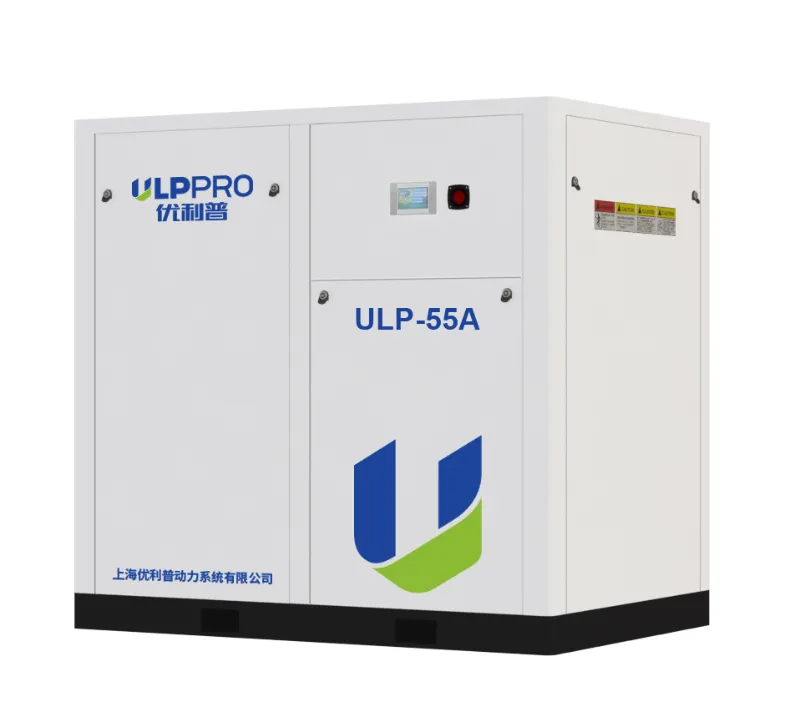
Step 1: Calculate Your Facility’s True Air Demand
Do not guess. Measure the actual air consumption of all tools, valves, and processes. Use a flow meter during peak production hours. List every pneumatic device and its duty cycle.
| Equipment Type | Average Flow (CFM) | Duty Cycle (%) | Weighted Flow (CFM) |
|---|---|---|---|
| Air Knife | 150 | 100 | 150 |
| Pneumatic Conveyor | 200 | 60 | 120 |
| Atomizing Nozzle | 80 | 80 | 64 |
| Total | 334 CFM |
Add a 15-20% safety margin for future expansion and leakage. In this example, target Low Pressure Screw Air Compressor capacity would be 384–400 CFM.
Step 2: Match Pressure Requirements, Not Just Flow
Low pressure typically means 1.5 to 5 bar (22–72 psi). A common mistake is buying a standard 7 bar compressor and regulating it down – this is energy-inefficient. Yuzhen designs dedicated Low Pressure Screw Air Compressor models that optimize rotor profiles for sub-5 bar operation, reducing power consumption by up to 25%.
Step 3: Consider Variable Frequency Drive (VFD)
If your demand fluctuates, a VFD-controlled Low Pressure Screw Air Compressor is essential. The table below compares fixed-speed vs. VFD.
| Feature | Fixed Speed | VFD (Variable Frequency Drive) |
|---|---|---|
| Energy efficiency at partial load | Poor | Excellent (30-50% savings) |
| Pressure stability | ±0.2 bar | ±0.05 bar |
| Starting current | High | Ramp-up, low |
| Best for | Constant load | Fluctuating load |
Low Pressure Screw Air Compressor FAQ
Q1: What happens if I oversize my Low Pressure Screw Air Compressor?
A: Oversizing leads to frequent load/unload cycles. The motor runs at full speed until reaching the cut-out pressure, then stops, then restarts when pressure drops. Each cycle creates thermal stress and wastes energy. For a Low Pressure Screw Air Compressor running at 30% load, a fixed-speed unit wastes over 40% of its input power. Worse, excessive idling causes oil carryover into the discharge line, contaminating downstream equipment. Always select a model that matches 60-100% of your average demand, or use a VFD unit.
Q2: Can I use a standard screw air compressor with a pressure regulator for low-pressure applications?
A: Technically yes, but economically no. Standard screw compressors are designed for 7-10 bar differential pressure. Throttling the discharge down to 3 bar forces the compressor to work against a high internal pressure ratio, then throw away the excess energy as heat. A true Low Pressure Screw Air Compressor from Yuzhen uses specially machined rotors with shorter helix angles and larger discharge ports, reducing internal compression work. Field tests show a dedicated low-pressure model consumes 0.085 kW per CFM, while a throttled standard unit consumes 0.125 kW per CFM – a 32% penalty.
Q3: How do I determine the right air receiver tank size for my Low Pressure Screw Air Compressor?
A: For low-pressure systems, a larger receiver is beneficial because low-pressure air is less dense and acts as a weaker buffer. The general rule: receiver volume (gallons) = 3 to 5 × compressor FAD (CFM). Example: a 400 CFM compressor needs a 1200-2000 gallon tank. Low-pressure applications like aeration or pneumatic conveying often have instantaneous high-flow events. A properly sized tank prevents the Low Pressure Screw Air Compressor from responding to every micro-dip, reducing start-stop cycles by 70%. Always install the receiver downstream of the aftercooler and before any filter bank.
Final Selection Checklist
-
Actual demand measured (not motor nameplate FAD)
-
Peak-to-average ratio calculated
-
Pressure band defined (minimum + 0.3 bar safety)
-
VFD specified if demand varies >20%
-
Air receiver volume confirmed
Contact Us
Choosing the right Low Pressure Screw Air Compressor directly impacts your electricity bill and production reliability. Yuzhen engineers are ready to review your air audit data and recommend a model that fits your exact pressure-flow profile. Contact us today for a no-obligation sizing proposal and energy savings estimate.