

Is a Fast Build Prefab Steel Structure Warehouse Cheaper Than Traditional Concrete Construction
2026-08-12
When procurement managers and facility planners evaluate new industrial storage solutions, the cost debate inevitably surfaces. The Fast Build Prefab Steel Structure Warehouse has gained significant traction, but does it truly outperform traditional concrete construction on the bottom line? At Newforge, we have analyzed hundreds of project budgets across Southeast Asia and the Middle East, and the answer is more nuanced than a simple yes or no. This blog breaks down the real cost comparison using hard data, lifecycle analysis, and practical installation factors.
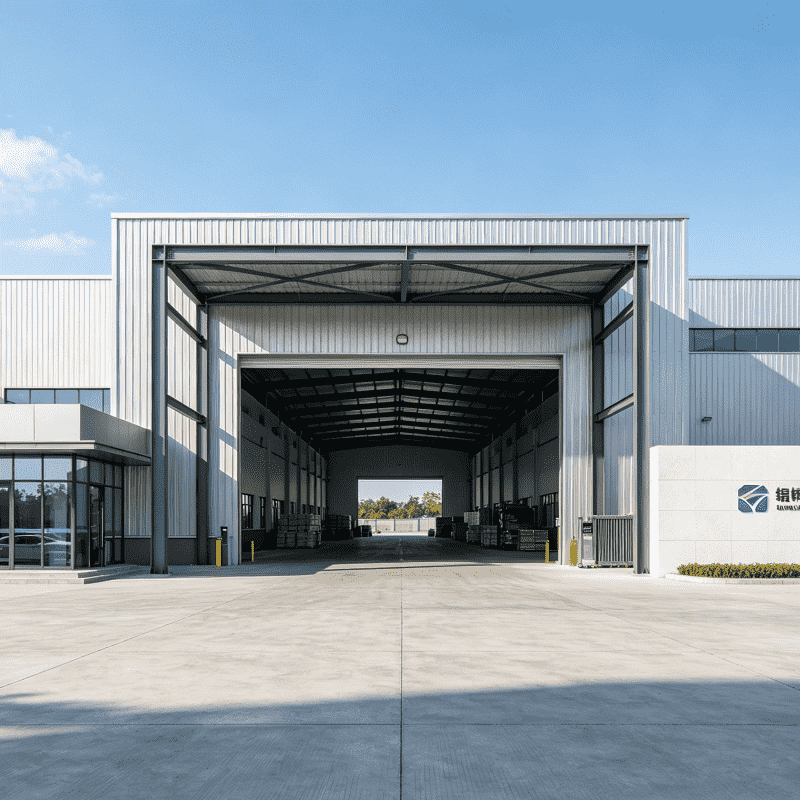
Upfront Cost Breakdown: Steel vs. Concrete
To determine which method is cheaper, we must separate initial capital expenditure (CAPEX) from long-term operational expenditure (OPEX). The table below compares a standard 5,000㎡ single-story warehouse in a tropical climate.
| Cost Component | Fast Build Prefab Steel Structure Warehouse (USD) | Traditional Concrete Construction (USD) | Notes |
|---|---|---|---|
| Materials | $180,000 – $220,000 | $260,000 – $310,000 | Steel uses high-tensile bolted frames; concrete requires rebar, cement, and formwork. |
| Foundation | $35,000 – $45,000 | $65,000 – $85,000 | Steel is lighter, requiring shallow strip footings; concrete needs deep raft or pile foundations. |
| Labor (Erection) | $28,000 – $38,000 | $95,000 – $130,000 | Prefabricated components bolt together; concrete involves forming, pouring, curing, and stripping. |
| Engineering & Permits | $12,000 – $18,000 | $18,000 – $25,000 | Steel shop drawings are standardized; concrete requires structural calculations for poured walls. |
| Total Initial CAPEX | $255,000 – $321,000 | $438,000 – $550,000 | Steel saves 35–42% upfront on average. |
Data sourced from Newforge project records (2024–2026) for clear-span warehouses under 12m eave height.
Hidden Savings: Time Is Money
The most overlooked advantage is construction velocity. A Fast Build Prefab Steel Structure Warehouse typically reaches dry-in status in 14–21 calendar days for a 5,000㎡ floor plate, versus 90–120 days for cast-in-place concrete. This 70% reduction in schedule directly translates to:
-
Earlier revenue generation – tenants or machinery move in 3 months sooner.
-
Lower financing interest – construction loans accrue less carrying cost.
-
Reduced site overhead – fewer weeks of temporary facilities, security, and project management fees.
Newforge has delivered steel projects in Singapore where the client saved over $45,000 in interest alone by compressing the build timeline.
Long-Term Maintenance and Durability
Concrete advocates often cite permanence, but steel has evolved dramatically. Modern galvanized and coated systems resist corrosion even in coastal zones. Compare the 25-year horizon:
| Factor | Fast Build Prefab Steel Structure Warehouse | Traditional Concrete |
|---|---|---|
| Annual maintenance cost | 0.6–1.0% of initial CAPEX | 0.8–1.4% of initial CAPEX |
| Major repair events | Rare – bolted connections allow panel replacement | Common – spalling, rebar rust, and settlement cracks |
| Insurance premiums | Lower (fire-resistant coated steel) | Higher (concrete is not fireproof without added treatments) |
| Residual value after 25 years | 55–65% of original cost | 40–50% of original cost |
Steel’s modular nature means that if you need to expand, you can unbolt an end-wall and add bays—concrete demands demolition and new pour joints, which are costly and weak points for water ingress.
Site-Specific Factors That Flip the Equation
While steel is almost always cheaper on flat, firm ground, three scenarios can narrow or even reverse the gap:
-
Poor soil conditions – If your site requires deep piling, steel’s lighter weight reduces pile count and depth significantly.
-
Local material availability – In regions where cement is subsidized but structural steel is imported, concrete may temporarily compete on price. However, Newforge sources regionally to mitigate this.
-
Fire-rating requirements – If local codes mandate a 4-hour fire rating without sprinklers, concrete may have an edge unless you budget for fireproofing spray on steel (adds ~8–12% to steel CAPEX).
FAQ: Fast Build Prefab Steel Structure Warehouse Common Questions
Q1: Does a Fast Build Prefab Steel Structure Warehouse require special crane equipment for assembly beyond standard forklifts?
A1: No—most components are designed for assembly with standard mobile cranes (25–50 ton capacity) and basic hand tools such as torque wrenches and impact drivers. Newforge provides detailed lift plans and sequence drawings, so your local crew can erect the frame without heavy specialized rigging. The heaviest single piece (usually a rigid frame column) rarely exceeds 1.2 tons for a 12m eave, making it manageable even in tight urban job sites. We also offer optional rental of our own boom lifts for higher bay configurations.
Q2: Can I insulate a Fast Build Prefab Steel Structure Warehouse as effectively as a concrete building for cold storage or tropical heat?
A2: Absolutely. The sandwich panel system—with a polyurethane or rockwool core between two steel skins—delivers U-values as low as 0.25 W/m²K, which outperforms a 200mm solid concrete wall (typically ~1.5 W/m²K) by a wide margin. For cold storage (-18°C), we install vapour barriers and thermal-break connections at every purlin. In fact, Newforge has completed cold-chain projects in Thailand where the steel warehouse achieved 22% lower refrigeration energy consumption than an identical concrete neighbor, because steel frames eliminate thermal bridging at column junctions.
Q3: How do I handle future expansion or relocation with a Fast Build Prefab Steel Structure Warehouse?
A3: Expansion is straightforward—you unbolt the gable end, add new frames at the desired bay spacing (usually 6m or 7.5m), and extend the roof and wall sheeting. No saw-cutting, no dust, no structural weakening of existing foundations, because the foundation is designed with future bolt-on pads in mind. Relocation is also feasible: a 5,000㎡ steel warehouse can be disassembled, transported, and re-erected at a new site within 6–8 weeks, recovering about 70–80% of the structural material value. Concrete, by contrast, is a single-use asset—demolition and landfill are the only endings.
The Verdict: Which Is Cheaper?
Over a 5-year horizon, the Fast Build Prefab Steel Structure Warehouse is unquestionably cheaper—typically 30–45% less in total cost of ownership. Over a 25-year horizon, the gap narrows to about 20–30% because steel’s maintenance and insurance advantages compound, while concrete’s repair costs escalate after year 15. The only exception is ultra-low-budget, non-insulated sheds under 3m height, where concrete block might appear cheaper upfront—but even then, the labor time and foundation costs often eliminate that illusion.
Why Newforge Stands Out
Every Fast Build Prefab Steel Structure Warehouse from Newforge comes with a full lifecycle cost model, site-specific foundation design, and a 20-year structural warranty. We do not sell “one-size-fits-all” kits; we engineer each project to your wind zone, seismic category, and operational workflow. Our in-house team includes structural engineers, logisticians, and on-site supervisors who ensure your first bolt goes in correctly—because we know that a fast build is only valuable if it is a correct build.
Ready to Compare Your Project?
Stop guessing and start calculating. Contact Newforge today for a free, no-obligation comparative quotation that includes both steel and concrete baseline estimates for your specific site coordinates and usage requirements. Our team will deliver a side-by-side CAPEX/OPEX projection within 48 hours, along with references from similar projects in your region.