

What Are the Advantages of Using Structural Hollow Sections Over Solid Steel Beams
2026-10-08
When engineers and fabricators evaluate load-bearing options for modern construction, Structural Hollow Sections often emerge as the preferred choice over traditional solid steel beams. At Energet Solar, we have supported countless projects where weight reduction, torsional rigidity, and architectural flexibility directly influence the final structural solution. Understanding why Structural Hollow Sections outperform solid equivalents helps designers make informed decisions that reduce cost without compromising safety.
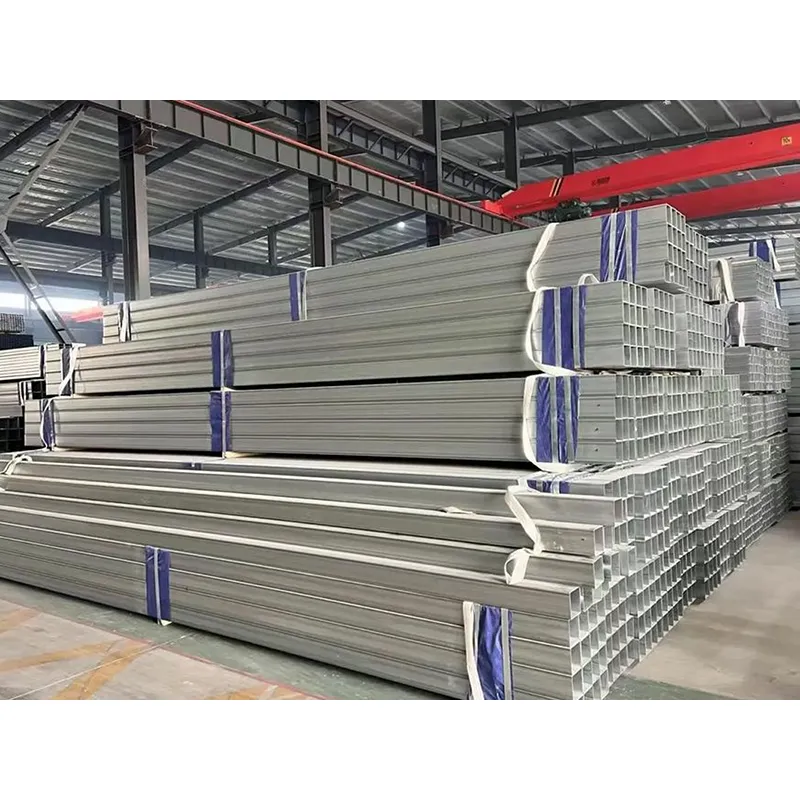
Key Advantages of Structural Hollow Sections
Structural Hollow Sections offer a closed profile that distributes material efficiently around the perimeter. This geometric advantage produces several measurable benefits:
-
Superior strength-to-weight ratio – Less steel is required to achieve comparable or higher load capacity.
-
High torsional resistance – The closed shape resists twisting far better than open sections such as I-beams.
-
Uniform stiffness in both axes – Ideal for columns and members subject to multi-directional forces.
-
Aesthetic appeal – Clean, smooth surfaces suit exposed architectural applications.
-
Reduced surface area – Lower painting and coating costs compared to open profiles.
-
Ease of fabrication – Uniform sections simplify connections, cutting, and welding.
Comparison: Structural Hollow Sections vs. Solid Steel Beams
| Criteria | Structural Hollow Sections | Solid Steel Beams |
|---|---|---|
| Weight for equivalent load | Lower | Higher |
| Torsional rigidity | Excellent | Moderate to low |
| Surface area for coating | Smaller | Larger |
| Aesthetic finish | Clean and uniform | Requires additional treatment |
| Connection complexity | Moderate | Often higher |
| Material efficiency | High | Lower |
| Fire protection cost | Generally lower | Generally higher |
Where Structural Hollow Sections Excel
Structural Hollow Sections are widely used in columns, trusses, bracing systems, and long-span roofs. Their closed form also performs well in dynamic and seismic applications because the section resists buckling in multiple directions. For projects requiring exposed steel, the smooth profile of Structural Hollow Sections eliminates the need for costly cladding or decorative covering.
Frequently Asked Questions About Structural Hollow Sections
Q: What is the difference between a Structural Hollow Section and a solid steel beam?
A: A Structural Hollow Section is a closed, tubular profile with a hollow core, while a solid steel beam is a dense, open or solid section. The hollow design places material where it contributes most to stiffness and strength, delivering comparable performance at a lower weight.
Q: Are Structural Hollow Sections suitable for heavy-load applications?
A: Yes. Structural Hollow Sections can carry heavy axial and bending loads when sized and graded correctly. Their closed shape provides excellent buckling resistance, making them suitable for columns, bridge elements, and industrial frames.
Q: How do Structural Hollow Sections perform in corrosive environments?
A: Structural Hollow Sections perform well when properly protected. Their reduced surface area lowers coating demand, and closed profiles can be sealed to limit internal corrosion. With appropriate galvanizing or painting, they deliver long service life in harsh conditions.
Conclusion
Choosing Structural Hollow Sections over solid steel beams reduces weight, improves torsional performance, and lowers long-term maintenance costs. At Energet Solar, we help clients select and specify the right Structural Hollow Sections for each application. Contact us today to discuss your project requirements and receive expert guidance on optimizing your structural design.