

What Are The Key Design Factors For An Efficient Cyclone Dust Collector
2026-01-09
When designing an industrial dust collection system, efficiency is paramount. An efficient Cyclone Dust Collector relies on a delicate balance of engineering principles to separate particulate matter from the air stream effectively. As a leader in air pollution control technology, Botou Xintian understands that overlooking key design factors can lead to significant performance drops, higher operational costs, and compliance issues. This blog delves into the core engineering elements that determine the effectiveness of these vital systems.
Several interdependent factors dictate the performance of a Cyclone Dust Collector. Getting these elements right is the difference between mediocre and exceptional dust separation.
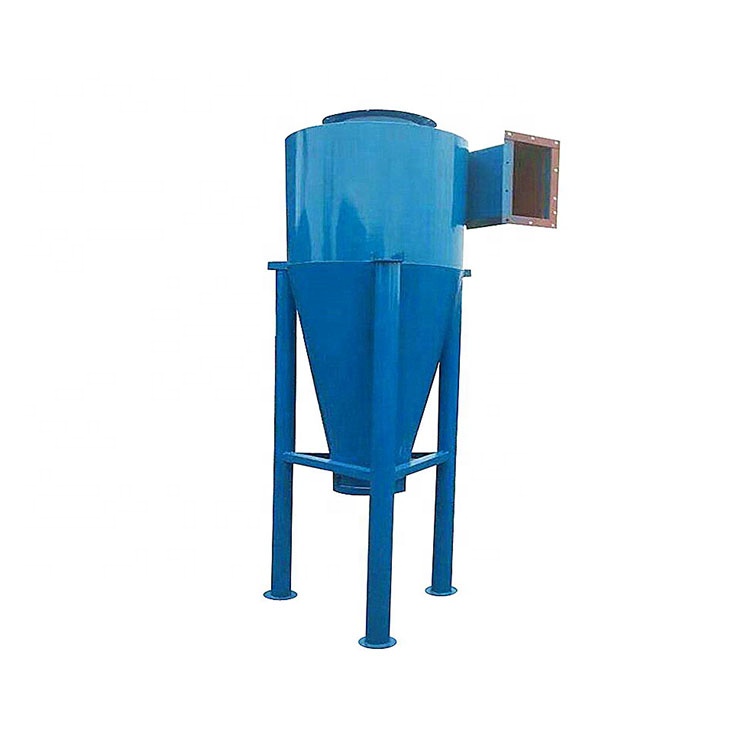
Key Design Factors to Consider:
-
Inlet Velocity: The speed at which dusty air enters the cyclone. Optimal velocity creates the necessary centrifugal force without causing re-entrainment of dust or excessive pressure drop.
-
Cyclone Diameter: A smaller diameter generally increases centrifugal force and collection efficiency for finer particles but may limit airflow capacity.
-
Body Length and Cone Design: Sufficient length allows for more particle settling time. The cone's angle and length are critical for guiding collected dust to the hopper without clogging.
-
Outlet Tube (Vortex Finder) Dimensions: The diameter and insertion depth of this tube are crucial for preventing short-circuiting of clean air and ensuring a stable vortex.
The relationship between some of these factors is often summarized by the concept of "Cyclone Design Ratios." While Botou Xintian engineers perform precise calculations for each application, the table below illustrates typical proportional relationships for a high-efficiency design.
| Design Component | Typical Ratio (Relative to Cyclone Body Diameter D) | Impact on Performance |
|---|---|---|
| Inlet Width | 0.2 - 0.25 D | Affects inlet velocity and capacity. |
| Inlet Height | 0.4 - 0.5 D | Influences particle entry trajectory. |
| Vortex Finder Diameter | 0.4 - 0.5 D | Critical for separating the clean air stream from the dust spiral. |
| Overall Body Length | 1.5 - 2.0 D | Provides residence time for particle separation. |
Cyclone Dust Collector FAQ
What is the typical collection efficiency range of a standard single cyclone?
A well-designed single Cyclone Dust Collector is highly efficient for larger, coarse particles (above 20 microns), often reaching 90-99%. However, for fine particles (below 10 microns), efficiency decreases significantly, which is why they are frequently used as pre-cleaners before filters.
Can a cyclone handle high-temperature dust-laden air?
Yes, one of the significant advantages of a Cyclone Dust Collector is its ability to handle high-temperature streams, as it contains no internal filters that can melt or degrade. Botou Xintian designs units with appropriate material selections to withstand temperatures that would damage other collector types.
How important is the airlock on the dust discharge outlet?
It is absolutely critical. An effective rotary airlock or double-dump valve is essential to maintain the air seal. Without it, ambient air can be sucked up through the discharge, disrupting the internal vortex and drastically reducing the efficiency of your Cyclone Dust Collector by re-entraining collected dust.
Achieving peak efficiency requires more than just an off-the-shelf design. It demands a precise analysis of your dust particle size distribution, airflow volume, temperature, and desired outcome. This is where decades of application expertise from Botou Xintian become invaluable. Our engineers specialize in optimizing these key design factors to build a system that delivers reliable, cost-effective, and compliant performance for your specific operation.
Contact us today for a free consultation. Let Botou Xintian's experts analyze your needs and design an efficient Cyclone Dust Collector solution that maximizes your return on investment and keeps your workspace clean and safe.