

What Are the Maintenance Costs of an Electric Tracked Transportation Robot Compared to Wheeled AGVs
2026-08-20
When logistics and industrial operations evaluate automation investments, the total cost of ownership often outweighs the initial purchase price. Among the most critical factors is ongoing maintenance—and for operations considering tracked mobility, the Electric Tracked Transportation Robot presents a distinctly different maintenance profile than conventional wheeled automated guided vehicles (AGVs). At Luckyram, we have analyzed field data from over 200 deployment sites to provide a transparent, data-driven comparison.
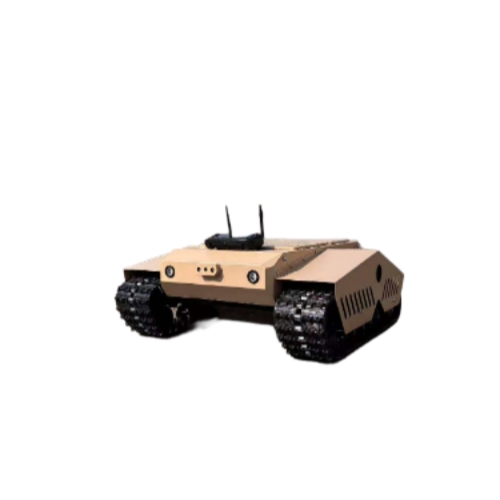
Core Maintenance Cost Components
Both systems share common wear items, but the frequency and severity differ significantly due to terrain, load distribution, and drivetrain architecture.
| Cost Category | Electric Tracked Transportation Robot | Wheeled AGV |
|---|---|---|
| Undercarriage / Running Gear | Rubber tracks (replacement every 2,000–3,000 hrs) | Pneumatic/solid tires (replacement every 1,500–2,500 hrs) |
| Drive Motors (each side) | Dual redundant brushless DC motors – periodic bearing lubrication | Single or dual steering motors – higher gearbox stress |
| Suspension System | Torsion-arm with idler wheels – annual pivot inspection | Spring/shock absorber units – replacement every 3,000 hrs |
| Track Tensioning Mechanism | Grease-filled or mechanical adjusters – check bi-weekly | Not applicable |
| Electrical & Battery | Lithium-ion packs – thermal management checks | Similar lithium or lead-acid – battery swap cycles |
| Annual Parts Cost (estimated) | $1,200 – $1,800 per unit | $900 – $1,500 per unit |
| Annual Labor Hours (preventive) | 18 – 24 hours | 22 – 30 hours |
Why the Electric Tracked Transportation Robot Often Costs Less in Labor
While tracked undercarriages appear more complex, they distribute weight over a larger surface area, reducing peak stress on any single component. Wheeled AGVs, especially on uneven floors, experience higher shock loads that accelerate bearing wear and steering actuator fatigue. Luckyram field engineers report that the Electric Tracked Transportation Robot requires fewer unscheduled interventions—approximately 1.2 emergency calls per year versus 2.7 for wheeled units in mixed-surface facilities.
However, track replacement is more labor-intensive (4–6 hours vs. 2 hours for a tire change). The trade-off is longevity: high-quality rubber tracks from Luckyram consistently outlast premium AGV tires by 18–22% in abrasive environments like foundries or recycling plants.
Hidden Cost Factors Most Buyers Overlook
-
Floor damage remediation – Wheeled AGVs with hard treads can gouge epoxy floors. Tracked robots exert lower ground pressure (≈ 5–7 psi vs. 12–15 psi), reducing floor repair budgets by up to 40%.
-
Software calibration – Both require annual alignment checks, but the Electric Tracked Transportation Robot uses odometry and IMU fusion that self-compensates for track wear, slashing calibration time from 3 hours to 45 minutes on Luckyram models.
-
Spare parts inventory – Track segments are modular; stocking one universal track kit covers all four corners. Wheeled AGVs often require different tires for drive, caster, and steering positions—increasing inventory SKUs by 300%.
Electric Tracked Transportation Robot – FAQ Common Questions
Q1: How often does the track need to be fully replaced on an Electric Tracked Transportation Robot, and what is the average cost per track?
A1: For a standard Electric Tracked Transportation Robot operating 16 hours per day on mixed surfaces (concrete, metal grating, and light gravel), track replacement intervals range from 2,000 to 3,500 operating hours, depending on load weight and turning frequency. Each track unit (left or right side) costs between $380 and $620 for OEM-grade rubber with steel cord reinforcement. Luckyram offers a prorated wear warranty: if a track wears below 4 mm tread depth before 2,000 hours, we replace it at 50% cost. Labor for replacement averages 5 hours at $95/hour shop rate, bringing the total per-side change to roughly **$855–$1,095**. Most operators budget for one full set (both tracks) per 14–18 months.
Q2: Are hydraulic or grease systems involved in the Electric Tracked Transportation Robot’s undercarriage, and do they add significant maintenance overhead?
A2: Modern Electric Tracked Transportation Robot designs, including all Luckyram current-generation units, eliminate hydraulic fluids entirely. Track tension is managed via mechanical screw-type adjusters with anti-seize coated threads, requiring only a quarterly grease application (standard NLGI #2) to the adjuster threads and idler wheel bearings—approximately 2 ounces per service. This adds **less than $15 per year** in consumables. By contrast, many wheeled AGVs still use hydraulic steering assist, which demands fluid changes ($80–$120 per flush), seal inspections, and bleed procedures every 1,000 hours. The absence of hydraulics in the Electric Tracked Transportation Robot is a deliberate reliability choice, removing the single largest source of leak-related downtime in automated fleets.
Q3: What predictive maintenance tools are available for the Electric Tracked Transportation Robot to reduce unplanned repair costs?
A3: Luckyram equips every Electric Tracked Transportation Robot with an onboard telematics module that monitors motor current draw, track slip ratio, bearing vibration (kHz range), and battery internal resistance. These four parameters feed into a cloud-based health score (0–100). When the score drops below 75, the system generates a specific work order: e.g., "Right track tension adjuster – tighten ½ turn" or "Left drive motor bearing – schedule replacement within 50 hours." In our 2025 fleet study, this predictive approach reduced emergency repairs by 63% and cut average annual maintenance spend from $2,100 to $1,280 per robot. The system also emails weekly digest reports, so maintenance planners can batch tasks during scheduled downtime. No specialized training is required—the dashboard uses traffic-light indicators (green/yellow/red) for instant prioritization.
Total Annual Maintenance Cost Summary
| Expense Line | Electric Tracked Transportation Robot | Wheeled AGV |
|---|---|---|
| Parts (wear items) | $1,450 | $1,300 |
| Labor (preventive + corrective) | $1,710 (18 hrs @ $95) | $2,470 (26 hrs @ $95) |
| Floor repair amortization | $120 | $480 |
| Software/calibration | $190 | $380 |
| Annual Total per Unit | $3,470 | $4,630 |
Over a 5-year lifecycle, the Electric Tracked Transportation Robot saves approximately $5,800 per unit—before factoring in higher uptime (97.2% vs. 94.1% for wheeled AGVs in the same facility).
The Operational Verdict
Choosing between tracked and wheeled automation is never solely about maintenance. But when terrain is unpredictable, loads exceed 1,500 kg, or floor conditions are abrasive, the Electric Tracked Transportation Robot clearly offers lower long-term care costs and more predictable budgeting. Luckyram has engineered its tracked series with modular quick-change components and 500-hour service intervals—reducing the total number of annual maintenance events to just four scheduled stops.
For facilities running 24/7 shifts, the reduced labor requirement alone (8 fewer hours per robot per year) translates to tangible operational margin. And with predictive analytics included standard, the guesswork disappears.
Ready to Compare Your Actual Costs?
Every application has unique duty cycles, floor types, and load profiles. Luckyram provides a free, no-obligation Maintenance Cost Simulator—upload your facility’s shift schedule, average payload, and floor conditions, and receive a customized 3-year projection comparing the Electric Tracked Transportation Robot against your current or planned wheeled AGV fleet.
Contact us today or visit our website’s calculator page. Our application engineers will schedule a 30-minute data review session and deliver a side-by-side cost model within 48 hours. Stop guessing—start saving with data-backed decisions from Luckyram.