

What are the most common safety features required for a single girder gantry crane in industrial settings
2026-05-26
When operating a single girder gantry crane in demanding industrial environments, safety is the top priority. A well-designed single girder gantry crane integrates multiple protective systems to prevent accidents, protect personnel, and extend equipment lifespan. At FYL, we engineer every crane with industry‑proven safety mechanisms that meet global standards. Below are the most common safety features required for reliable daily operation.
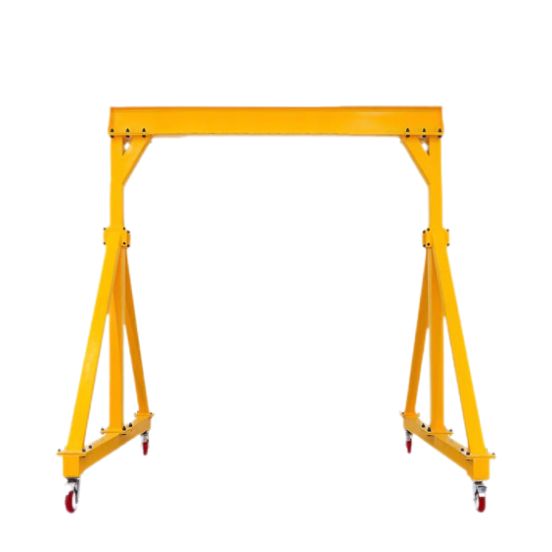
Essential Safety Features for a Single Girder Gantry Crane
| Safety Feature | Function | Typical Application |
|---|---|---|
| Load Limiter | Prevents overload by cutting power when lifting capacity is exceeded | All lifting operations |
| Emergency Stop System | Instantly halts all crane movements via multiple buttons or pull cords | Operator panel and remote control |
| Limit Switches (Hoist & Travel) | Automatically stops hook or trolley at preset endpoints | Hoist upper/lower limits; end‑carriage travel |
| Anti‑collision Device | Avoids impact with other cranes or obstacles in multi‑crane zones | Overhead common runway areas |
| Bumper & Rail Stop | Absorbs kinetic energy and physically stops the crane at rail ends | Both ends of the gantry runway |
| Wind Speed Anemometer | Triggers alarm and parking brake when wind exceeds safe level | Outdoor or semi‑outdoor installations |
| Audible & Visual Alarms | Warns nearby workers before and during movement | Travel motion, hoisting, and power‑on |
| Emergency Lowering Valve | Allows controlled descent of load if power or hydraulic pressure fails | Hoist motor or hydraulic system |
In addition to hardware, FYL recommends regular inspection of wire ropes, brakes, and electrical insulation. Every single girder gantry crane from FYL comes with a detailed safety checklist tailored to your site conditions.
Single Girder Gantry Crane FAQ
What happens if the load limiter fails during operation?
If the load limiter fails, the crane’s hoist motor will not receive the signal to stop at excessive weight. This can lead to structural deformation, motor burnout, or sudden load drop. FYL designs redundant circuits and provides a mechanical overload clutch as a backup. Daily pre‑operation tests with a test weight (e.g., 110% of rated load) help verify limiter function. Any failure requires immediate lockout/tagout and professional recalibration.
How often should the emergency stop system be tested on a single girder gantry crane
Emergency stop systems should be tested at the start of every shift. The operator must press each emergency stop button (pendant, remote, and main control box) and verify that all motions stop within one second. FYL recommends logging test results in a daily safety log. If any button fails to cut power, the crane must be taken out of service. Electrical contacts in emergency stop circuits should be inspected monthly for corrosion or wear.
Can a single girder gantry crane operate outdoors without an anemometer
No. For any outdoor single girder gantry crane, an anemometer is a mandatory safety feature according to most industrial standards (e.g., OSHA, ASME B30.17). Wind gusts can cause load sway, gantry drift, or tip‑over. The anemometer must be mounted at the highest point of the crane and set to alarm at wind speeds typically above 20 mph (adjustable per local code). FYL integrates wireless anemometers with real‑time wind display on the operator’s remote.
Why Compliance Matters
Missing or bypassed safety features turn a single girder gantry crane into a major hazard. FYL has helped over 500 factories reduce crane‑related incidents by 60% through mandatory installation of the features listed above. Every feature must be clearly labeled, regularly inspected, and never disabled.
Contact us today for a free safety audit of your existing single girder gantry crane or to request a customized quote from FYL. Our engineers will help you select the right safety package based on your load capacity, span, and workplace conditions. Reach out via our website or call your local FYL representative.