

What Are the Safety Guidelines for Operating a Manual Hydraulic Stacker
2025-12-24
Operating a manual Hydraulic Stacker is a fundamental task in many warehouses and workshops. While simple in design, following strict safety protocols is crucial to prevent accidents, ensure operator well-being, and protect your inventory. At BaiYi, we prioritize safety as much as performance. This guide outlines essential safety guidelines to ensure you get the most out of your equipment safely and efficiently.
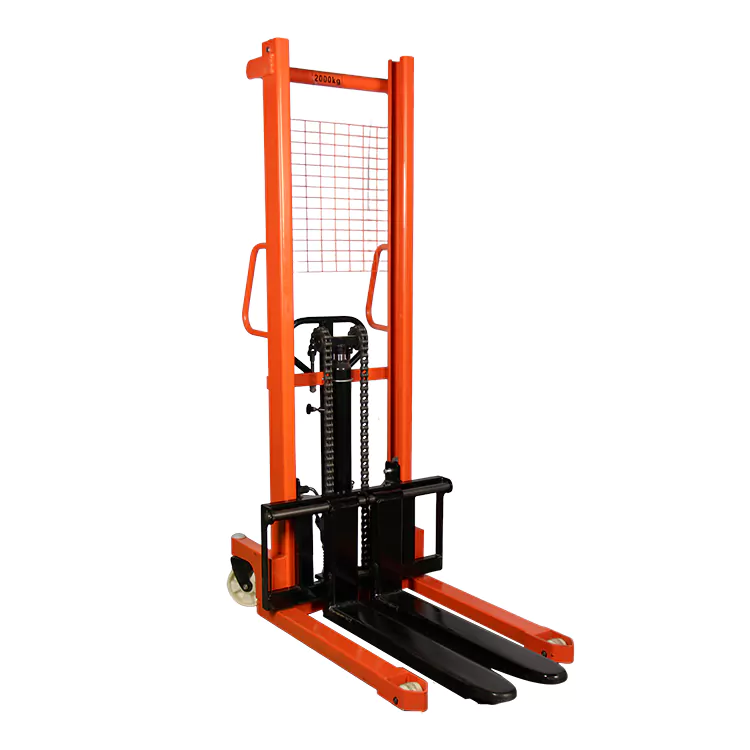
Pre-Operational Safety Checklist (The 5-Point Inspection)
Before every use, conduct a quick visual and functional inspection. This takes less than a minute but is your first line of defense.
-
Forks: Check for cracks, bends, or excessive wear.
-
Hydraulic System: Look for leaks, and ensure the release valve controls smoothly.
-
Wheels & Casters: Ensure they rotate freely and are not damaged.
-
Load Capacity Plate: Verify it is legible. Never exceed the rated capacity.
-
Floor Path: Clear the intended route of obstacles, spills, or debris.
Core Safety Guidelines for Operation
-
Center and Secure the Load: Always place the pallet or load centrally on the forks. An unbalanced load can tip over.
-
Lift to a Safe Travel Height: Only raise the load enough to clear the floor (typically 2-5 cm). Do not travel with the load at maximum height.
-
Maintain Clear Visibility: Push the Hydraulic Stacker; do not pull it. Keep the load in front of you for a clear line of sight.
-
Use Proper Body Mechanics: Keep your back straight, use leg strength to start moving, and avoid sudden stops or sharp turns.
-
On Inclines: Always keep the load on the upside of the incline. Go straight up or down, never across a slope.
Common Hazards and How to Avoid Them
| Hazard | Risk | Prevention Action |
|---|---|---|
| Overloading | Structural failure, tipping | Always check and adhere to the capacity plate. |
| Unbalanced Load | Sudden tip-over, loss of control | Center the load and ensure it is stable before lifting. |
| Obstructed Path | Collision, trip hazard | Plan your route and keep aisles clear. |
| Faulty Equipment | Unexpected collapse, injury | Perform pre-use inspection; tag and remove faulty equipment. |
Hydraulic Stacker FAQ
Q: Can I stand on the forks of a manual Hydraulic Stacker to reach a high shelf?
A: Absolutely not. Manual Hydraulic Stackers are designed for lifting loads only, not personnel. They lack the safety features required for man-up operation. For elevated work, use a proper work platform or scissor lift.
Q: How often should I perform maintenance on my manual stacker?
A: Besides the daily pre-use check, a formal inspection and basic maintenance (like checking hydraulic oil levels and lubricating moving parts) should be performed monthly under normal use. For heavy-duty applications, increase the frequency. Refer to the BaiYi user manual for a detailed schedule.
Q: What should I do if the hydraulic unit fails to lift or holds pressure poorly?
A: First, ensure the release valve is fully closed. If the problem persists, it may indicate low hydraulic oil, air in the system, or a worn seal. Do not attempt to disassemble the hydraulic cylinder yourself. Tag the equipment as "Out of Service" and contact a qualified technician or BaiYi support for professional service.
Safety is not an option—it’s the foundation of efficient and productive material handling. A well-maintained BaiYi Hydraulic Stacker, operated within these guidelines, is an invaluable and safe asset for your team.
Is your current equipment due for a safety inspection or are you looking to upgrade to reliable, safety-focused material handling solutions? Contact us today to explore the durable and ergonomic range of BaiYi manual Hydraulic Stackers. Our experts are ready to help you choose the perfect model for your needs.