

What factors influence the optimal lifting speed in an automatic lifting central drive thickener
2026-06-02
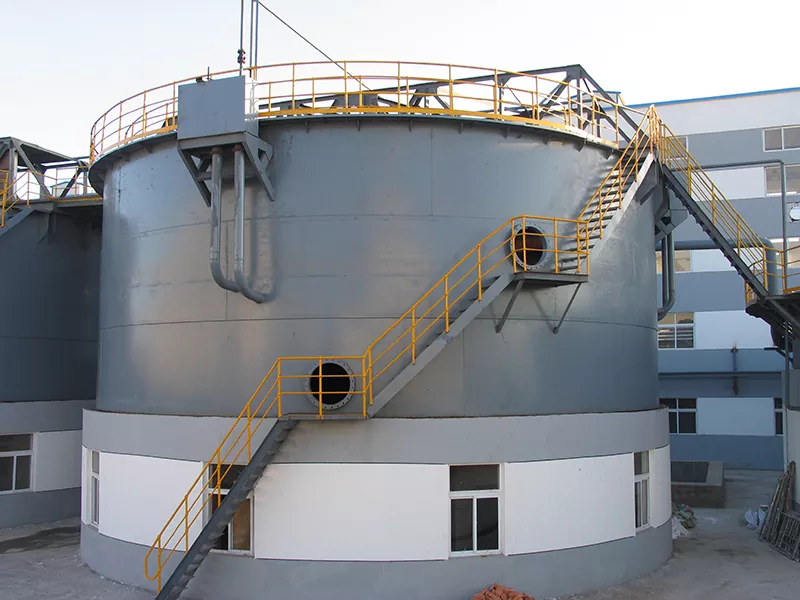
In mineral processing and tailings management, the Automatic Lifting Central Drive Thickener from EPIC represents a significant advancement in solid-liquid separation. One of the most critical operational parameters is the optimal lifting speed of the rake mechanism. Selecting the wrong speed can lead to rake damage, poor underflow density, or excessive torque. This article examines the key factors that determine the correct lifting speed, ensuring efficiency and longevity.
Key influencing factors
The optimal lifting speed depends on several interrelated variables. The table below summarizes the primary factors and their effects.
| Factor | Effect on Optimal Lifting Speed | Typical Adjustment Direction |
|---|---|---|
| Feed solids concentration | Higher concentration increases bed compression | Reduce lifting speed to maintain rake penetration |
| Particle size distribution | Fine particles settle slowly and form fluid beds | Increase speed to prevent rake burial |
| Underflow density target | Higher density requires deeper rake engagement | Decrease speed to allow consolidation |
| Rake torque reading | Rising torque indicates bed overload | Increase speed temporarily to relieve torque |
| Flocculant dosage | Poor flocculation leads to scattered settling | Adjust speed based on bed level feedback |
Beyond these, operational consistency matters. When the Automatic Lifting Central Drive Thickener processes variable feed streams, real-time torque and bed pressure sensors guide speed adjustments. A speed that is too fast lifts the rake unnecessarily, reducing underflow density. A speed too slow risks mechanical overload.
Practical recommendations
-
For high-density tailings (above 55% solids by weight), maintain lifting speeds below 0.2 m/min.
-
For clarifier applications with dilute feed, speeds up to 0.5 m/min are acceptable.
-
Always correlate speed changes with rake torque trends over 15‑minute intervals.
Frequently Asked Questions
What happens if the lifting speed is set too high in an Automatic Lifting Central Drive Thickener
A high lifting speed causes the rake to rise prematurely, losing contact with the settled bed. This prevents proper raking of underflow solids, leading to uneven discharge, channeling, and a sharp drop in underflow density. Over time, solids accumulate unevenly, which can trigger false torque alarms and reduce the effective thickening area. EPIC recommends starting at 0.15 m/min and adjusting upward only when torque remains below 40% of maximum for one hour.
How does feed variability affect the optimal lifting speed in an Automatic Lifting Central Drive Thickener
Feed variability is the most common cause of speed adjustments. When feed solids concentration suddenly increases, the bed compresses faster, and torque rises. The optimal response is to temporarily increase lifting speed by 20‑30% to relieve rake pressure, then gradually reduce speed as the bed stabilizes. Conversely, a drop in feed solids requires a lower lifting speed to maintain bed contact. EPIC units incorporate automated torque feedback loops that perform this adjustment without manual intervention.
Can the optimal lifting speed be calculated or does it require trial and error
A baseline calculation is possible using settling rate tests and rake arm geometry. The formula is: initial speed (m/min) = (rake lift travel / desired lifting time). However, the true optimal speed must be validated under actual slurry conditions. EPIC recommends performing a 24‑hour ramp test: start at 0.1 m/min and increase speed by 0.02 m/min every two hours while monitoring torque and underflow density. The optimal speed is the highest value that keeps torque below 55% and density variation under ±3%.
Conclusion and contact
Selecting the right lifting speed for your Automatic Lifting Central Drive Thickener directly impacts throughput, safety, and operating costs. Every slurry type and plant layout presents unique challenges.
Contact EPIC today for a customized lifting speed analysis based on your feed characteristics and process targets. Our engineering team provides onsite torque profiling and remote optimization support to maximize your thickener performance.