

What Is the Average Battery Life of a Full Electric Standing Type Forklift per Charge
2026-06-22
For warehouse managers and logistics professionals, the single most critical performance metric for electric material handling equipment is battery runtime. When evaluating a Full Electric Standing Type Forklift, the average operational time per charge directly impacts productivity, shift scheduling, and total cost of ownership. While industry averages range from 6 to 9 hours of continuous use under standard conditions, this figure is not fixed. It fluctuates based on battery chemistry, application intensity, and maintenance habits. At HUGO, we engineer our Full Electric Standing Type Forklift models to deliver consistent, reliable performance across diverse workloads, but understanding the variables behind that number is essential for making an informed purchasing decision.
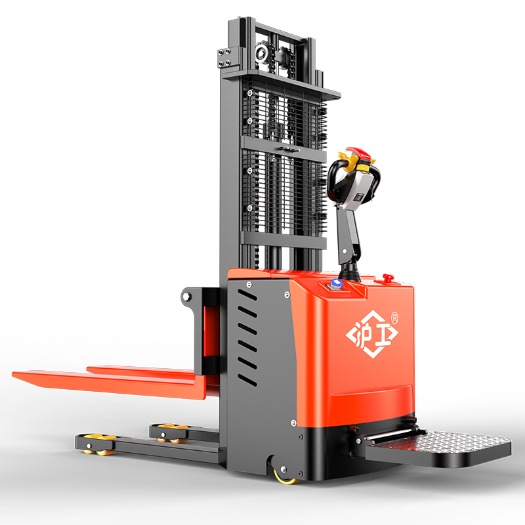
The Baseline: What Does "Average" Really Mean?
The term "average" can be misleading without context. For most lead-acid battery-powered Full Electric Standing Type Forklift units, the standard runtime falls between 6 and 8 hours on a full charge. However, lithium-ion variants, such as those offered in the HUGO E-series, frequently achieve 8 to 10 hours of active operation. This discrepancy arises from lithium-ion's higher energy density and more efficient discharge curve. Unlike lead-acid batteries, which experience a voltage drop that slows the forklift as the charge depletes, a HUGO Full Electric Standing Type Forklift with lithium-ion power maintains consistent lifting and traveling speeds until the final 5–10% of battery capacity.
Key Factors That Influence Runtime Per Charge
Battery life is not a fixed spec; it is a dynamic outcome of several operational variables. Below is a breakdown of the most influential factors:
-
Battery Type & Chemistry – Lead-acid (6–8 hrs) vs. Lithium-ion (8–10 hrs). Lithium also allows opportunity charging during breaks.
-
Lifting Frequency – High-intensity stacking with heavy loads (over 80% capacity) drains the battery 25–30% faster than light-duty flatbed transport.
-
Travel Distance per Shift – Longer travel paths increase motor draw. A Full Electric Standing Type Forklift used in a sprawling 500,000 sq. ft. warehouse will have shorter runtime than one in a compact facility.
-
Aisle Width & Turning – Frequent tight turns and reversing consume more regenerative braking energy, which can slightly extend runtime on HUGO models equipped with smart energy recovery.
-
Ambient Temperature – Cold storage (below 32°F) can reduce lead-acid capacity by up to 20%. Lithium-ion performs better in cold, losing only 5–10%.
-
Operator Habits – Aggressive acceleration and hard braking waste energy. Smooth operation can add 45–60 minutes per charge.
Comparative Runtime Data by Battery Type
To provide a clear, data-driven perspective, the following table compares average runtimes for a Full Electric Standing Type Forklift under three standard duty cycles, using both lead-acid and lithium-ion configurations. HUGO recommends lithium-ion for multi-shift operations.
| Duty Cycle | Load Factor | Avg. Speed | Lead-Acid Runtime (hrs) | HUGO Li-Ion Runtime (hrs) |
|---|---|---|---|---|
| Light Duty (inspection, staging) | < 30% | 4.5 mph | 8.0 | 10.5 |
| Moderate Duty (order picking, put-away) | 50–70% | 6.0 mph | 7.0 | 9.0 |
| Heavy Duty (pallet stacking, ramp work) | > 80% | 6.5 mph | 5.5 | 8.0 |
Note: All figures are based on standard 80V/630Ah lead-acid and 80V/460Ah lithium-ion packs. Actual results may vary with terrain and attachment usage.
Extending Battery Life Per Charge: Best Practices
Maximizing the runtime of your Full Electric Standing Type Forklift does not require expensive upgrades—it demands disciplined operational protocols. HUGO provides integrated battery management systems (BMS) that offer real-time discharge analytics, but operators should also adopt these habits:
-
Implement Opportunity Charging – For lithium-ion batteries, charge during lunch and shift-change breaks without waiting for a full discharge. This adds 1.5–2 hours of cumulative runtime.
-
Reduce Hydraulic Idle Time – Avoid leaving the forks raised when parked. Hydraulic pumps draw 15–20A even at zero lift, consuming valuable capacity.
-
Monitor Tire Pressure – Under-inflated cushion tires increase rolling resistance, forcing the motor to work harder and reducing range by up to 12%.
-
Use Regenerative Braking – On HUGO models, enable the maximum regenerative setting to recover 10–15% of energy during deceleration and lowering operations.
-
Schedule Equalization Charges – For lead-acid batteries, perform equalization every 5–10 cycles to balance cell voltages and prevent premature capacity loss.
Frequently Asked Questions About Full Electric Standing Type Forklift Battery Life
Q: How many shifts can a Full Electric Standing Type Forklift run on a single charge in a typical 24/7 operation?
A: With a standard lead-acid battery, you will get approximately one full 8-hour shift per charge. For continuous 24/7 operations, you would need two spare batteries per truck to allow for cooling and swapping. However, a HUGO Full Electric Standing Type Forklift with a lithium-ion battery can handle two partial shifts (e.g., 8 hours + 4 hours) with opportunity charging during breaks, because lithium-ion does not require a full cooldown before recharging. For three full 8-hour shifts, we recommend either a battery change-out system or investing in high-capacity 80V/600Ah+ lithium packs, which HUGO can custom-configure for your application.
Q: Does the battery life per charge decrease significantly over time, and how often should I replace the battery?
A: Yes, all batteries experience capacity degradation. Lead-acid batteries typically lose 20–25% of their original runtime after 1,200–1,500 cycles (about 3–4 years of single-shift use). Lithium-ion batteries, like those used in HUGO forklifts, retain 80% of initial capacity after 2,500–3,000 cycles (roughly 6–8 years). You should consider replacement when your Full Electric Standing Type Forklift runs under 5 hours per charge under light-duty conditions, as this signals end-of-life. HUGO recommends performing a quarterly capacity test using our onboard diagnostic port to track degradation trends and plan replacements proactively, avoiding unplanned downtime.
Q: Can I use a fast charger to reduce downtime, and does it affect the average runtime per charge?
A: Fast charging (typically 100–150A) can recharge a depleted battery to 80% in 2–3 hours, which is highly effective for multi-shift operations. However, frequent fast-charging of lead-acid batteries can raise internal temperatures, accelerating plate corrosion and reducing overall runtime per charge by 5–8% over a year. For lithium-ion batteries, fast charging is perfectly safe and does not degrade the average runtime per charge, as long as the battery management system (BMS) regulates temperature. HUGO offers an adaptive fast-charging station that automatically adjusts amperage based on battery state-of-charge and temperature, ensuring that your Full Electric Standing Type Forklift achieves the maximum possible runtime without compromising battery health. We advise using fast charging only during breaks, not as a primary daily charging method for lead-acid types.
Final Verdict: Know Your Duty, Choose Your Battery
The average battery life of a Full Electric Standing Type Forklift per charge is not a one-size-fits-all number. For light to moderate single-shift operations, a lead-acid battery delivering 7 hours may suffice. For demanding, multi-shift environments, the HUGO lithium-ion solution consistently outperforms with 9+ hours of reliable power, faster recharge times, and lower long-term maintenance costs. The key is to match the battery type to your specific lift height, load weight, and daily travel distance. HUGO provides a free on-site operational audit to calculate your exact energy requirements and recommend the optimal battery configuration for your fleet.
Ready to maximize your uptime and eliminate battery anxiety? Contact our HUGO technical sales team today for a personalized runtime simulation and a no-obligation demo of our latest Full Electric Standing Type Forklift series. We will help you select the right power solution that keeps your warehouse moving efficiently—shift after shift. Reach out via our website live chat or call our support hotline to speak directly with a material handling specialist. Your productivity is our priority.