

A reliable heat transfer system is essential for industries that depend on stable temperature control, energy efficiency, and continuous operation. A Brazed Plate Heat Exchanger has become a popular choice for HVAC systems, refrigeration equipment, industrial processes, and renewable energy applications because of its compact structure, excellent thermal performance, and long service life.
Many engineers and equipment buyers face challenges such as limited installation space, increasing energy costs, complicated maintenance requirements, and the need for reliable heat exchange performance. Understanding how a Brazed Plate Heat Exchanger works and how to select the right model can help companies improve system efficiency while reducing operational risks.
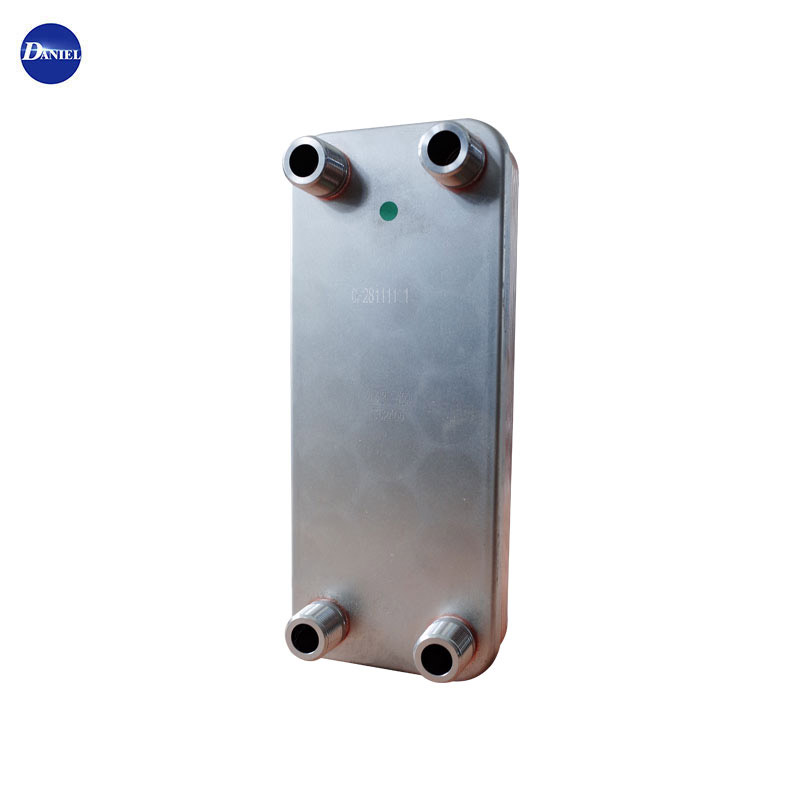
1. Understanding a Brazed Plate Heat Exchanger
A Brazed Plate Heat Exchanger is a compact heat transfer device made by stacking multiple stainless steel plates and permanently bonding them together through a brazing process. These plates create alternating channels where two different fluids flow separately while transferring heat through the thin metal surface.
Unlike traditional shell-and-tube heat exchangers, brazed plate models do not require large shells or complex internal structures. Their compact design allows manufacturers and system designers to achieve high heat transfer efficiency while saving valuable installation space.
The brazing process creates a strong and sealed structure without traditional gaskets. This design improves durability and reduces the risk of leakage caused by aging seals, making it suitable for many demanding applications.
- Compact footprint for space-saving installation
- High heat transfer efficiency due to turbulent flow channels
- Strong resistance to pressure and temperature changes
- Reduced maintenance requirements compared with gasketed units
- Flexible application possibilities across different industries
For companies looking for dependable heat exchange solutions, choosing a properly designed Brazed Plate Heat Exchanger can improve system performance while simplifying equipment integration.
2. How Does a Brazed Plate Heat Exchanger Work?
The operating principle of a Brazed Plate Heat Exchanger is based on efficient thermal transfer between two fluids without allowing them to mix. One fluid flows through one group of channels while another fluid flows through the adjacent channels.
Alternating Plate Channel Design
The thin stainless steel plates create narrow passages that increase fluid turbulence. This turbulence improves contact between the fluid and the plate surface, allowing heat to transfer more effectively.
Brazing Technology
During manufacturing, copper or another suitable brazing material bonds the plates together under high-temperature conditions. The resulting structure provides mechanical strength and reliable sealing performance.
Efficient Heat Transfer Process
When a hot fluid enters the exchanger, heat passes through the metal plate into the colder fluid on the opposite side. Because the plates are thin and the channels create strong fluid movement, the heat transfer process becomes highly efficient.
| Component | Function |
|---|---|
| Stainless Steel Plates | Provide heat transfer surfaces between two fluids |
| Brazed Joints | Create a sealed and durable structure |
| Flow Channels | Guide fluids and improve turbulence |
| Connections | Allow integration with external piping systems |
3. Key Advantages for Industrial Applications
Compact Size and Space Efficiency
One of the biggest advantages of a Brazed Plate Heat Exchanger is its compact design. Compared with many traditional heat exchangers, it requires significantly less installation space.
This benefit is especially valuable in modern buildings, refrigeration systems, and industrial equipment where available space is limited.
High Thermal Performance
The optimized plate structure creates efficient heat transfer conditions. Increased turbulence reduces thermal resistance and allows systems to achieve the required temperature exchange with a smaller equipment footprint.
Reduced Maintenance Requirements
Because brazed plate heat exchangers do not normally use replaceable gaskets, they can reduce maintenance requirements related to gasket replacement and sealing problems.
Improved Energy Efficiency
Efficient heat transfer allows heating and cooling systems to operate more effectively. Properly selected heat exchangers can contribute to lower energy consumption by improving overall system performance.
Strong Durability
The brazed structure provides excellent mechanical strength. When correctly selected according to pressure, temperature, and fluid compatibility requirements, these heat exchangers can provide reliable long-term operation.
4. Common Applications and Industries
Brazed Plate Heat Exchangers are widely used because they can meet the needs of many thermal management systems.
| Industry | Application | Main Benefit |
|---|---|---|
| HVAC | Heating and cooling systems | Compact installation and efficient temperature control |
| Refrigeration | Evaporators and condensers | Reliable heat exchange performance |
| Industrial Processing | Process cooling and heating | Stable operation and energy savings |
| Renewable Energy | Heat pump systems | Improved system efficiency |
| Marine Applications | Cooling equipment | Space-saving design |
HVAC Systems
In commercial buildings and industrial facilities, Brazed Plate Heat Exchangers help transfer heat between water circuits, refrigerants, and heating systems. Their compact size makes them suitable for modern mechanical rooms where space optimization is important.
Heat Pump Systems
Heat pumps require efficient heat transfer components to maintain stable performance. Brazed plate designs are commonly used because they provide excellent thermal exchange efficiency within a small footprint.
Industrial Equipment
Manufacturing equipment often requires precise temperature control. A properly selected heat exchanger helps maintain operating temperatures and protects critical components from overheating.
5. Important Factors When Selecting a Brazed Plate Heat Exchanger
Choosing the correct heat exchanger requires careful evaluation of operating conditions. Selecting only by size or price may lead to insufficient performance or unnecessary costs.
- Heat Transfer Capacity: Determine the required heating or cooling load according to actual system requirements.
- Operating Temperature: Check both fluid temperatures and allowable temperature ranges.
- Working Pressure: Ensure the exchanger can safely handle system pressure.
- Fluid Compatibility: Confirm that materials are suitable for the working medium.
- Connection Type: Select connection designs that match existing piping systems.
- Installation Environment: Consider space limitations, maintenance access, and operating conditions.
Providing detailed operating information, including flow rate, inlet temperature, outlet temperature, pressure requirements, and application type, allows manufacturers to recommend a more suitable Brazed Plate Heat Exchanger solution.
6. Comparison with Traditional Heat Exchangers
When selecting heat transfer equipment, engineers often compare different heat exchanger designs based on efficiency, installation requirements, maintenance needs, and long-term operating costs. A Brazed Plate Heat Exchanger offers several advantages that make it suitable for modern compact systems.
| Feature | Brazed Plate Heat Exchanger | Shell and Tube Heat Exchanger | Gasketed Plate Heat Exchanger |
|---|---|---|---|
| Size | Compact and space-saving | Usually larger installation footprint | Medium size depending on design |
| Heat Transfer Efficiency | High efficiency due to turbulent flow channels | Good performance but requires larger surfaces | High efficiency with flexible plate arrangement |
| Maintenance | Low maintenance requirements | May require internal cleaning and inspection | Requires gasket inspection and replacement |
| Leak Risk | Low because plates are permanently brazed | Depends on tube structure and sealing design | Higher due to gasket aging |
| Installation Space | Suitable for limited spaces | Requires more room | Requires moderate space |
Why Many Engineers Prefer Brazed Plate Designs
Modern equipment designs increasingly focus on reducing footprint while improving performance. The compact structure of a Brazed Plate Heat Exchanger allows manufacturers to create smaller systems without sacrificing heat transfer capability.
For applications where frequent opening and cleaning are not required, the brazed structure provides a practical balance between performance, reliability, and cost efficiency.
However, the best choice depends on the actual application. Systems handling fluids with heavy contamination, frequent cleaning requirements, or special maintenance conditions may require other heat exchanger designs.
7. Installation and Maintenance Considerations
Proper installation plays an important role in achieving the expected performance of a Brazed Plate Heat Exchanger. Even a high-quality heat exchanger may experience reduced efficiency if the system design or installation method is unsuitable.
Installation Guidelines
- Check Flow Direction: Connect the inlet and outlet according to the recommended flow arrangement to maximize heat transfer performance.
- Install Proper Filters: Filtration helps prevent particles from entering narrow plate channels and reducing efficiency.
- Avoid Excessive Vibration: Secure piping systems properly to reduce mechanical stress on connections.
- Allow Maintenance Space: Ensure surrounding areas provide enough room for inspection and service activities.
- Control Operating Conditions: Avoid exceeding the rated pressure and temperature limits.
Maintenance Recommendations
Although Brazed Plate Heat Exchangers require less maintenance compared with many traditional designs, regular monitoring is still important.
| Inspection Item | Recommended Action |
|---|---|
| Temperature Difference | Monitor inlet and outlet temperatures to identify performance changes. |
| Pressure Drop | Check for unusual increases that may indicate fouling or blockage. |
| Connections | Inspect joints and piping for possible leakage. |
| Fluid Quality | Maintain suitable water quality and prevent excessive contamination. |
| System Operation | Review operating conditions regularly to ensure stable performance. |
Preventive maintenance helps identify potential problems before they affect production efficiency. Regular monitoring is especially important in industrial environments where unexpected downtime can create significant operational losses.
8. Common Problems and Solutions
Understanding common operating problems helps users maintain stable system performance and extend equipment service life.
| Problem | Possible Cause | Solution |
|---|---|---|
| Reduced Heat Transfer Efficiency | Fouling, insufficient flow, incorrect system settings | Check fluid conditions, clean the system if required, and verify operating parameters. |
| High Pressure Drop | Blocked channels or excessive flow resistance | Inspect filtration systems and evaluate fluid conditions. |
| Leakage at Connections | Improper installation or damaged connection components | Check installation quality and tighten or repair connections when necessary. |
| Temperature Not Meeting Requirements | Incorrect sizing or changed operating conditions | Review heat load requirements and system parameters. |
| Frequent System Shutdown | Improper control settings or unstable operating conditions | Analyze operating data and adjust the system configuration. |
How to Prevent Performance Issues
- Select the correct heat exchanger according to actual operating requirements.
- Maintain proper fluid quality and filtration.
- Avoid operating beyond rated pressure and temperature limits.
- Monitor system performance regularly.
- Work with experienced manufacturers for technical support.
Many heat exchanger problems are not caused by product quality but by incorrect selection, unsuitable installation conditions, or changes in system requirements. A professional evaluation before purchase can significantly reduce future operating challenges.
9. How Jiangyin Daniel Cooler Co., Ltd. Supports Reliable Heat Transfer Solutions
Choosing the right heat transfer equipment requires more than selecting a standard product. Different industries have different requirements for temperature control, pressure conditions, installation space, and operating environments.
Jiangyin Daniel Cooler Co., Ltd. focuses on providing professional heat exchanger solutions, including Brazed Plate Heat Exchanger products designed for various industrial and commercial applications.
With attention to product quality, engineering requirements, and application performance, Jiangyin Daniel Cooler Co., Ltd. helps customers find suitable heat transfer solutions for HVAC systems, refrigeration equipment, industrial machinery, and energy-related projects.
- Professional heat exchanger manufacturing experience
- Solutions suitable for different industrial applications
- Support for technical selection and application evaluation
- Reliable products designed for efficient heat transfer performance
- Flexible solutions based on customer requirements
A successful heat transfer system depends on choosing equipment that matches the real working conditions. By understanding application requirements and selecting the correct Brazed Plate Heat Exchanger, companies can achieve better system stability and operational efficiency.
10. Frequently Asked Questions About Brazed Plate Heat Exchanger
What is a Brazed Plate Heat Exchanger mainly used for?
A Brazed Plate Heat Exchanger is mainly used for transferring heat between two fluids without mixing them. Common applications include HVAC systems, refrigeration equipment, heat pumps, industrial cooling systems, and process heating systems.
What makes a Brazed Plate Heat Exchanger different from a traditional heat exchanger?
The main difference is the compact brazed plate structure. It provides efficient heat transfer in a smaller size and reduces maintenance requirements compared with some traditional designs.
How long can a Brazed Plate Heat Exchanger operate?
Service life depends on operating conditions, fluid quality, pressure, temperature, installation quality, and maintenance practices. Proper selection and regular monitoring help extend operational reliability.
Can a Brazed Plate Heat Exchanger be used for refrigeration systems?
Yes. Brazed plate designs are widely used in refrigeration and heat pump applications because of their compact size, efficient heat transfer capability, and strong pressure resistance.
How do I choose the correct Brazed Plate Heat Exchanger model?
Selection should consider heat load, flow rate, temperature difference, working pressure, fluid type, connection requirements, and installation environment. Providing accurate system information helps manufacturers recommend the appropriate solution.
Does a Brazed Plate Heat Exchanger require frequent cleaning?
Maintenance requirements are generally lower than gasketed designs. However, systems with contaminated fluids may require filtration, monitoring, and periodic cleaning procedures to maintain efficiency.
Why does pressure drop increase during operation?
An increasing pressure drop may result from fouling, blocked channels, poor fluid quality, or changes in system flow conditions. Checking the complete system helps identify the actual cause.
Can Brazed Plate Heat Exchangers be customized?
Many manufacturers provide different plate designs, connection configurations, and performance specifications according to customer application requirements.
Conclusion: Improving Heat Transfer Performance with the Right Solution
A Brazed Plate Heat Exchanger provides an efficient and reliable approach for modern heat transfer systems. Its compact structure, strong thermal performance, and reduced maintenance requirements make it suitable for many applications where space, efficiency, and reliability are important.
However, achieving the best performance requires correct product selection, proper installation, and suitable operating conditions. Understanding your system requirements before purchasing helps avoid unnecessary costs and ensures long-term stability.
As industries continue to demand more efficient thermal management solutions, choosing a dependable heat exchanger supplier becomes increasingly important.
Need a Reliable Brazed Plate Heat Exchanger Solution?
Jiangyin Daniel Cooler Co., Ltd. provides professional heat exchanger products and technical solutions for customers requiring efficient and dependable thermal management systems.
Whether you are developing HVAC equipment, refrigeration systems, industrial machinery, or customized heat transfer applications, our team can help evaluate suitable products based on your operating requirements.
Visit our official product page: Brazed Plate Heat Exchanger
If you need assistance with product selection, technical specifications, or customized requirements, please contact us today. Jiangyin Daniel Cooler Co., Ltd. is ready to provide professional heat transfer solutions designed for your application needs.