

What Makes a Metal Slitting Machine Essential for Modern Coil Processing?
2026-09-30
A Metal Slitting Machine is a key piece of equipment for manufacturers that need to convert wide metal coils into narrower strips with controlled widths and consistent quality. In industries such as automotive components, construction materials, electrical equipment, appliances, and metal fabrication, accurate coil slitting directly affects production efficiency and finished-product quality. For buyers looking for reliable coil processing solutions, KINGREAL STEEL SLITTING provides Metal Slitting Machine systems designed around different materials, coil specifications, production capacities, and processing requirements.
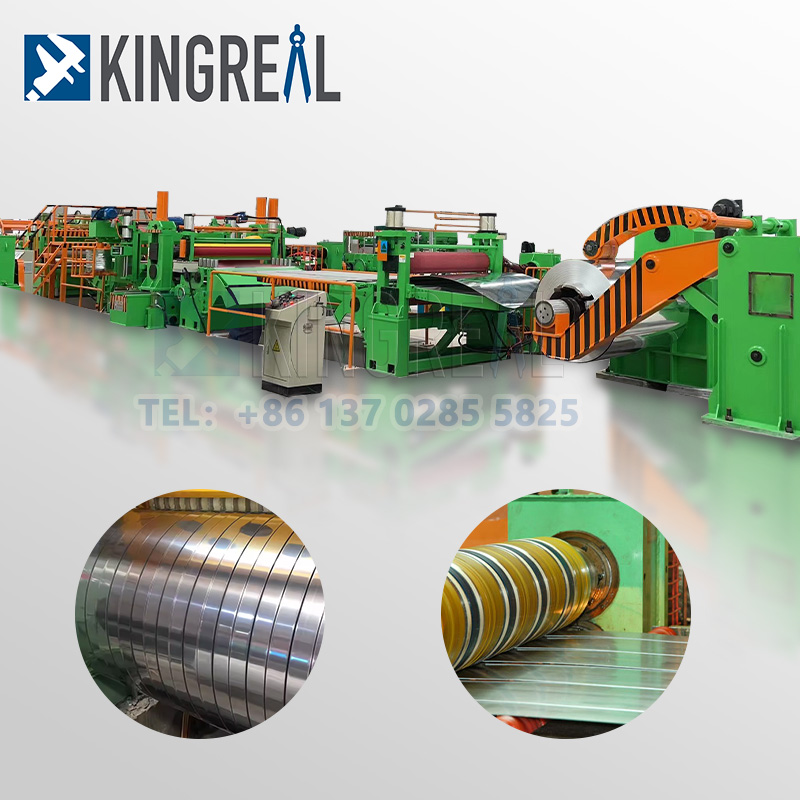
What Is a Metal Slitting Machine?
A Metal Slitting Machine is industrial equipment used to cut a wide metal coil longitudinally into multiple narrower strips. Instead of cutting individual sheets one by one, the machine continuously processes coil material, making it suitable for high-volume manufacturing.
Depending on the production requirement, a complete slitting line can include:
-
Entry coil car and loading system
-
Uncoiler
-
Leveler or straightening unit
-
Slitting head
-
Scrap edge winder
-
Tension unit
-
Recoiler
-
Hydraulic and electrical control systems
The slitting knives are arranged according to the required strip width. As the metal coil passes through the slitting section, rotating knives make continuous longitudinal cuts before the separated strips are rewound into finished coils.
Why Is Metal Slitting Important for Manufacturers?
Metal coil processing often requires different widths for different downstream applications. Purchasing only standard-width coils may create additional cutting work, material waste, and storage requirements.
A properly configured Metal Slitting Machine allows manufacturers to process master coils into multiple usable widths in a single production operation.
Its main advantages include:
-
Improved material utilization
Accurate slitting can help manufacturers plan strip widths more efficiently and reduce unnecessary material loss. -
Higher production efficiency
Continuous coil-to-coil processing is faster than repeated manual cutting operations. -
Consistent strip dimensions
A controlled slitting process helps maintain stable strip width and edge quality. -
Flexible production
Operators can configure knife arrangements according to different customer orders and product specifications. -
Reduced downstream processing
Finished slit coils can be directly supplied to stamping, roll forming, tube making, pressing, and other production processes.
How Does a Metal Slitting Machine Improve Production Results?
The performance of a slitting line is not determined only by cutting speed. Material thickness, coil weight, strip width, knife configuration, tension control, and recoiling quality all influence the final result.
For manufacturers, a well-designed Metal Slitting Machine can produce narrower coils with controlled dimensions and stable winding performance.
| Production Factor | Expected Benefit |
|---|---|
| Accurate knife positioning | Consistent strip width |
| Stable tension control | Better coil winding |
| Automatic coil handling | Reduced manual operation |
| High-speed slitting | Increased production capacity |
| Precise edge cutting | Improved edge quality |
| Flexible configuration | Supports different orders |
These improvements are particularly valuable for manufacturers handling multiple metal grades and specifications.
Which Materials Can a Metal Slitting Machine Process?
The material capability depends on the machine's configuration and the selected tooling. Different metals have different mechanical properties, so the slitting knives, drive system, tension control, and machine structure should be matched to the application.
Common materials may include:
-
Carbon steel
-
Stainless steel
-
Galvanized steel
-
Aluminum
-
Pre-painted steel
-
Silicon steel
-
Other metal coils according to specific machine requirements
For example, stainless steel may require different cutting conditions from carbon steel, while thinner materials require precise tension and knife adjustment to maintain edge quality.
KINGREAL STEEL SLITTING can configure slitting equipment according to material characteristics, coil thickness, coil width, finished strip width, and required production capacity.
What Should Buyers Consider Before Choosing a Slitting Line?
Selecting a Metal Slitting Machine should begin with the actual production requirements rather than simply comparing machine speed or price.
Important factors include:
1. Coil Specifications
Buyers should determine the maximum coil width, minimum and maximum thickness, coil weight, and internal and external coil diameter.
2. Finished Strip Width
The required minimum strip width and the number of strips produced simultaneously affect the slitting head and tooling configuration.
3. Production Capacity
Manufacturers with high-volume orders may require higher line speeds, automated handling, and efficient recoiling systems.
4. Material Characteristics
Material strength, hardness, thickness, and surface requirements should be considered when selecting knives and machine components.
5. Automation Level
Automatic loading, knife positioning, threading, tension control, and coil unloading can reduce manual intervention and improve operational consistency.
6. Finished Coil Quality
A good slitting line should provide stable strip alignment, clean edges, controlled tension, and compact finished coils suitable for subsequent processing.
Metal Slitting Machine vs. Manual Cutting
Traditional manual or semi-manual cutting may be suitable for very small production volumes, but it becomes less practical when manufacturers need continuous processing and multiple strip widths.
A Metal Slitting Machine offers a more systematic approach by integrating feeding, cutting, separation, tension control, and recoiling into one production line.
For manufacturers serving multiple customers, this flexibility can make it easier to switch between production specifications while maintaining repeatable results.
How Does KINGREAL STEEL SLITTING Support Coil Processing?
KINGREAL STEEL SLITTING focuses on coil processing equipment and provides customized slitting solutions for different industrial applications. Rather than treating every production line as identical, the machine configuration can be developed around the customer's material and production requirements.
A typical project may consider:
-
Coil width and thickness
-
Maximum coil weight
-
Required strip widths
-
Number of strips
-
Slitting speed
-
Knife material and arrangement
-
Recoiling requirements
-
Automation preferences
-
Workshop layout
-
Production capacity
This approach helps buyers select equipment that fits their actual manufacturing process instead of paying for unnecessary functions or choosing a configuration that cannot meet future production requirements.
What Production Benefits Can Users Expect?
When correctly specified and operated, a Metal Slitting Machine can help manufacturers establish a more efficient coil-processing workflow.
The typical production process is:
Master Coil → Uncoiling → Leveling → Slitting → Edge Trimming → Tension Control → Recoiling → Finished Slit Coils
This continuous process reduces unnecessary handling between operations. It also allows manufacturers to transform large master coils into customer-specific widths ready for downstream applications.
For B2B buyers, the value of the equipment is therefore not limited to the cutting operation itself. It can influence production speed, material utilization, labor requirements, product consistency, and order flexibility.
Conclusion
A Metal Slitting Machine plays an important role in modern metal coil processing by transforming wide master coils into accurately controlled strips for different manufacturing applications. Its value comes from the combination of precise slitting, stable tension control, efficient material handling, and flexible production capability.
For manufacturers evaluating a new slitting line, the right solution should match the material, coil dimensions, finished strip requirements, production volume, and desired automation level. With customized equipment solutions and coil-processing experience, KINGREAL STEEL SLITTING can support manufacturers seeking reliable and efficient metal slitting capabilities.
If you are looking for a Metal Slitting Machine matched to your specific coil processing requirements, contact us to discuss your material specifications, production goals, and customized equipment solution.