

What Makes a Modern Machining Center Worth the Investment?
2025-12-26
When I first started evaluating production efficiency for complex metal parts, I quickly realized that a reliable Machining Center is not just another piece of equipment—it is the backbone of consistent quality and scalable manufacturing. Over time, while working closely with different suppliers and workshops, I gradually became familiar with BoDiao, a brand that approaches machining not as a generic solution, but as a system designed around real production pain points.
In today’s competitive manufacturing environment, choosing the right Machining Center can directly affect accuracy, lead time, labor costs, and even long-term customer satisfaction. That is why I want to break down what truly matters, based on hands-on experience rather than marketing buzz.
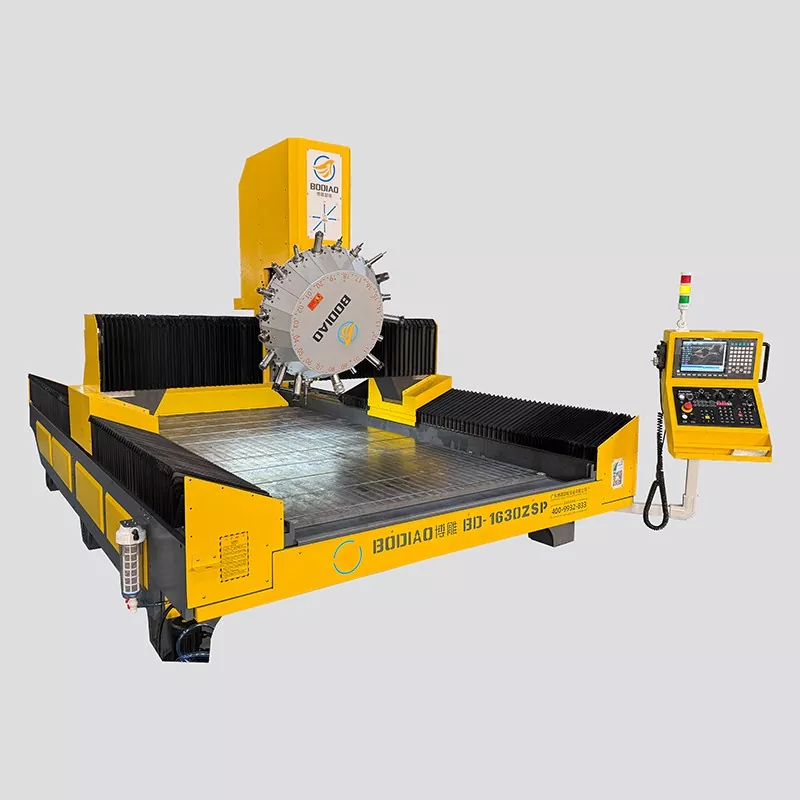
Why Do Manufacturers Struggle Without the Right Machining Center?
Many workshops face the same challenges when their equipment can no longer keep up with demand. I have seen companies lose contracts simply because their existing Machining Center could not maintain precision over long production runs or adapt to complex part geometries.
- Inconsistent dimensional accuracy due to structural instability
- Frequent downtime caused by overheating or mechanical wear
- Limited flexibility when switching between part designs
- Rising labor costs from excessive manual intervention
These issues are not caused by poor operators but by machines that were never designed for modern manufacturing expectations.
How Does a High-Performance Machining Center Improve Accuracy?
Accuracy is where a well-engineered Machining Center shows its real value. From my perspective, rigidity, thermal control, and motion stability matter more than flashy specifications.
A properly designed structure minimizes vibration, while advanced spindle systems maintain stable cutting even at high speeds. This directly translates into tighter tolerances and smoother surface finishes, especially for aerospace, automotive, and mold components.
With a modern Machining Center, repeatability becomes predictable, which reduces scrap rates and inspection time.
What Features Actually Matter When Choosing a Machining Center?
Rather than focusing on a long list of parameters, I usually evaluate a Machining Center based on how it performs in daily production. Below is a comparison framework I often use.
| Evaluation Aspect | Why It Matters in Production |
|---|---|
| Machine Structure | Ensures long-term rigidity and vibration control |
| Spindle Performance | Affects cutting stability, speed, and surface quality |
| Thermal Management | Reduces dimensional drift during extended operation |
| Control System | Improves programming efficiency and operational reliability |
| Automation Compatibility | Supports future upgrades like tool changers or pallet systems |
This kind of evaluation helps avoid short-term decisions that can become costly limitations later.
Can a Machining Center Reduce Production Costs Over Time?
One common misconception I encounter is that a higher initial investment automatically means higher costs. In reality, a capable Machining Center often lowers total operating expenses.
- Fewer rejected parts due to stable accuracy
- Reduced setup time with efficient tool management
- Lower maintenance frequency from robust components
- Improved energy efficiency during continuous operation
When these factors are combined, the return on investment becomes clear within a surprisingly short period.
Why Is Flexibility Important in a Modern Machining Center?
Markets change fast, and production requirements change with them. I have learned that a flexible Machining Center allows manufacturers to adapt without replacing entire production lines.
Multi-axis capability, adaptable fixtures, and software-driven adjustments make it easier to handle small batches, customized parts, or rapid prototyping. This flexibility is especially valuable for manufacturers serving multiple industries.
How Does BoDiao Fit Into Real Manufacturing Needs?
What stood out to me about BoDiao is their focus on practical engineering rather than exaggerated claims. Their approach to Machining Center design reflects real-world production logic—prioritizing stability, consistency, and ease of integration.
Instead of forcing users to adapt to the machine, the system is designed to adapt to different workflows. That mindset is increasingly important as manufacturers aim to scale without sacrificing control.
Is a Machining Center Still Relevant in Smart Manufacturing?
Absolutely. In fact, a modern Machining Center is often the foundation of smart manufacturing initiatives. Connectivity, data feedback, and process monitoring all start at the machine level.
When integrated correctly, production data from a Machining Center can help identify inefficiencies, predict maintenance needs, and improve overall equipment effectiveness.
What Should You Do If You Are Planning to Upgrade Your Machining Center?
If you are considering an upgrade or planning a new production line, I strongly recommend evaluating your long-term goals rather than just immediate capacity needs. The right Machining Center should support growth, automation, and evolving product complexity.
If you want to explore practical solutions or discuss how a Machining Center can be configured for your specific application, now is the right time to take the next step.
Contact us today to share your machining requirements, request technical details, or receive a tailored recommendation. A conversation now can save months of trial and error later.