

What Makes Clay Alluvial Gold Washing Plants Essential for Efficient Gold Recovery?
2026-05-13
Gold mining in alluvial deposits is one of the most effective ways to recover natural gold particles from rivers, floodplains, and clay-rich mining areas. However, processing sticky clay materials can become a major challenge for miners because clay easily wraps gold particles, blocks screening equipment, and reduces recovery efficiency. This is why modern Clay Alluvial Gold Washing Plants have become increasingly important in the mining industry.
A well-designed washing plant can effectively break down clay, separate impurities, and improve gold recovery rates while reducing labor costs and operational downtime. For mining companies looking for stable performance and long-term profitability, choosing the right equipment supplier is critical. Qingzhou Jinqi Mining Machinery Co., Ltd. provides professional solutions designed for difficult alluvial gold conditions, especially in high-clay mining environments.
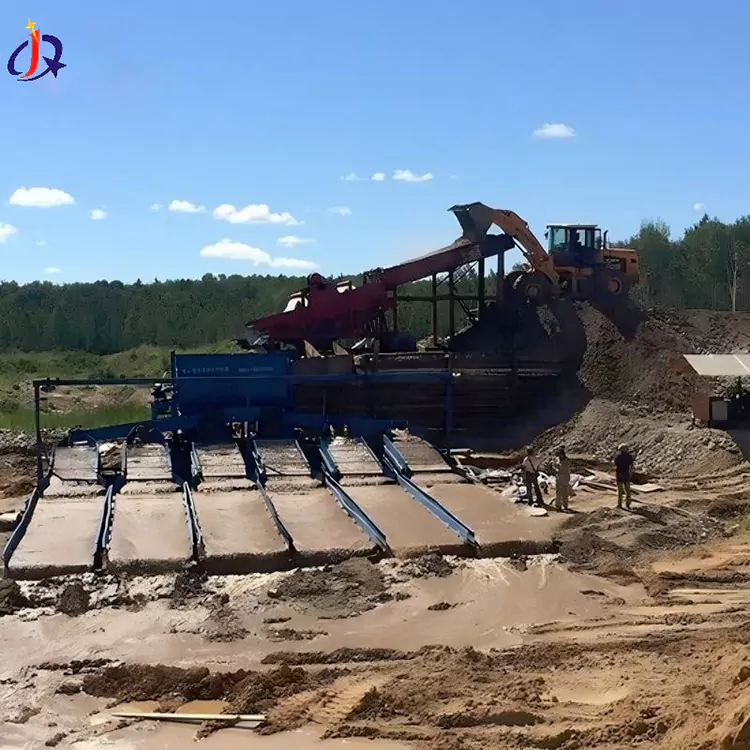
What Are Clay Alluvial Gold Washing Plants?
Clay Alluvial Gold Washing Plants are specialized mining systems designed to process gold-bearing alluvial ores mixed with heavy clay. Their primary function is to wash, scrub, separate, and recover gold particles efficiently.
Unlike ordinary washing equipment, these plants are equipped with strong scrubbing systems and advanced screening technologies that can handle sticky materials without clogging.
Typical materials processed include:
- Clay-rich alluvial gold ore
- River sand gold deposits
- Gravel and mud mixtures
- Oxide gold ore
- Wet mineral materials
These systems are commonly used in:
- Small-scale gold mining
- Medium mining operations
- Large commercial mining projects
- Mobile gold recovery plants
Why Is Clay a Challenge in Gold Mining?
Clay creates several problems during gold extraction. When wet clay sticks together, it traps gold particles and prevents proper separation.
Common Mining Problems Caused by Clay
| Problem | Effect on Mining |
|---|---|
| Material clogging | Reduces equipment efficiency |
| Gold encapsulation | Lowers gold recovery rate |
| Sticky slurry | Difficult material transportation |
| Excess moisture | Increases processing time |
| Uneven feeding | Causes unstable plant operation |
Without efficient washing and scrubbing equipment, miners may lose a significant amount of valuable gold.
How Do Clay Alluvial Gold Washing Plants Work?
The workflow of Clay Alluvial Gold Washing Plants is designed to maximize gold recovery while minimizing material blockage.
Basic Working Process
1. Feeding
Raw alluvial material is transported into the hopper using excavators or loaders.
2. Washing and Scrubbing
A rotary scrubber or trommel screen breaks down clay lumps and separates mud from gravel.
3. Screening
Materials are classified according to particle size.
4. Gravity Separation
Gold particles are separated using gravity equipment such as:
- Centrifugal concentrators
- Shaking tables
- Sluice boxes
- Jig machines
5. Tailings Discharge
Waste material is discharged while valuable gold concentrate is collected.
Main Components of a Gold Washing Plant
Modern Clay Alluvial Gold Washing Plants usually contain multiple integrated systems.
| Equipment | Function |
|---|---|
| Hopper feeder | Material feeding |
| Rotary scrubber | Clay washing and disintegration |
| Trommel screen | Material classification |
| Vibrating screen | Fine particle separation |
| Centrifugal concentrator | Fine gold recovery |
| Sluice box | Gravity gold separation |
| Water pump system | Water circulation |
| Tailings system | Waste discharge |
Each component plays an important role in improving production efficiency and gold recovery.
Benefits of Using Professional Gold Washing Equipment
Higher Gold Recovery Rate
Advanced washing systems release gold particles trapped inside clay, significantly improving recovery efficiency.
Reduced Operational Downtime
Efficient scrubbing systems reduce clogging problems and maintain continuous production.
Lower Labor Costs
Automated systems require fewer workers and simplify mining operations.
Better Environmental Performance
Modern washing plants often include water recycling systems that reduce water consumption.
Strong Adaptability
Professional plants can process various materials including:
- Sticky clay
- Wet ore
- River gravel
- Fine sand
- Mixed mineral deposits
Typical Applications of Clay Alluvial Gold Washing Plants
These mining plants are widely used across many regions worldwide.
Common Mining Scenarios
River Gold Mining
Ideal for recovering fine gold particles from riverbeds.
Desert Alluvial Mining
Suitable for dry areas where clay and sand mixtures are common.
Tropical Mining Areas
Efficient in high-moisture environments with heavy clay deposits.
Mobile Gold Mining Projects
Portable washing plants are popular for remote mining operations.
How to Choose the Right Gold Washing Plant
Choosing suitable mining equipment directly affects operational success.
Important Factors to Consider
Ore Characteristics
Analyze:
- Clay content
- Gold particle size
- Moisture level
- Feeding capacity
Production Capacity
Different projects require different throughput capacities.
| Plant Type | Capacity Range |
|---|---|
| Small mobile plant | 20–50 TPH |
| Medium plant | 50–150 TPH |
| Large mining plant | 150–300+ TPH |
Recovery Efficiency
Select equipment designed for both coarse and fine gold recovery.
Mobility Requirements
Some projects benefit from mobile trailer-mounted plants.
After-Sales Service
Reliable technical support and spare parts availability are extremely important.
Why Choose Qingzhou Jinqi Mining Machinery Co., Ltd.?
Qingzhou Jinqi Mining Machinery Co., Ltd. specializes in manufacturing advanced mining equipment for global customers. The company provides customized solutions for difficult alluvial gold processing environments.
Key Advantages
- Professional engineering team
- Customized plant design
- High-efficiency gold recovery technology
- Durable mining equipment
- Competitive pricing
- Global export experience
- Technical installation support
Their Clay Alluvial Gold Washing Plants are designed to handle high-clay materials while maintaining stable production and excellent recovery rates.
The company continuously improves equipment performance to meet modern mining demands and international quality standards.
Frequently Asked Questions
What is the main purpose of Clay Alluvial Gold Washing Plants?
The main purpose is to wash sticky clay materials and recover gold particles efficiently from alluvial deposits.
Can these plants recover fine gold?
Yes. Modern gravity separation systems can effectively recover both coarse and fine gold particles.
Are mobile gold washing plants available?
Yes. Many mining companies prefer mobile plants for remote mining areas and flexible operations.
How much water does a gold washing plant require?
Water consumption depends on plant size and ore conditions, but recycling systems can significantly reduce usage.
What equipment is best for clay-rich gold ore?
Rotary scrubbers combined with trommel screens are commonly considered the most effective solution.
Conclusion
Efficient processing of clay-rich alluvial deposits requires reliable and professional mining equipment. Modern Clay Alluvial Gold Washing Plants help miners overcome common challenges such as clogging, gold loss, and unstable production. With advanced washing, screening, and gravity separation technologies, these systems can greatly improve recovery rates and operational efficiency.
For mining companies seeking durable equipment and customized gold recovery solutions, Qingzhou Jinqi Mining Machinery Co., Ltd. offers professional support and high-performance mining machinery tailored to different project requirements.
If you are looking for efficient alluvial gold processing equipment with strong performance and reliable technical support, contact us today to learn more about customized gold washing solutions for your mining project.