

What Makes Heat Exchange Equipment for Chemical Industry Essential for High-Efficiency Production?
2025-12-01
Heat Exchange Equipment For Chemical Industry plays a decisive role in modern processing lines, especially when precision temperature control determines product quality, safety, and energy consumption. As a trusted manufacturer, Jiangyin Daniel Cooler Co., Ltd. offers customized and efficient heat exchange solutions designed for demanding chemical environments. In this article, we explore its functions, benefits, importance, and practical performance indicators. I also share my own perspective through three Q&A inserts to make the topic more relatable.
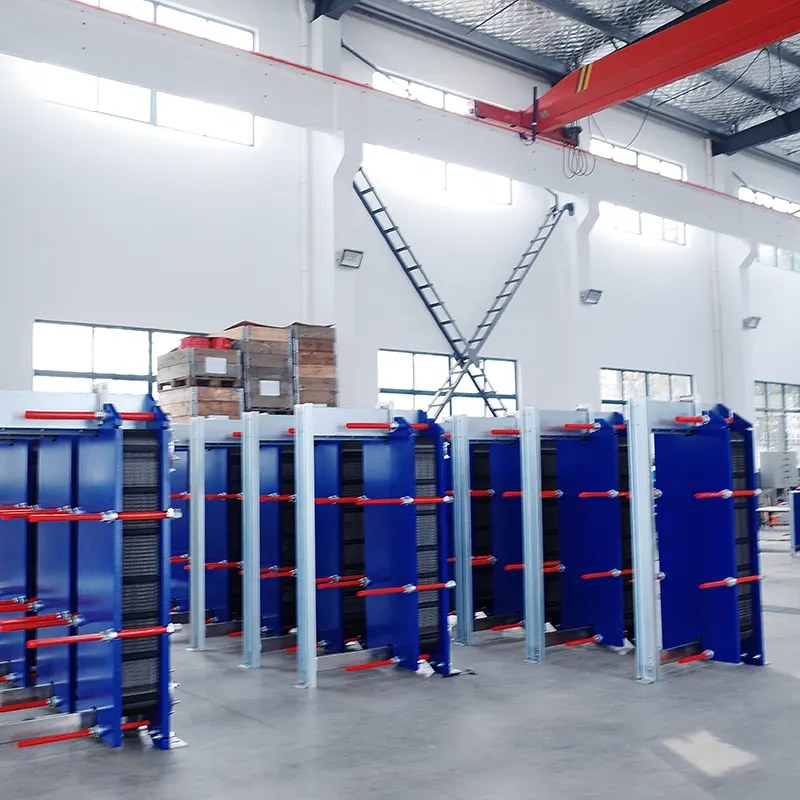
Functions of Heat Exchange Equipment in the Chemical Industry
Heat exchange systems are widely used to transfer heat between two media, ensuring that each production stage maintains stable temperatures. Whether cooling, heating, condensing, or evaporating, these units help improve process efficiency and reduce operational costs.
Key Functions:
-
Temperature stabilization for reactions
-
Efficient cooling during material separation
-
Heat recovery to improve energy savings
-
Protection of equipment from overheating
-
Enhancement of continuous production stability
Performance and Effects
High-quality Heat Exchange Equipment For Chemical Industry enhances the production line in several measurable ways:
-
Greater heat transfer efficiency improves reaction consistency.
-
Optimized flow design reduces pressure drop and enhances system reliability.
-
Corrosion-resistant materials guarantee long service life in harsh chemical environments.
-
Compact structures support easy installation and maintenance.
Three Practical Q&A Inserts
Q1: Why do I need stable Heat Exchange Equipment For Chemical Industry in high-temperature chemical reactions?
A1: I rely on stable temperature control to avoid reaction runaway and maintain productivity. Reliable equipment from Jiangyin Daniel Cooler Co., Ltd. ensures this stability.
Q2: What performance indicators should I check when selecting Heat Exchange Equipment For Chemical Industry?
A2: I always focus on heat transfer coefficients, flow rate design, anti-corrosion properties, and maintenance accessibility.
Q3: How can I reduce energy consumption using Heat Exchange Equipment For Chemical Industry?
A3: I choose models with high thermal efficiency and heat-recovery features to reuse waste heat and lower operating costs.
Technical Parameters Overview
Below is a typical parameter range for chemical-grade heat exchangers offered by Jiangyin Daniel Cooler Co., Ltd.:
| Parameter | Typical Range | Description |
|---|---|---|
| Heat Transfer Capacity | 5–800 kW | Suitable for small to large chemical systems |
| Working Pressure | Up to 2.5 MPa | Supports high-pressure chemical processes |
| Working Temperature | -40°C to 300°C | Wide adaptability for cooling & heating |
| Material Options | SS304, SS316L, Titanium | Corrosion-resistant for complex media |
| Flow Configuration | Multi-pass / Single-pass | Flexible system integration |
Why Heat Exchange Equipment Matters in the Chemical Industry
1. Safety Control
Precise temperature regulation prevents dangerous reactions, equipment damage, and product inconsistencies.
2. Enhanced Efficiency
Optimized heat transfer shortens reaction time and stabilizes production across all batches.
3. Energy Conservation
By reducing the need for external heating or cooling sources, heat exchange systems cut energy consumption significantly.
4. Durability and Reliability
Heat Exchange Equipment For Chemical Industry must withstand corrosive fluids, high pressure, and extreme temperatures—qualities that Jiangyin Daniel Cooler Co., Ltd. integrates into every product.
List of Core Advantages
-
High thermal conductivity design
-
Modular integration for chemical plants
-
Multi-medium adaptability (gas–liquid, liquid–liquid)
-
Strong mechanical structure for long service life
-
Cost-effective performance, boosting ROI
Conclusion
Heat Exchange Equipment For Chemical Industry is indispensable for improving safety, efficiency, and cost control in modern chemical production. With advanced designs and robust materials, Jiangyin Daniel Cooler Co., Ltd. delivers high-performance solutions tailored to different processing needs.
If you are looking for durable, efficient, and customizable heat exchange systems for your chemical facility, contact us today and get a professional solution tailored to your application.