

What Raw Materials Can be Used in a Brick Making Machine?
2026-10-12
A brick plant manager receives a quote for clay that is 25 percent higher than last year. The plant's Brick Machine is capable of processing a wide range of materials, but the manager has always used the same local clay. A raw material engineer is called in to evaluate alternatives. After testing, the engineer recommends a mix of 40 percent fly ash, 30 percent construction waste, and 30 percent clay. The resulting bricks meet the strength requirement, the shrinkage is within tolerance, and the raw material cost drops by 32 percent. This is not a rare outcome. A modern Brick Machine can process a wide range of materials, but the key is understanding the properties of each material and how they interact in the mix.
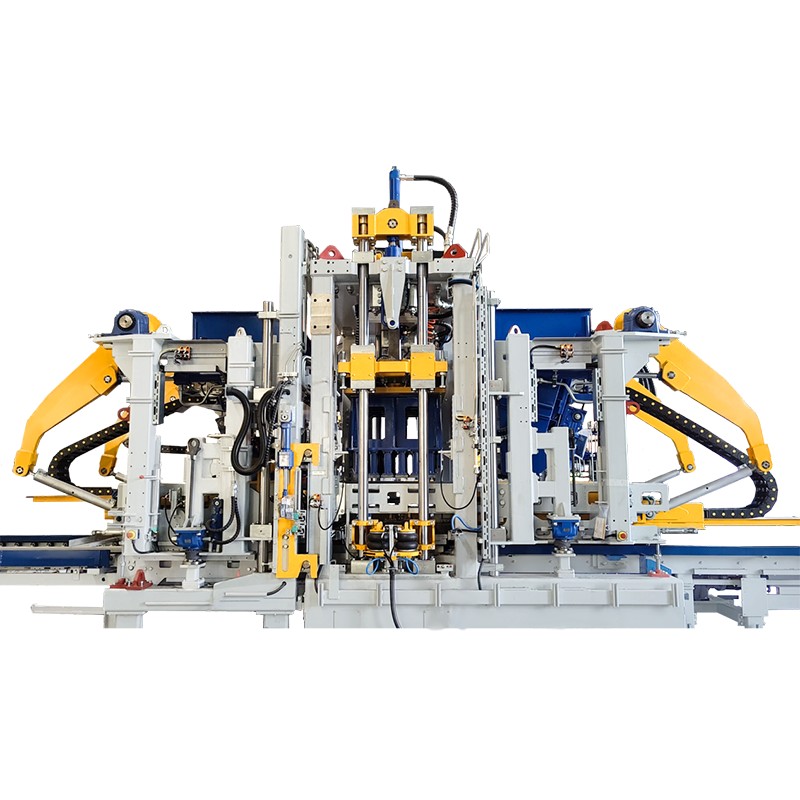
1. What Are the Key Properties Required for Brick Raw Materials?
Not all materials are suitable for brick making. The raw material must have the right chemical composition, the right particle size distribution, and the right plasticity. The chemical composition determines the firing behavior. Silica (SiO₂) provides strength but too much causes cracking during cooling. Alumina (Al₂O₃) provides refractoriness and strength. Iron oxide (Fe₂O₃) provides color and lowers the firing temperature. Calcium oxide (CaO) can cause lime popping if present in large particles. The particle size distribution determines the compaction and the surface finish. The plasticity determines the formability. The table below shows the typical chemical composition requirements for brick raw materials.
| Component | Typical range (%) | Function | Effect if too high |
| SiO₂ | 50 – 70 | Strength, dimensional stability | Cracking during cooling |
| Al₂O₃ | 10 – 25 | Refractoriness, strength | Higher firing temperature |
| Fe₂O₃ | 3 – 10 | Color, flux | Dark color, bloating |
| CaO | < 10 | Flux | Lime popping |
| MgO | < 5 | Flux | Scumming |
| Loss on ignition | 5 – 15 | Porosity | Excessive shrinkage |
In our factory, we test every raw material for these properties before recommending a mix design. The Brick Machine can process materials with a wide range of compositions, but the mix must be adjusted to compensate for variations. For example, if the clay has a high silica content, we add a plasticizer to improve the formability. If the fly ash has a high carbon content, we adjust the firing curve to burn out the carbon before the brick reaches full density. Zenith has been designing brick making solutions for over 20 years.
2. What Are the Common Raw Materials and Their Characteristics?
There are six common raw materials used in brick making. Each has a different set of characteristics that affect the brick quality and the production process. The table below summarizes the properties of these materials.
| Raw material | Typical plasticity | Shrinkage during firing | Required firing temperature | Typical replacement ratio |
| Clay | High | 6 – 10% | 900 – 1,000°C | Baseline |
| Shale | Moderate | 4 – 8% | 950 – 1,050°C | 50 – 100% |
| Fly ash | Low | 2 – 5% | 1,000 – 1,100°C | 30 – 60% |
| Slag | Low | 1 – 4% | 1,050 – 1,150°C | 20 – 40% |
| Construction waste | Low to moderate | 3 – 7% | 950 – 1,050°C | 30 – 50% |
| Sand | None | 0 – 2% | N/A (filler) | 10 – 20% |
Clay is the traditional material and has the highest plasticity, which makes it easy to form. Shale is a sedimentary rock that must be crushed before use. Fly ash is a byproduct of coal combustion. It has low plasticity and requires a binder. Slag is a byproduct of steel production. It must be ground to a fine powder. Construction waste is crushed concrete, brick, and stone. It must be screened to remove contaminants. Sand is used as a filler to reduce shrinkage. In our factory, we have tested all of these materials in our Brick Machine and have developed mix designs for each.
3. How Do You Determine the Optimal Mix Ratio for a Brick Machine?
The optimal mix ratio depends on the properties of the raw materials, the required brick strength, the allowable shrinkage, and the cost. The process starts with a laboratory test. We mix small batches of different ratios, form them into test cylinders, and measure the green strength, the dry shrinkage, and the fired strength. The table below shows a typical test matrix for a mix of clay, fly ash, and construction waste.
| Mix ID | Clay (%) | Fly ash (%) | Construction waste (%) | Green strength (MPa) | Fired strength (MPa) | Shrinkage (%) |
| M1 | 100 | 0 | 0 | 0.8 | 15 | 8.5 |
| M2 | 70 | 30 | 0 | 0.6 | 18 | 6.2 |
| M3 | 50 | 30 | 20 | 0.5 | 20 | 4.8 |
| M4 | 40 | 40 | 20 | 0.4 | 22 | 3.5 |
| M5 | 30 | 40 | 30 | 0.3 | 19 | 3.0 |
Mix M4 provides the best balance of strength and shrinkage. The fired strength is 22 MPa, which exceeds the 15 MPa requirement. The shrinkage is 3.5 percent, which is within the 5 percent limit. The raw material cost is 32 percent lower than the 100 percent clay mix. In our factory, we use this test matrix approach for every new raw material. Zenith provides a free mix design service for customers who send us samples of their raw materials.
4. How Does Raw Material Preparation Affect Brick Machine Performance?
The raw material must be prepared before it enters the Brick Machine. The preparation steps include crushing, grinding, screening, and mixing. The particle size distribution affects the compaction and the surface finish. A mix with a wide particle size distribution compacts better because the smaller particles fill the voids between the larger particles. The moisture content affects the plasticity and the forming pressure. The table below shows the recommended preparation parameters for different raw materials.
| Raw material | Crushing size (mm) | Grinding size (mm) | Moisture content (%) | Mixing time (min) |
| Clay | < 5 | Not required | 15 – 20 | 3 – 5 |
| Shale | < 10 | < 2 | 12 – 18 | 5 – 8 |
| Fly ash | Not required | Not required | 20 – 25 | 5 – 8 |
| Slag | < 5 | < 0.5 | 10 – 15 | 8 – 12 |
| Construction waste | < 20 | < 5 | 12 – 18 | 5 – 10 |
Preparation tip: The moisture content is the most critical parameter for the Brick Machine. If the moisture is too low, the mix will not form a coherent brick. If the moisture is too high, the brick will slump after forming. We recommend a moisture content of 15 to 18 percent for most mixes. The moisture should be measured before the mix enters the machine and adjusted if necessary. Zenith provides moisture sensors and automatic water dosing systems for our brick making lines.
Frequently Asked Questions About Raw Materials for Brick Making Machines
Summary for Brick Plant Managers and Raw Material Engineers
A Brick Machine can process a wide range of raw materials, including clay, shale, fly ash, slag, construction waste, and sand. The key to success is understanding the chemical and physical properties of each material and adjusting the mix design accordingly. The optimal mix ratio can reduce raw material costs by 30 percent or more while maintaining or improving brick strength. The raw material preparation, especially the moisture content and particle size distribution, is critical for the performance of the Brick Machine. Zenith has been designing and manufacturing brick making machines for over 20 years and provides full raw material testing and mix design support.
Zenith manufactures Brick Machine systems for clay, shale, fly ash, and construction waste. We provide raw material testing, mix design, and full production line integration.