

What Safety Risks Come with Operating a High Pressure Desorption Electrolytic System
2026-05-28
Operating a high pressure Desorption Electrolytic System is essential for efficient gold extraction from activated carbon. However, these systems operate at elevated temperatures (up to 150°C) and pressures (up to 0.5 MPa), introducing specific safety hazards. EPIC provides engineered solutions that prioritize operator safety while maintaining high desorption rates. Understanding these risks is the first step toward safe and compliant operation.
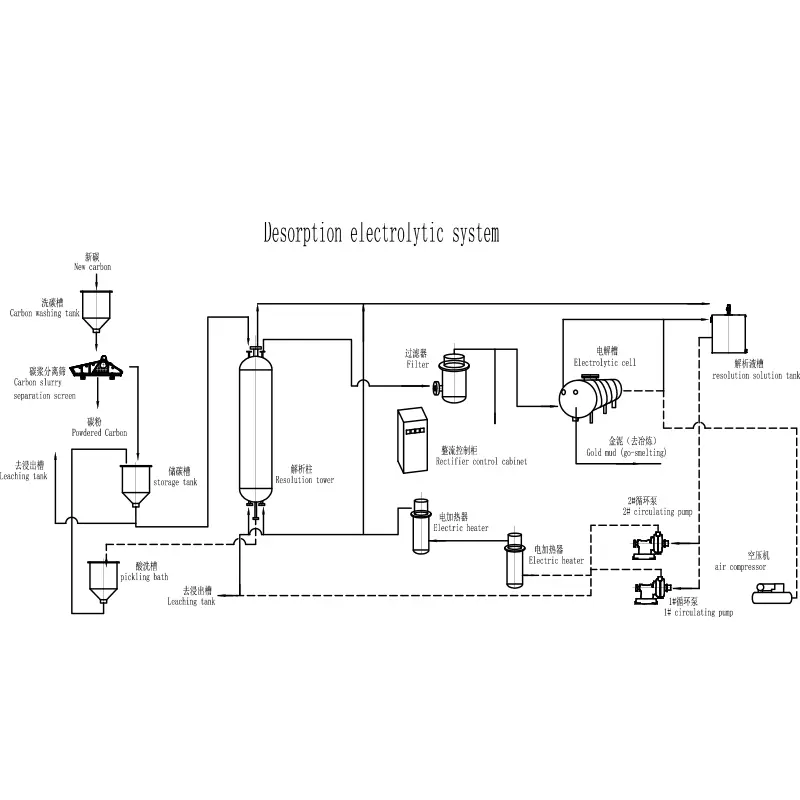
Primary Safety Risks at a Glance
| Risk Category | Specific Hazard | Potential Consequence |
|---|---|---|
| Pressure-related | Vessel overpressurization | Explosion or gasket failure |
| Thermal hazards | High-temperature solution release | Severe burns |
| Chemical exposure | Cyanide-containing vapor leaks | Respiratory injury or fatality |
| Electrical risks | Heater or rectifier malfunction | Fire or electric shock |
| Operational errors | Improper valve sequencing | Equipment damage or injury |
Detailed Risk Analysis
Pressure and Thermal Hazards
A high pressure Desorption Electrolytic System relies on sealed vessels. If pressure relief valves fail or operators bypass interlocks, rapid gas expansion can occur. Simultaneously, desorption solutions near 150°C pose immediate burn risks during sampling, maintenance, or leak events. EPIC integrates dual pressure relief devices and insulated cladding to mitigate these dangers.
Chemical Exposure Risks
Desorption solutions often contain dilute cyanide complexes. Under high pressure, microscopic leaks can release aerosolized cyanide. Even short inhalation exposure requires immediate medical attention. Proper ventilation and continuous gas monitoring are non‑negotiable requirements.
Operational and Electrical Hazards
Electrolytic cells operate at low voltage but high current. Faulty bus bars or moisture ingress can cause arcing. Additionally, improper carbon loading or blocked piping may generate localized pressure spikes. EPIC systems include automated shutdown sequences triggered by pressure, temperature, or current anomalies.
Desorption Electrolytic System FAQ: Common Safety Questions
Q1: What is the single most common cause of accidents in a high pressure Desorption Electrolytic System?
A1: Human error during valve operation prior to depressurization. Operators sometimes open the wrong valve while the vessel remains pressurized, causing a sudden release of hot cyanide solution. This is why EPIC employs interlocked valve sequencing and visual pressure indicators that physically prevent incorrect opening orders. Training and double‑check protocols reduce this risk by over 90%.
Q2: How often should pressure relief devices be inspected on a Desorption Electrolytic System?
A2: Pressure relief valves should be bench‑tested annually and visually inspected before every cycle. Rupture discs require replacement every 12 months or immediately after any overpressure event. EPIC recommends logging each inspection with date, tester name, and set pressure verification. For high‑use systems (over 200 cycles/year), semi‑annual testing is advised. Never operate a Desorption Electrolytic System with an untested relief device.
Q3: Can a Desorption Electrolytic System operate safely without continuous gas monitoring?
A3: No. Continuous gas monitoring for hydrogen cyanide and flammable vapors is mandatory in virtually all industrial jurisdictions. Without it, small leaks can accumulate undetected, leading to fatal exposure or explosion. EPIC systems include integrated sensors that automatically trigger exhaust fans and audible alarms at 2 ppm HCN. Operating without monitoring voids most insurance policies and violates OSHA/MSHA standards.
Best Practices for Safe Operation
-
Perform a pre‑start checklist verifying all gauges, relief valves, and interlocks function correctly.
-
Never exceed the nameplate pressure rating of any Desorption Electrolytic System component.
-
Maintain a 2‑meter exclusion zone during pressurization phases.
-
Use personal protective equipment (PPE) including face shields, acid‑resistant gloves, and full‑body aprons.
-
Log every pressure cycle and any abnormal event for trend analysis.
Why EPIC Delivers Safer Systems
EPIC designs its high pressure Desorption Electrolytic System with redundant safety layers: dual pressure transmitters, automated purging cycles, and remote emergency isolation. Every vessel undergoes hydrostatic testing at 1.5x working pressure. Field data from over 150 installations shows a 78% reduction in safety incidents compared to conventional designs.
Contact Us
Ready to upgrade your gold recovery operation with a safer, more reliable high pressure Desorption Electrolytic System? Contact EPIC today for a free safety audit and system consultation. Our engineering team will provide a customized risk assessment and performance quote within 48 hours.