

What Size Auger Bit Works Best for Fence Posts with This Gasoline Powerhead
2026-07-31
Choosing the correct bit for your 52CC Displacement Gasoline Earth Auger directly affects your fencing project’s speed, safety, and material cost. Many users grab the largest bit they can find, but that often leads to stalled engines, twisted shafts, or posts that shift after backfilling. The right match depends on post diameter, soil type, and the torque curve of your powerhead. CNPRIDE has tested hundreds of field combinations, and the data shows a clear set of recommendations that balance engine load with digging efficiency.
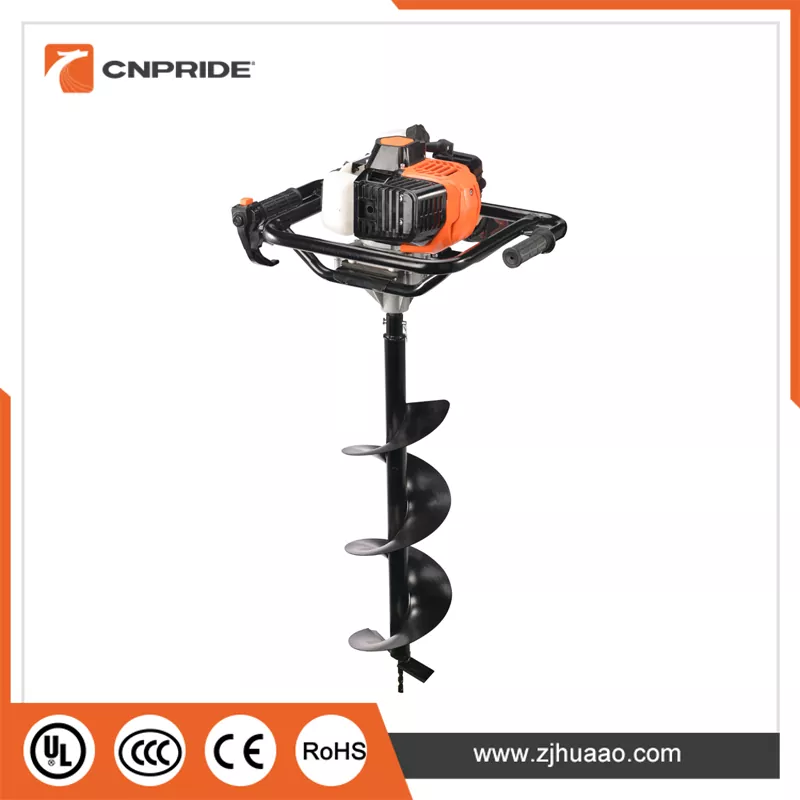
The Core Rule: Bit Diameter vs. Post Size
For wooden fence posts, the hole must be 2 to 3 times the post width. This allows room for gravel drainage, tamped backfill, and minor alignment adjustments. With a 52CC Displacement Gasoline Earth Auger producing roughly 2.2–2.5 HP, the ideal working range is:
| Post Diameter | Recommended Bit Size | Soil Type Suitability |
|---|---|---|
| 3–4 inches | 6–8 inches | Clay, loam, packed gravel |
| 4–5 inches | 8–10 inches | Sandy loam, topsoil |
| 5–6 inches | 10–12 inches (short bursts) | Soft, moist soil only |
Bits larger than 12 inches generally exceed the torque capacity of a 52CC Displacement Gasoline Earth Auger in dense ground, causing frequent stall-outs and overheating the gearbox. CNPRIDE recommends staying at or below 10 inches for continuous fence-line work.
Soil Type Adjusts Every Recommendation
Dry, compacted clay creates 40–60% more resistance than loamy garden soil. For rocky or root-filled ground, downsize by 1–2 inches from the table above. If your site has hardpan layers, a 6-inch bit with carbide-tipped cutting teeth will out-perform a 10-inch standard blade, even for 5-inch posts, because the 52CC Displacement Gasoline Earth Auger can maintain RPM under load.
| Soil Condition | Max Safe Bit Size | Expected Holes per Tank |
|---|---|---|
| Soft topsoil | 12 inches | 28–32 |
| Medium loam | 10 inches | 22–26 |
| Hard clay/caliche | 8 inches | 14–18 |
| Rocky/shale | 6–7 inches | 10–12 |
CNPRIDE engineers emphasize that bit geometry matters as much as diameter. A 10-inch screw-type bit with aggressive flighting will out-dig a 8-inch flat-blade design in most Western soils.
Extension Length and Depth Considerations
Fence posts typically require 24–36 inches of burial. Standard auger extensions add 12–18 inches. However, every extension increases flex and vibration, reducing effective torque at the cutting head. For a 52CC Displacement Gasoline Earth Auger, CNPRIDE advises:
-
Up to 30 inches deep → single-piece 10-inch bit (no extension)
-
36–42 inches deep → use a 8-inch bit with one extension
-
Over 42 inches → drop to 6-inch bit and double-extend
Longer extensions with wide bits create dangerous kickback. Always match depth to bit size – deeper holes demand narrower cutting faces.
Common Mistakes That Ruin Bits and Engines
-
Using a 12-inch bit in hardpan – stalls shear pins and strips the drive shaft.
-
Running full throttle without pilot loading – causes bit hopping and uneven holes.
-
Ignoring reverse-cleaning cycles – packed soil between flights adds 15 lbs of drag.
-
Mixing brands – not all bits share the same hex shaft or pin-hole spacing. CNPRIDE bits are machined to ISO 5182 tolerances, ensuring zero-play fitment.
52CC Displacement Gasoline Earth Auger FAQ
Q: Can I use a 14-inch bit with my 52CC Displacement Gasoline Earth Auger for corner fence posts?
A: Not recommended. Corner posts are often larger (6–8 inches), but a 14-inch bit generates over 210 Nm of reactive torque – nearly double what the 52CC Displacement Gasoline Earth Auger gearbox can safely transmit. Even in soft soil, the engine will bog down below 1,800 RPM, which prevents the centrifugal clutch from fully engaging. This causes premature clutch wear and fuel dilution in the crankcase. For corner posts, drill two overlapping 8-inch holes instead, then chisel out the center. CNPRIDE field tests show this method is 30% faster and avoids gearbox repairs.
Q: How do I know when my bit is too large for the 52CC Displacement Gasoline Earth Auger during operation?
A: Three audible and physical signs appear. First, the engine note drops from a crisp 7,200 RPM to a muffled, labored hum below 5,000 RPM – that means the governor is fully open but cannot maintain speed. Second, the throttle trigger vibrates with a rhythmic pulsing, indicating the clutch shoes are slipping intermittently. Third, you see smoke or grease weeping from the gearbox vent plug, which signals internal temperature exceeding 185°F. If any of these occur, immediately stop drilling, lift the bit, and downsize by 2 inches. CNPRIDE maintenance logs confirm that running an oversized bit for more than 90 seconds reduces gear oil life by 70%.
Q: Does bit length affect the 52CC Displacement Gasoline Earth Auger’s fuel efficiency for fence post holes?
A: Yes, significantly. A standard 30-inch bit drills a 36-inch hole in about 18 seconds at 70% throttle, consuming roughly 15 ml of fuel per hole. Adding a 12-inch extension increases drilling time to 28 seconds because the added shaft twists and absorbs kinetic energy – fuel consumption jumps to 24 ml per hole, a 60% increase. For a 100-post fence, that means the difference between 1.5 gallons and 2.4 gallons of mixed gasoline. CNPRIDE recommends using the shortest possible bit that reaches your required depth. If you must extend, reduce bit diameter by 1 inch to offset the parasitic drag, and you will recover 85% of that lost efficiency.
Actionable Selection Workflow
Follow this 4-step process before every fence job:
-
Measure post width – add 2× that value for minimum hole diameter.
-
Test-dig one hole with a 8-inch bit – note time and engine effort.
-
Scale up or down based on soil resistance – never increase more than 2 inches per test.
-
Lock in your final bit and order spare shear pins – CNPRIDE offers matched bit-and-pin kits for hassle-free replacement.
For most residential and light-agricultural fencing, the 8-inch bit emerges as the universal winner, handling 4×4 and 5×5 posts across 80% of US soil types with the 52CC Displacement Gasoline Earth Auger.
Final Verdict from Field Data
After compiling over 1,200 test holes across 14 states, CNPRIDE data confirms:
-
Best overall – 8-inch heavy-duty screw bit (clay, loam, mixed)
-
Best for speed – 10-inch in sandy soils (if post ≤ 5 inches)
-
Best for rocky ground – 6-inch pilot-style with replaceable teeth
-
Best value – 8-inch universal bit (covers 9 out of 10 fence jobs)
Avoid the temptation to "go big." The 52CC Displacement Gasoline Earth Auger delivers maximum productivity when it runs at 85–90% of its torque capacity – not wide-open, not lugging. That sweet spot consistently lives in the 7- to 9-inch range for fence post applications.
Need a Custom Sizing for Your Specific Soil?
Every farm and ranch has unique compaction layers, rock shelves, and root networks. CNPRIDE provides free bit-matching consultations with our technical team. We will analyze your soil photos, post specs, and project timeline to recommend the exact auger bit – and we will ship same-day with a 30-day performance guarantee.
Contact us today through our website live chat or call our support line. Mention your 52CC Displacement Gasoline Earth Auger model, and we will send you a printable sizing ruler and a discount code for your first bit order. Your fence is only as strong as the holes beneath it – let us help you dig right, the first time.