

What Size Standalone Baghouse Dust Collector Do I Need for My Facility
2026-10-12
Selecting the right size Standalone Baghouse Dust Collector is one of the most important decisions facility managers make when upgrading air pollution control systems. An undersized unit leads to poor filtration, frequent filter replacements, and compliance risks, while an oversized unit wastes energy and capital. Jiangteng has helped thousands of industrial clients match airflow, dust load, and filtration area to the correct Standalone Baghouse Dust Collector, and this guide shares the same engineering logic used in real project evaluations.
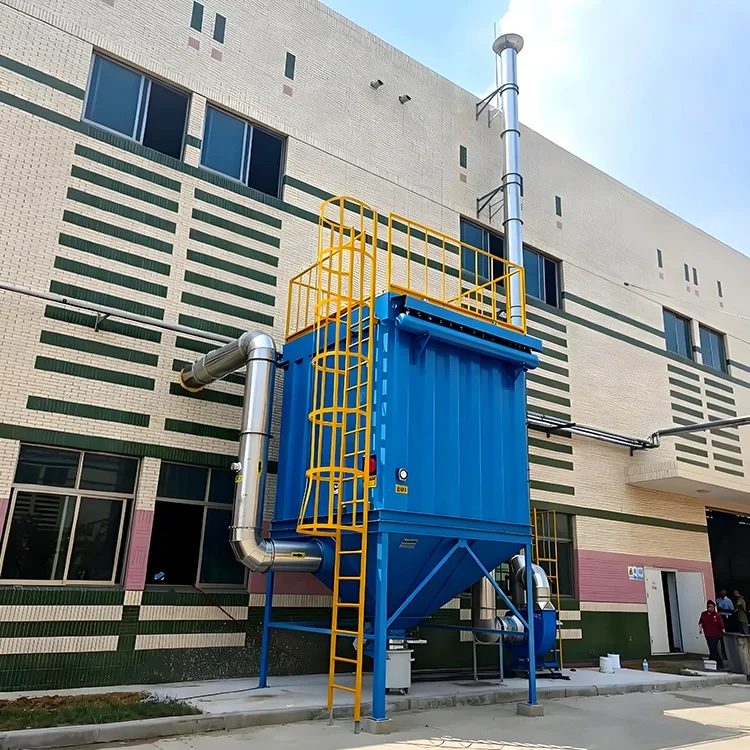
Key Factors That Determine Collector Size
Sizing a Standalone Baghouse Dust Collector is not simply a matter of picking the largest model available. Engineers evaluate several interdependent variables before recommending a configuration. Jiangteng applies the following criteria during every sizing assessment:
-
Air volume (CFM or m³/h): The total airflow required to capture dust at each pickup point.
-
Air-to-cloth ratio: The relationship between airflow and total filter media area, expressed in CFM per square foot.
-
Dust loading (grains/ft³ or g/m³): Higher concentrations demand lower air-to-cloth ratios.
-
Particle characteristics: Abrasiveness, stickiness, moisture content, and combustibility.
-
Temperature and chemistry: Determines bag material selection and housing design.
-
Operational schedule: Continuous duty versus intermittent operation affects sizing margins.
-
Space and layout constraints: Footprint, height clearance, and duct routing.
-
Local emission regulations: Compliance limits often dictate minimum filtration efficiency.
Air-to-Cloth Ratio: The Core Sizing Metric
The air-to-cloth ratio is the single most influential number in sizing a Standalone Baghouse Dust Collector. It represents how much air passes through each square foot of filter media per minute. Lower ratios extend bag life and improve efficiency but require more filter area and a larger housing.
| Application Type | Typical Air-to-Cloth Ratio (CFM/ft²) | Recommended Jiangteng Model Series |
|---|---|---|
| General ventilation, light dust | 6.0 – 8.0 | JT-BH Series |
| Welding and metal grinding | 4.0 – 6.0 | JT-BHW Series |
| Woodworking and sawdust | 5.0 – 7.0 | JT-BHW Series |
| Cement, lime, and mineral dust | 2.5 – 4.0 | JT-BHH Series |
| Foundry and abrasive blasting | 2.0 – 3.5 | JT-BHA Series |
| High-temperature fumes (>200°C) | 2.0 – 3.0 | JT-BHT Series |
Step-by-Step Sizing Calculation
Use the following procedure to estimate the required size of a Standalone Baghouse Dust Collector:
-
Calculate total capture airflow. Sum the CFM required at every hood, enclosure, or pickup point.
-
Add a safety margin. Add 10–20% for duct leakage, future expansion, and filter loading.
-
Select the air-to-cloth ratio based on your dust type from the table above.
-
Divide total airflow by the ratio to determine required filter area in square feet.
-
Choose a bag size and count that provides at least that filter area.
-
Verify can velocity and hopper design to prevent re-entrainment of dust.
-
Confirm fan static pressure accounts for ductwork, filters, and clean-side losses.
For example, a facility requiring 12,000 CFM with a ratio of 5.0 needs 2,400 ft² of filter media. Jiangteng engineers would then select a housing that accommodates the corresponding number of bags while maintaining proper bag spacing and pulse-jet cleaning clearance.
Common Sizing Mistakes to Avoid
-
Choosing a collector based on price alone without airflow verification.
-
Ignoring dust loading and applying an aggressive air-to-cloth ratio.
-
Forgetting to account for altitude and temperature corrections on fan performance.
-
Overlooking explosive dust regulations such as NFPA 652 and ATEX.
-
Failing to plan for future production expansion.
Frequently Asked Questions
What happens if I choose a Standalone Baghouse Dust Collector that is too small? An undersized Standalone Baghouse Dust Collector forces a higher air-to-cloth ratio, causing rapid filter blinding, elevated pressure drop, frequent bag failures, and possible emission non-compliance.
Can I resize an existing Standalone Baghouse Dust Collector instead of buying a new one? In many cases, Jiangteng can retrofit a larger housing, add filter modules, or upgrade the pulse-jet system to increase capacity without replacing the entire unit.
How do I know which filter bag material is right for my Standalone Baghouse Dust Collector? Bag selection depends on temperature, chemical exposure, and abrasiveness; Jiangteng offers polyester, polypropylene, aramid, P84, and PTFE options matched to your specific dust profile.
Does altitude affect the size of a Standalone Baghouse Dust Collector? Yes, higher altitudes reduce air density, which lowers fan performance and requires a larger collector or higher-horsepower fan to move the same mass of air.
What information does Jiangteng need to size a Standalone Baghouse Dust Collector accurately? Provide airflow requirements, dust type and concentration, temperature, moisture level, available footprint, and applicable emission standards, and Jiangteng will deliver a complete sizing recommendation.
Contact Us
Choosing the correct Standalone Baghouse Dust Collector protects your equipment, your workforce, and your compliance record. Contact Jiangteng today for a free engineering consultation, airflow analysis, and customized sizing proposal. Our team will help you specify the right Standalone Baghouse Dust Collector for your facility, budget, and regulatory environment. Reach out now and let Jiangteng deliver a solution built for long-term performance.