

A handheld marking machine is designed for a simple industrial problem: not every workpiece can be conveniently moved to a desktop marking station. Large steel components, vehicle frames, pipes, cylinders, machinery assemblies and other heavy or fixed parts often need identification exactly where they are located. A portable marking solution brings the marking process to the workpiece instead of forcing the workpiece to the machine.
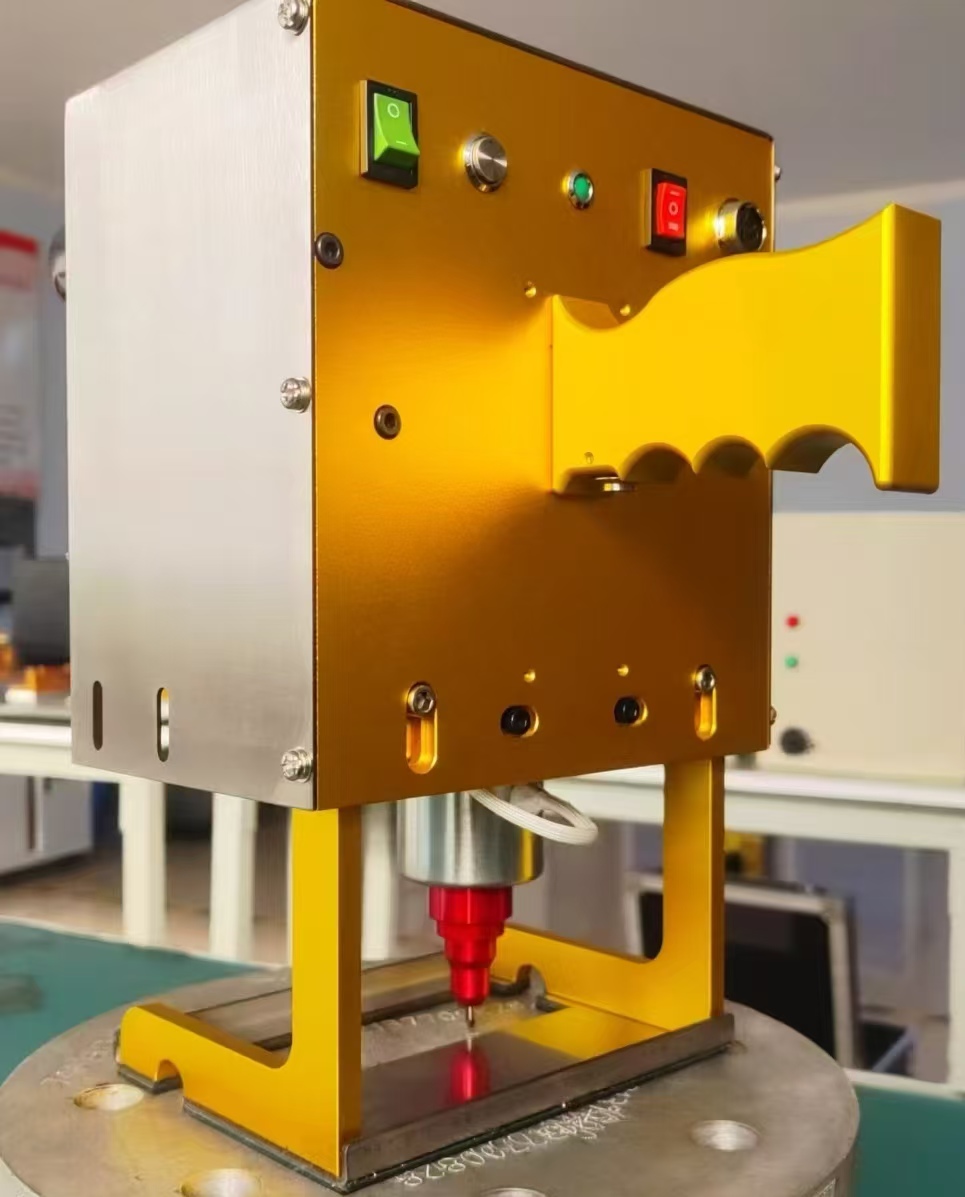
Where a Handheld Marking Machine Works Best
The biggest advantage of a handheld marking machine is not simply its smaller size. Its real value comes from mobility. When a component is too large, too heavy, already installed, difficult to position, or located in a narrow production area, moving it to a conventional marking station can create unnecessary labor and handling costs.
A handheld system reverses this workflow. The operator takes the marking head to the component and places the marking tool directly on the required area. This approach is especially useful for industrial identification tasks involving chassis, frames, engine components, steel plates, pipes, flanges, cylinders, machinery and large fabricated parts.
Large Workpieces
Useful when the product is too large or heavy to move efficiently to a desktop marking station.
Fixed Components
Suitable for parts that are installed, assembled or otherwise difficult to remove from their working position.
Narrow Areas
A compact marking head can reach areas where a larger marking system would be inconvenient to position.
This makes handheld marking particularly relevant when traceability must happen close to production, repair, inspection or assembly activities rather than at a centralized marking station.
Why Handheld Marking Solves Difficult Marking Problems
Industrial marking is often performed after a component has already been manufactured or assembled. At this stage, the workpiece may no longer be easy to transport. A large steel structure, for example, may already be positioned on a production floor. A vehicle frame may require identification after assembly. A pipe or cylinder may be several meters long and impractical to place on a desktop machine.
A handheld marking machine addresses this problem by reducing dependence on workpiece movement. Depending on the machine configuration, operators can create permanent identification directly on metal surfaces using electric, pneumatic or battery-powered marking technologies.
- Moving heavy workpieces simply to complete identification.
- Limited access to the surface that needs marking.
- Insufficient space for a large marking station.
- The need to mark products at different locations within a factory.
- Outdoor or field-service environments where fixed equipment is inconvenient.
- Traceability requirements involving serial numbers, part numbers or VIN-related identification.
- Replacing inconsistent manual engraving or stamping processes.
The practical result is a marking workflow that can be moved closer to the actual production problem. The machine does not need to dictate where the workpiece must be placed; instead, the marking equipment can adapt to the workpiece.
Where It Can Be Used Across Industries
Handheld marking technology is particularly valuable wherever permanent identification is required on large, heavy or assembled components. The exact application depends on the material, required mark depth, marking area, production volume and operating environment.
Automotive and Motorcycle Components
Vehicle-related applications can include chassis, frames, engine components and other metal parts requiring identification. For repair shops and manufacturing operations, the ability to take the marking equipment directly to the vehicle or component can simplify the process considerably.
Steel Fabrication and Heavy Equipment
Fabricated steel components often require part numbers, production identifiers, heat numbers or other traceability information. When a component is too large to bring to a desktop machine, a handheld system provides a more practical workflow.
Pipes, Cylinders and Flanges
Cylindrical or oversized components can present positioning challenges. A handheld marking head can be placed against the required surface, allowing identification to be completed without building a large dedicated workstation around the part.
Machinery and Maintenance Operations
Maintenance teams may encounter machines and assemblies that are already installed. When a replacement component or repaired part needs identification, portability can reduce the need to dismantle or relocate equipment.
Outdoor and Field Marking
Battery-powered configurations can be particularly useful when marking must take place away from a conventional production line. Luyue's battery-operated marking solutions are designed around cordless operation, with the company describing certain models as capable of several hours of continuous operation depending on configuration and working conditions.
Materials and Marking Information
A handheld marking machine is commonly considered when permanent identification is needed on metal. Dot peen systems create marks through controlled mechanical indentation, while handheld laser systems use focused laser energy to modify or remove material at the surface. These technologies solve different marking requirements and should not automatically be treated as interchangeable.
Depending on the specific machine and configuration, typical industrial workpieces can include steel, stainless steel, aluminum, copper, brass and other engineering materials. Material hardness and surface condition have a direct influence on the achievable marking depth and appearance.
The information itself can be simple or highly structured. Common examples include:
| Marking Information | Typical Purpose | Common Application |
|---|---|---|
| Serial Number | Individual product identification | Machinery, components, tools |
| Part Number | Component identification | Automotive and industrial parts |
| VIN / Frame Number | Vehicle identification | Cars, motorcycles and chassis |
| Date / Batch Code | Production traceability | Manufacturing and fabrication |
| Logo / Text | Brand or product identification | Industrial products and equipment |
| 2D / Data Codes | Machine-readable traceability | Parts management and production records |
Battery-Powered Operation for Flexible Work
One of the most practical developments in portable marking equipment is battery operation. Traditional equipment may require an electrical connection, compressed air or other supporting infrastructure. A cordless machine can reduce these restrictions when marking is performed in different locations.
Jinan Luyue CNC Equipment Co., Ltd. offers battery-operated handheld marking machines designed for applications where mobility is important. According to the company's product information, certain battery-powered models operate without an external electric or air connection and can provide approximately 4–6 hours of continuous operation under stated conditions.
Battery operation can be useful for vehicle repair, outdoor marking, large fabrication projects and production environments where the workpiece moves between areas. However, runtime should always be evaluated against actual marking frequency, battery condition, workload and the specific model being considered.
- Expected operating time per working session.
- Charging time and battery replacement options.
- Whether the work area has reliable electrical access.
- Whether an air compressor is available or desirable.
- The weight of the complete handheld system.
- Whether the machine can be positioned securely against the workpiece.
How to Select a Suitable Handheld Marking Machine
Selecting a marking machine by price alone can lead to an unsuitable configuration. A better approach is to begin with the marking task and work backward toward the equipment specification.
Define the Workpiece
Record the material, approximate hardness, dimensions, surface condition and whether the workpiece is fixed or movable.
Define the Mark
Determine whether you need text, serial numbers, VIN information, logos, dates, barcodes or 2D codes.
Define the Required Depth
Permanent identification for harsh industrial environments may require a different marking method from a shallow decorative mark.
Check the Marking Area
Confirm the required character size and overall marking field. For example, Luyue's LYD-3000Plus product information lists a 90 × 30 mm marking area.
Check the Working Environment
Decide whether the machine will be used indoors, outdoors, on a production line, in a repair shop or in a field-service environment.
Choose the Power Configuration
Compare mains-powered, pneumatic and battery-powered options according to the infrastructure available at the marking location.
| Requirement | What to Confirm | Why It Matters |
|---|---|---|
| Portability | Total machine weight and handling method | Affects operator comfort and positioning |
| Marking Depth | Required depth and material hardness | Influences permanence and readability |
| Marking Field | Maximum marking dimensions | Determines whether the complete identification fits |
| Power | Electric, pneumatic or battery operation | Determines where the machine can be used |
| Control System | Touchscreen, controller or computer interface | Affects programming and operator workflow |
| Production Volume | Daily marking quantity and duty cycle | Helps determine the appropriate machine configuration |
A Practical Marking Workflow
Good marking results depend on more than the machine itself. Surface preparation, positioning and correct parameter selection all contribute to a consistent result.
1. Clean the Marking Area
Remove excessive oil, dirt, loose rust or other contamination where appropriate. A clean surface helps the marking head maintain stable contact and makes the finished mark easier to inspect.
2. Position the Machine Correctly
The marking head should be held firmly against the intended surface. Unstable positioning can affect character consistency, especially when marking curved or difficult-to-access areas.
3. Confirm the Marking Data
Before starting production, verify serial numbers, part numbers, dates and other variable information. A permanent mark cannot be corrected as easily as temporary ink or a removable label.
4. Test Before Full Production
When working with a new material or unfamiliar surface, perform a sample mark first. Check character visibility, depth, spacing and overall appearance before applying the same parameters to a production batch.
5. Inspect the Finished Mark
The final inspection should confirm that the identification is readable, correctly positioned and consistent with the production record. For traceability applications, this simple verification step can prevent incorrect identification from moving further through the process.
Maintenance and Marking Quality
Portable industrial equipment is often exposed to dust, metal particles, oil and frequent handling. Regular maintenance helps preserve marking consistency and extends the useful life of the machine.
- Keep the marking head and contact area clean.
- Inspect the marking pin or stylus for wear.
- Check cables, connectors and battery components where applicable.
- Keep the control system and software free from unnecessary files or configuration errors.
- Store the machine in a dry, suitable environment when it is not in use.
- Follow the manufacturer's operating and maintenance instructions for the specific model.
If marking quality gradually becomes lighter, uneven or inconsistent, do not immediately assume that the machine itself has failed. Material variation, surface contamination, incorrect positioning, worn consumables and parameter settings can all influence the result.
Handheld Marking Compared with Traditional Methods
Many factories still use manual engraving, stamping, ink marking or other identification methods. Each method has its own suitable applications, but handheld digital marking can provide greater flexibility when identification data changes frequently.
| Method | Typical Strength | Potential Limitation |
|---|---|---|
| Manual Engraving | Simple and inexpensive for occasional work | Consistency and repeatability can depend heavily on operator skill |
| Stamping | Fast for standardized identification | Changing characters may require different tooling |
| Inkjet Coding | Suitable for certain high-speed production applications | Mark durability depends strongly on ink and surface conditions |
| Handheld Dot Peen | Permanent indentation and high portability | Marking appearance is different from a laser-engraved surface |
| Handheld Laser | Contactless marking and flexible surface processing | Application depends on material, laser configuration and safety requirements |
The important question is therefore not simply which technology is more advanced. The practical question is which marking process matches the workpiece, identification requirement and production environment.
Frequently Asked Questions
What is a handheld marking machine used for?
Can a handheld marking machine mark large metal parts?
Can handheld marking machines be battery powered?
What information can be marked?
What materials can be marked?
Is a handheld marking machine suitable for outdoor work?
How do I choose the correct marking machine?
Can a handheld marking machine be customized?
Need a Handheld Marking Solution for Your Workpiece?
The right marking machine begins with the actual application. If you need to mark a chassis, frame, engine, steel plate, pipe, cylinder, large metal component or another difficult-to-move workpiece, share your material, marking content, required depth, marking size and working environment with the technical team at Jinan Luyue CNC Equipment Co., Ltd. A suitable configuration can then be evaluated around your specific requirements.
Contact Us