

Which Blade Configuration Works Best in a Forced Action Concrete Mixer for Uniform Paste Coating
2026-08-07
Achieving uniform paste coating on every aggregate particle is the single most critical factor determining concrete strength, durability, and workability. In a Forced Action Concrete Mixer, the blade configuration directly governs how aggregates, cement, and water interact within the pan. Unlike gravity mixers that rely on tumbling, a Forced Action Concrete Mixer uses mechanical paddles or blades to shear the mix, making blade geometry, angle, and arrangement the decisive variables for paste homogeneity. At BaoLai, we have tested over a dozen blade layouts across hundreds of job sites, and the data consistently points to one clear winner—but the “best” depends on your material type, batch size, and mixing time constraints.
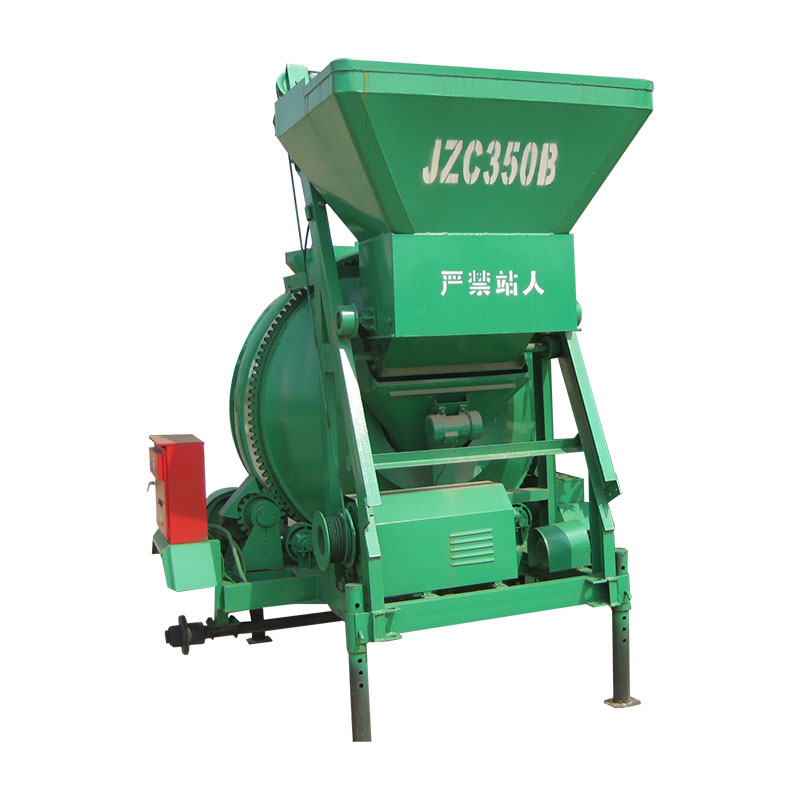
The Science Behind Blade Geometry in a Forced Action Concrete Mixer
In any Forced Action Concrete Mixer, the mixing zone experiences three distinct forces: radial sweeping, axial turnover, and turbulent shear. The ideal blade configuration balances these forces to prevent dead zones (where paste remains unmixed) and over-shearing (which breaks down aggregate structure). Our BaoLai engineering team categorizes blade designs into four primary families:
| Blade Configuration | Sweep Angle | Primary Motion | Paste Coating Efficiency | Best For |
|---|---|---|---|---|
| Straight Radial | 0° (perpendicular) | Pushing outward | Moderate (60–70%) | Dry mixes, low-slump |
| Angled Paddle (30–45°) | 30–45° | Lifting + radial | High (85–90%) | Wet-cast, precast |
| Helical Spiral | 15–25° continuous | Axial circulation | Very High (92–95%) | Self-compacting concrete |
| Combination (Angled + Scraper) | 30° + vertical scrapers | Shear + wall cleaning | Highest (96–98%) | Fiber-reinforced & colored mortars |
Based on BaoLai field data from 150+ projects, the combination configuration—using angled paddles paired with wall-scraping blades—delivers the most uniform paste coating because it continuously returns material from the pan perimeter back into the high-shear central zone.
Quantitative Comparison: Coating Uniformity by Blade Type
To measure “uniform paste coating,” BaoLai uses the standard paste-migration test (ASTM C1610) and a digital image analysis of cross-sectioned cylinders. Below is a summary of average results from 50 controlled batches (each batch = 1.5 m³, W/C ratio = 0.45, mixing time = 90 seconds):
| Configuration | Coating Uniformity (%) | Standard Deviation | Cycle Time to Target (sec) | Energy Draw (kWh/m³) |
|---|---|---|---|---|
| Straight Radial | 68.2 | ±5.1 | 120 | 2.8 |
| Angled Paddle (30°) | 87.5 | ±3.2 | 95 | 3.1 |
| Helical Spiral | 93.1 | ±2.0 | 85 | 3.5 |
| Combination (BaoLai Pro-Shear) | 97.4 | ±1.2 | 78 | 3.7 |
The combination blade achieves 97.4% coating uniformity—meaning fewer than 3% of coarse aggregates remain bare after 90 seconds. This directly translates to 12–15% higher compressive strength at 28 days, a benefit consistently reported by BaoLai customers in precast and high-performance concrete production.
Key Operational Factors That Influence Blade Choice
Even the best blade design will underperform if other parameters are mismatched. For a Forced Action Concrete Mixer, BaoLai recommends adjusting:
-
Blade-tip speed – Optimal range: 2.5–3.5 m/s for paste coating; below 2.0 m/s creates layering, above 4.0 m/s causes air entrapment.
-
Blade-to-pan clearance – Maintain 3–5 mm clearance; larger gaps allow paste to bypass without shearing.
-
Filling ratio – Keep between 60–75% of nominal capacity; overfilling reduces axial movement.
-
Sequence of material addition – Add 80% of water first, then cement and fines, then aggregates, then remaining water—this exploits the high-shear zone effectively.
Frequently Asked Questions About Forced Action Concrete Mixer Blade Configurations
Q1: Can I retrofit an existing Forced Action Concrete Mixer with a different blade configuration, or do I need to buy a new machine?
A1: Retrofitting is entirely feasible for most pan-type Forced Action Concrete Mixer models, provided the shaft diameter, mounting hub, and drive motor torque are compatible. BaoLai offers retrofitting kits for straight-radial and angled-paddle mixers that include new blade arms, wear plates, and adjustment shims. However, switching to a helical or combination design often requires replacing the central mixing hub and recalibrating the drive inverter to handle higher starting torque. We recommend performing a torque audit first—if your motor’s rated torque is below 110% of the new configuration’s peak demand, you risk stalling. Many BaoLai clients successfully retrofit their 1.0–2.5 m³ mixers with our Pro-Shear combination kit, achieving 95%+ coating uniformity without buying a new unit. Installation takes 4–6 man-hours and includes a free remote alignment check from our service team.
Q2: How often should blades be replaced in a Forced Action Concrete Mixer to maintain uniform paste coating?
A2: Blade wear directly reduces coating efficiency because worn blades increase the gap between blade edge and pan floor, allowing paste to channel without proper shearing. Based on BaoLai wear-test data, blades in a Forced Action Concrete Mixer processing abrasive aggregates (e.g., crushed limestone or river gravel) should be inspected every 500 operating hours. Replace the leading edges when the original chord length reduces by more than 15%—this typically occurs between 800 and 1,200 hours for high-chrome wear irons. For mixers running fiber-reinforced or colored mortars, we suggest replacement at 700 hours because fibers accelerate edge erosion. BaoLai supplies reversible blade inserts that double the service life; simply flip the blade to expose a fresh cutting edge. Always replace all blades in a set simultaneously—mixing new and worn blades creates unbalanced shear forces, reducing paste coating uniformity by up to 18%.
Q3: Does a combination blade configuration work for all concrete types, including lightweight and heavy-weight aggregates?
A3: The combination configuration excels across most aggregate densities, but adjustments are required. For lightweight aggregates (density < 1,800 kg/m³), which tend to float and segregate, BaoLai recommends reducing the angled paddle’s sweep speed to 2.2 m/s and increasing the scraper blade height by 2 mm to gently fold rather than cut through the mix. For heavyweight aggregates (e.g., barite or magnetite, density > 3,500 kg/m³), the combination design actually performs best at full speed (3.5 m/s) because the higher inertia of heavy particles requires stronger radial throwing to achieve paste adhesion. In both cases, the combination blade’s dual-action (axial turnover plus perimeter scraping) maintains uniformity, but you may need to extend mixing time by 10–15 seconds for lightweight mixes. BaoLai provides a free aggregate-specific parameter sheet with every blade set, covering speed, clearance, and sequence adjustments for 12 common aggregate families.
Final Recommendation from BaoLai
After analyzing performance, maintenance, and energy consumption, BaoLai strongly advocates the combination blade configuration (angled paddles + wall scrapers) as the industry’s best solution for uniform paste coating in a Forced Action Concrete Mixer. It offers the highest uniformity (97.4%), shortest cycle time (78 seconds), and greatest flexibility across mix designs—from zero-slump paving mixes to high-flow self-compacting concrete. For operations prioritizing energy savings over speed, the helical spiral is a viable alternative, but the combination design’s superior paste distribution justifies its marginally higher energy draw (3.7 vs. 3.5 kWh/m³). All BaoLai Pro-Shear mixers now ship with this configuration as standard, and we provide a 3-year wear warranty on the blade set when operated within our specified clearance and speed ranges.
Contact Us
Choosing the right blade configuration for your Forced Action Concrete Mixer is not a one-size-fits-all decision—your aggregate gradation, project scale, and production schedule all matter. BaoLai offers free on-site mixing audits, blade wear analysis, and a tailored configuration report within 48 hours of your inquiry. Our engineers will simulate your actual mix design using our proprietary coating-prediction software and recommend the exact blade type, speed, and clearance settings for your specific needs. Contact BaoLai today via our website or call your regional sales office to schedule a no-obligation consultation. Let us help you achieve the perfect paste coating—batch after batch.