

Which Concrete Brick Machines Can Improve Production Efficiency and Product Quality?
2026-10-14
Concrete Brick Machines play an important role in modern construction material manufacturing, helping producers transform cement, sand, aggregates, and water into uniform concrete bricks and blocks. As demand for durable, cost-effective building materials continues to grow, manufacturers need reliable equipment that can balance production efficiency, product consistency, and operating costs. Selecting the right machinery can help construction material suppliers improve output, reduce manual labor, and respond to different market requirements. For businesses planning to establish a new production facility or upgrade existing equipment, understanding machine functions and selection criteria is essential. Ledrobit Machinery Co., Ltd. provides machinery solutions for businesses seeking practical and efficient concrete brick production equipment.
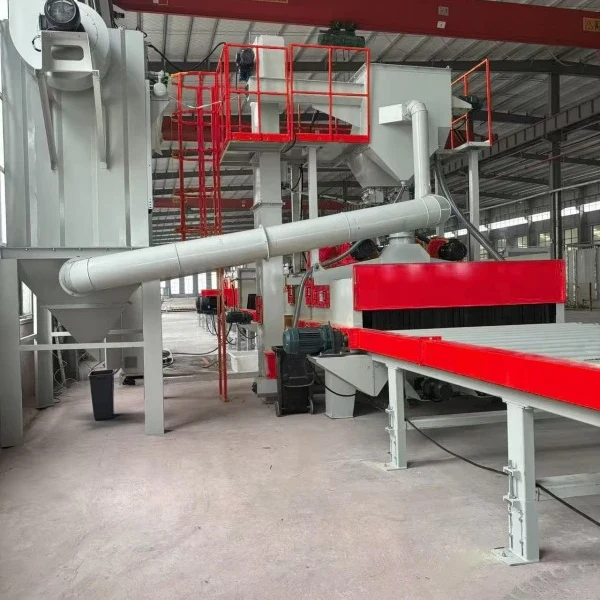
1. How Do Concrete Brick Machines Work?
Concrete Brick Machines manufacture bricks and blocks by combining material feeding, molding, vibration, and compaction. Depending on the machine configuration, the production process may also integrate automated conveying, stacking, and other material-handling systems.
Main Production Stages
-
Raw Material Preparation: Cement, sand, aggregates, water, and suitable additives are measured and mixed to achieve the required consistency.
-
Material Feeding: The prepared mixture is transferred into the machine's mold through a controlled feeding process.
-
Molding and Compaction: Mechanical vibration and, where applicable, hydraulic pressure compact the mixture into the desired shape and dimensions.
-
Demolding and Transfer: The newly formed bricks or blocks are carefully released from the mold and transferred for curing.
-
Curing and Quality Inspection: Products develop strength under appropriate curing conditions before being inspected and prepared for storage or delivery.
Each stage affects the final product. Consistent material proportions, suitable compaction, accurate molds, and proper curing are essential for achieving reliable dimensions and mechanical performance.
2. What Types of Concrete Brick Machines Are Available?
Different production environments require different equipment configurations. The appropriate choice depends on investment capacity, output targets, available labor, and the types of concrete products required.
Common Machine Types
-
Manual Concrete Brick Machines: Suitable for small workshops and businesses with limited production requirements. They generally involve more manual operation and require less investment.
-
Semi-Automatic Concrete Brick Machines: Combine mechanized forming with manual intervention in selected stages, making them suitable for growing manufacturers seeking a balance between investment and productivity.
-
Fully Automatic Concrete Brick Machines: Integrate automated feeding, molding, and material handling to support larger production volumes and reduce routine labor requirements.
-
Integrated Production Lines: Connect batching, mixing, brick forming, conveying, curing, and stacking equipment into a coordinated manufacturing process.
The best solution is not necessarily the most automated one. Businesses should evaluate whether the machine's capacity and operating requirements match their actual production plans.
3. Why Are Concrete Brick Machines Important?
Investing in suitable Concrete Brick Machines can improve manufacturing performance in several ways.
Higher Production Efficiency
Mechanized forming reduces repetitive manual tasks and helps manufacturers maintain a more organized production schedule. Automated systems can further improve workflow by coordinating material feeding, molding, and product transfer.
For suppliers serving contractors, distributors, and construction projects, reliable output makes it easier to plan inventory and meet delivery deadlines.
More Consistent Product Quality
Accurate molds and controlled compaction help produce bricks with more consistent dimensions and density. This improves batch uniformity and supports quality control throughout the manufacturing process.
However, equipment alone cannot guarantee product quality. Material selection, mixture proportions, machine maintenance, and curing conditions must also be properly managed.
Better Labor and Cost Management
Appropriate machinery can reduce dependence on manual forming and handling. When production processes are well organized, manufacturers may also reduce material waste, rework, and unnecessary handling.
The overall financial benefit depends on equipment utilization, energy consumption, labor costs, maintenance requirements, and local market demand.
4. Which Concrete Products Can These Machines Produce?
With compatible molds and suitable production settings, concrete brick-making equipment can support a range of construction applications.
| Product Type | Common Application |
|---|---|
| Solid concrete bricks | Walls and general masonry |
| Hollow concrete blocks | Building walls and partition systems |
| Concrete paving blocks | Walkways, driveways, and outdoor areas |
| Interlocking concrete blocks | Selected landscaping and construction applications |
| Concrete curbstones | Roads, parking areas, and landscape boundaries |
Product compatibility varies by machine model, mold design, and production process. Buyers should confirm the required dimensions, shapes, and technical specifications before placing an equipment order.
5. How Should You Choose the Right Concrete Brick Machines?
A well-planned purchase begins with a clear understanding of production requirements rather than price alone.
Consider these essential factors:
-
Production Capacity: Estimate daily and annual demand, including potential future growth.
-
Automation Level: Compare labor availability, operator skills, and the benefits of automated material handling.
-
Product Specifications: Confirm the required brick types, mold dimensions, and applicable quality standards.
-
Factory Layout: Assess installation space, power supply, material storage, and transportation routes.
-
Operating Costs: Review energy use, consumables, spare parts, maintenance, and labor requirements.
-
Technical Support: Evaluate installation guidance, operator training, maintenance assistance, and spare-parts availability.
Requesting a detailed technical quotation and confirming the complete equipment configuration can help buyers compare suppliers more accurately.
6. Why Consider Ledrobit Machinery Co., Ltd.?
For businesses sourcing concrete brick production equipment, choosing a machinery supplier is an important step toward establishing a stable manufacturing operation. Ledrobit Machinery Co., Ltd. is a company to consider when evaluating equipment solutions for concrete brick production.
Before making a purchasing decision, buyers should communicate their target output, product dimensions, factory conditions, and automation requirements. They should also request relevant machine specifications, production demonstrations where available, warranty details, and after-sales service information.
A clear understanding of these requirements helps both parties identify an equipment configuration that aligns with the buyer's production goals and investment plan.
Conclusion
Concrete Brick Machines are essential tools for improving the efficiency, consistency, and scalability of concrete brick manufacturing. From compact manual equipment to fully automatic production lines, each configuration offers different advantages for businesses of different sizes. By evaluating production capacity, product compatibility, operating costs, and technical support, buyers can make more informed investment decisions.
Ledrobit Machinery Co., Ltd. welcomes businesses looking for suitable concrete brick production solutions. Contact us to discuss your manufacturing requirements, explore available equipment options, and identify a practical solution for your concrete brick production business.