

Article Summary: A disassembly plate heat exchanger is particularly useful in HVAC systems where heat-transfer surfaces may need regular inspection, cleaning, gasket replacement, or troubleshooting. Unlike permanently sealed heat exchangers, a gasketed plate-and-frame design allows the plate pack to be opened and inspected. This can be valuable for chilled-water systems, heating loops, district energy equipment, heat recovery units, and other commercial or industrial HVAC applications. This guide explains what to look for when selecting a disassembly plate heat exchanger, how the structure affects maintenance, which operating problems usually require opening the unit, and how correct disassembly and reassembly can help protect heat-transfer performance and service life.
Why Plate Heat Exchangers Matter in HVAC Systems
Heat exchange is one of the less visible parts of an HVAC installation, but it has a direct effect on temperature control, energy consumption, equipment protection, and system stability. In a chilled-water application, for example, the heat exchanger transfers heat between the building-side circuit and the cooling source while keeping the two fluids physically separated. In heating applications, the same basic principle can be used to transfer energy from hot water, steam or another heating medium into the building loop.
Plate heat exchangers are widely used because a series of thin corrugated plates creates a large heat-transfer area within a relatively compact footprint. The plate pattern also promotes turbulence, helping the fluids exchange heat efficiently. However, the same compact passages that make the design effective can become sensitive to fouling, deposits, debris, poor water quality, or unsuitable operating conditions.
This is where a disassembly plate heat exchanger for the HVAC industry becomes particularly practical. A gasketed plate-and-frame construction can be opened when internal inspection or manual cleaning is required. Maintenance personnel can access the heat-transfer plates, examine gasket surfaces, identify deposits and replace damaged components rather than treating the complete heat exchanger as a closed, inaccessible assembly.
What Makes a Disassembly Plate Heat Exchanger Different?
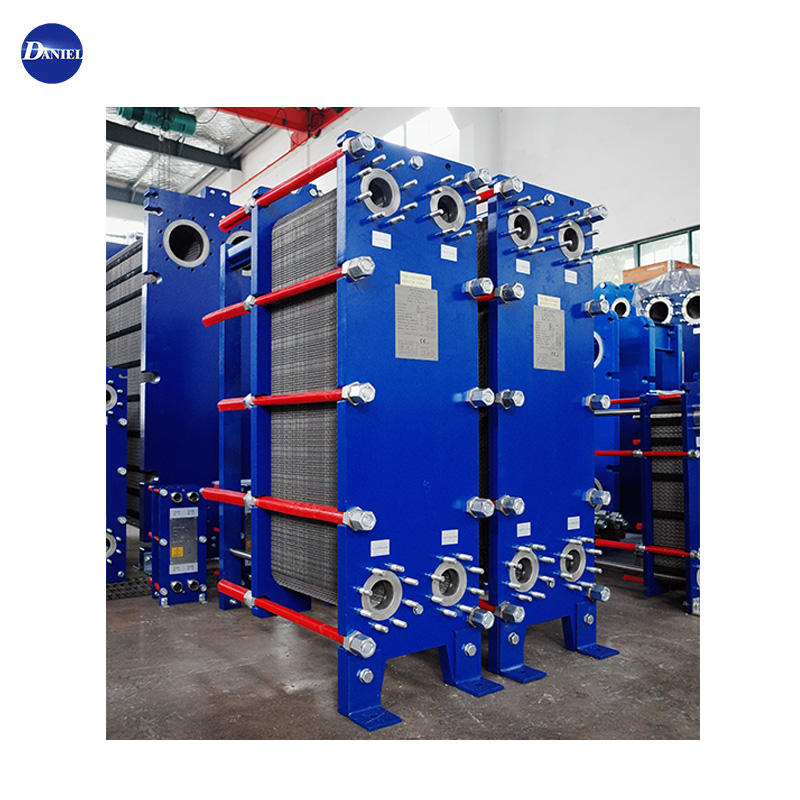
A typical disassembly plate heat exchanger consists of a fixed frame plate, a movable pressure plate, carrying bars, tightening bolts and a pack of corrugated heat-transfer plates. Gaskets around the plates establish the flow channels and separate the hot and cold circuits.
The plates are compressed together to create a sealed assembly. During operation, one fluid travels through alternating channels while the other fluid flows through the adjacent channels. Heat passes through the metal plate, while the fluids remain separated.
The major maintenance advantage is accessibility. Once the unit is safely isolated and opened, individual plates can be inspected and cleaned. Depending on the design, damaged plates or gaskets can also be replaced without replacing the entire heat exchanger.
That feature is especially useful in HVAC installations where the equipment may be expected to operate for many years. Cooling towers, boilers, chilled-water loops and closed heating circuits do not always maintain ideal water quality. Over time, deposits can develop on the heat-transfer surface and gradually change the pressure drop or heat-transfer performance.
Key Points to Check Before Selecting a Unit
Choosing a plate heat exchanger should not be based on connection size alone. HVAC engineers and purchasing teams need to match the heat exchanger to the actual operating conditions and the maintenance environment.
| Selection Factor | Why It Matters | Information to Confirm |
|---|---|---|
| Heat duty | Determines the required heat-transfer capacity. | Heating or cooling load, inlet and outlet temperatures. |
| Fluid type | Influences plate and gasket material selection. | Water, glycol solution, refrigerant-related circuit or other media. |
| Operating pressure | The frame and plate assembly must be suitable for system pressure. | Normal pressure, design pressure and pressure fluctuations. |
| Temperature | Affects material compatibility and gasket service conditions. | Normal and maximum operating temperature. |
| Water quality | Helps determine the likelihood of scaling, corrosion and fouling. | Hardness, suspended solids, chemical treatment and glycol concentration. |
| Maintenance access | A disassembly design requires enough space to open and move the plate pack. | Available clearance around the frame and service area. |
The last point is often overlooked. A heat exchanger may fit comfortably into a plant room when installed, but the surrounding space may not be sufficient to remove or slide the plates later. For a serviceable gasketed unit, maintenance clearance should be considered during the original system layout rather than after the equipment has already been installed.
When Should an HVAC Plate Heat Exchanger Be Opened?
Not every performance problem means that the plate pack needs to be opened immediately. Many HVAC systems can use routine monitoring to identify changes before major maintenance becomes necessary.
A rising pressure drop can indicate increased flow resistance caused by fouling or blockage. A reduction in outlet temperature performance can point toward deposits, insufficient flow, incorrect operating conditions or changes elsewhere in the HVAC system. External leakage around the plate pack may indicate a gasket problem, insufficient tightening, plate deformation or another sealing issue.
Opening the exchanger becomes more relevant when routine cleaning is no longer sufficient, when inspection is required, or when the operating symptoms suggest an internal condition that cannot be confirmed from the outside.
- Heat-transfer performance has declined compared with the normal operating baseline.
- Pressure drop has increased beyond the expected operating range.
- Visible leakage is found around the plate pack or connections.
- Water quality problems have caused significant scaling or deposits.
- A gasket inspection or replacement is required.
- Internal plates need inspection for corrosion, erosion, deformation or damage.
- The equipment is being serviced as part of a planned maintenance program.
Maintenance intervals should be determined from the actual application and the manufacturer's recommendations rather than relying on a universal calendar period. A clean closed-loop HVAC circuit may behave very differently from a system exposed to hard water, suspended solids or aggressive treatment chemicals.
How Should the Plate Pack Be Disassembled?
Disassembly looks straightforward, but careless handling can create problems that are more expensive than the original maintenance issue. The plate arrangement, gasket condition and tightening dimension should be documented before the plate pack is disturbed.
1. Shut Down and Isolate the Equipment
Stop the relevant HVAC circuit and isolate the heat exchanger from connected piping. Confirm that pressure has been released and that the internal fluid has been completely drained. If the equipment has been operating at elevated temperature, allow it to cool to a safe working condition.
2. Record the Original Condition
Before opening the frame, record relevant measurements according to the manufacturer's instructions. The original plate-pack dimension can be important during reassembly. Photographing the plate arrangement can also provide a useful reference, especially when a large number of plates are involved.
3. Mark the Plate Pack
Plate orientation and sequence matter. Marking the outside of the assembled plate pack before removing individual plates helps preserve the original configuration. Manufacturer maintenance instructions commonly recommend marking the assembly before opening it.
4. Loosen the Tightening Bolts Gradually
Tightening bolts should be loosened according to the manufacturer's specified sequence rather than simply removing one side completely. Controlled loosening helps avoid unnecessary stress on the frame and plate pack.
5. Move the Pressure Plate and Inspect the Plates
Once the pressure plate has been moved sufficiently, individual plates can be accessed. Plate edges can be sharp, so suitable hand protection should be used. Plates should be handled carefully to avoid bending or damaging the sealing surfaces.
Cleaning and Plate Inspection
Once the plate pack is open, the goal is not simply to make the plates look clean. The objective is to restore a suitable heat-transfer surface without damaging the corrugation, gasket groove or metal surface.
Water-soluble deposits may sometimes be removed using water and a suitable soft brush. More stubborn mineral scale or process deposits may require an approved chemical cleaning method. The cleaning agent must be compatible with the plate material, gasket material and the specific type of deposit.
Abrasive tools should be avoided when they can scratch the heat-transfer surface. Scratches can affect the surface condition and may contribute to corrosion or sealing problems. Cleaning pressure also needs to be controlled so that gaskets and sensitive components are not damaged.
Inspection should cover more than the plate surface
- Heat-transfer plates: Look for corrosion, erosion, cracks, pinholes, deformation and unusual wear.
- Gasket grooves: Check for deposits, damage and contamination.
- Gaskets: Look for cracks, hardening, swelling, deformation or loss of elasticity.
- Carrying bars: Check that the sliding surfaces are clean and suitable for movement.
- Frame: Inspect for distortion, corrosion and general mechanical condition.
- Tightening hardware: Check bolts, nuts and associated components before reassembly.
Proper cleaning also protects future performance. Deposits trapped along the gasket sealing line can interfere with sealing during reassembly, while deposits left on the heat-transfer area can continue to reduce thermal performance.
Why Gasket Condition Matters
In a gasketed plate heat exchanger, the gasket is not simply an accessory. It is part of the flow-channel and sealing system. The gasket controls how the individual channels are separated and helps prevent the heating and cooling media from mixing.
Aging, thermal cycling, chemical exposure and mechanical deformation can gradually change gasket performance. A gasket that appears acceptable at first glance may still require replacement if it has lost elasticity or no longer sits correctly in its groove.
Replacement gaskets should match the heat exchanger model and operating conditions. Material compatibility is particularly important because the same HVAC installation may use different temperatures, glycol concentrations or water-treatment chemicals from another installation.
During installation, the gasket groove and sealing surface should be clean. The gasket should sit correctly without twists, stretching or displacement. Manufacturer-approved adhesive or gasket-retention methods should be used where applicable.
Reassembly Without Losing Performance
Reassembly deserves as much attention as disassembly. A plate heat exchanger relies on the correct sequence and orientation of the plates to create its intended flow channels. Putting the plates back in an incorrect order can change the internal flow arrangement and affect performance.
Before closing the frame, confirm that every plate is correctly positioned and that the gaskets are seated properly. The plate pack should close evenly, with the fixed and pressure plates remaining aligned as specified by the manufacturer.
Tightening should be carried out gradually and in the recommended sequence. The final compression dimension should correspond to the manufacturer's specified value rather than being judged by appearance alone.
| Reassembly Check | Purpose |
|---|---|
| Plate order | Preserves the intended flow-channel configuration. |
| Plate orientation | Ensures the corrugation and ports align correctly. |
| Gasket seating | Maintains reliable separation between fluid channels. |
| Sealing surfaces | Prevents contamination from compromising the seal. |
| Frame alignment | Helps maintain even compression across the plate pack. |
| Final tightening dimension | Confirms that the plate pack has been compressed within the specified range. |
After reassembly, the system should be returned to service according to the manufacturer's commissioning procedure. The unit should be checked for leakage and abnormal operating conditions before being considered ready for normal HVAC operation.
Common HVAC Problems and What They Can Indicate
HVAC operators often notice the symptom before they know the cause. Looking at several operating parameters together can make troubleshooting much more useful.
| Observed Problem | Possible Internal Cause | Useful Investigation |
|---|---|---|
| Reduced heat-transfer capacity | Fouling, scaling, insufficient flow or changed operating conditions. | Compare temperatures and flow conditions with the original design or normal baseline. |
| Higher pressure drop | Deposits, blockage or increased flow resistance. | Compare current differential pressure with historical operating data. |
| External leakage | Gasket deterioration, incorrect compression, plate damage or contamination. | Inspect the plate pack and sealing areas after safe isolation. |
| Cross-contamination | Plate damage or internal sealing failure. | Investigate fluid quality and inspect plates and gaskets. |
| Repeated maintenance issues | Unsuitable water treatment, incorrect gasket material or operating conditions. | Review the complete system rather than replacing the same component repeatedly. |
This approach is particularly useful for commercial HVAC systems because replacing a gasket without addressing poor water quality or excessive fouling may only solve the immediate symptom. A maintenance record containing pressure drop, inlet and outlet temperatures, flow rate and previous service dates can provide a much clearer picture over time.
Disassembly Plate Heat Exchanger vs. Sealed Designs
Different HVAC projects have different priorities. A disassembly plate heat exchanger is designed around serviceability, while sealed heat exchangers may be selected where a compact permanently closed construction is preferred.
| Consideration | Disassembly Plate Heat Exchanger | Sealed Construction |
|---|---|---|
| Internal access | Plates can generally be accessed after opening the frame. | Internal access is more limited. |
| Gasket replacement | Applicable to gasketed models. | Not normally a routine field operation in the same way. |
| Manual cleaning | Practical when the design and application require it. | Cleaning options depend strongly on construction. |
| Inspection | Individual plates can be visually inspected. | Internal inspection can be more restricted. |
| Maintenance space | Requires adequate clearance for opening and plate removal. | Usually less service clearance is required for internal access. |
For HVAC applications where fouling, inspection, gasket replacement or future capacity modification is a concern, serviceability can be an important part of the equipment specification.
What HVAC Buyers Should Ask the Supplier
A good purchasing specification should give the supplier enough information to select the heat exchanger rather than simply asking for a unit based on pipe diameter. This reduces the risk of receiving equipment that physically fits the piping but does not perform correctly under actual operating conditions.
- What is the required heating or cooling duty?
- What are the inlet and outlet temperatures on both sides?
- What are the design and operating pressures?
- What fluids will pass through the primary and secondary circuits?
- Is glycol used, and at what concentration?
- What are the required connection sizes and connection standards?
- What plate and gasket materials are recommended for the application?
- What pressure-drop limit should be considered?
- What maintenance clearance is required around the frame?
- Are replacement plates and gaskets available for future maintenance?
- What technical drawings, data sheets and maintenance instructions are supplied?
For projects involving multiple HVAC units, it is also useful to ask about spare-part availability and long-term technical support. A heat exchanger is not only a purchase at the time of installation; its maintenance requirements can influence operating cost over many years.
Frequently Asked Questions
What is a disassembly plate heat exchanger used for in HVAC?
It is used to transfer heat between two separate fluid circuits while allowing the plate pack to be opened for inspection, cleaning and component replacement. Common applications include chilled-water systems, heating circuits, heat recovery and district energy systems.
Why is a gasketed plate heat exchanger useful for maintenance?
The frame can be opened so technicians can access the individual heat-transfer plates and gaskets. This makes visual inspection, manual cleaning and replacement of selected components more practical than with many permanently sealed designs.
How can I tell whether a plate heat exchanger needs cleaning?
A noticeable increase in pressure drop, reduced heat-transfer performance or unusual operating temperatures can indicate fouling. These symptoms should be evaluated together with flow rate, water quality and historical operating data before deciding on maintenance.
Should every plate heat exchanger be disassembled for routine cleaning?
Not necessarily. Some deposits can be addressed through an appropriate clean-in-place procedure. Disassembly may be required when deposits cannot be removed adequately, when internal inspection is needed, or when gaskets and plates require service.
Can damaged gaskets be replaced without replacing the complete heat exchanger?
In a gasketed plate heat exchanger, individual gaskets can generally be replaced when the correct replacement parts are available. The replacement gasket must be compatible with the specific plate design, fluid and operating conditions.
Why should the plate order be recorded before disassembly?
The sequence and orientation of the plates determine the internal flow passages. Losing the original arrangement can make correct reassembly more difficult and may affect the intended performance of the unit.
Does HVAC water quality affect plate heat exchanger performance?
Yes. Scaling, suspended solids and corrosion-related deposits can reduce effective heat-transfer area and increase flow resistance. Water treatment and filtration should therefore be considered as part of the overall HVAC system rather than as a separate maintenance issue.
What should be considered when installing a disassembly plate heat exchanger?
In addition to heat duty, pressure, temperature, flow rate, fluid compatibility and connection requirements, the installation should provide enough working space to open the frame and handle the plates safely during future maintenance.
Making Maintenance Part of the Original HVAC Design
The most practical way to approach a plate heat exchanger is to consider its entire service life rather than focusing only on the initial heat-transfer calculation. A correctly selected unit should meet the required thermal duty, remain compatible with the system fluids and provide a realistic maintenance path for the people who will operate it years after installation.
For HVAC engineers and procurement teams, the ability to open the plate pack can be particularly valuable when system conditions may change over time. Building loads change, water-treatment conditions change, pumps are replaced and operating schedules evolve. Equipment that can be inspected and serviced gives maintenance teams more options when those conditions change.
Jiangyin Daniel Cooler Co., Ltd. provides plate heat exchanger solutions for industrial and HVAC-related heat-transfer applications. When evaluating a project, the most useful starting point is the actual operating data: heat duty, temperatures, flow rates, pressure requirements, fluid properties and installation conditions. With these details, the heat exchanger can be selected around the real application rather than around a single nominal specification.
Need Help Selecting a Plate Heat Exchanger?
Choosing the right Disassembly Plate Heat Exchanger for the HVAC Industry starts with understanding the system behind it. If you are planning a new HVAC installation, replacing an existing heat exchanger, or looking for a serviceable solution for a demanding cooling or heating circuit, share your operating conditions and project requirements with the technical team.
Contact us to discuss your application, heat-transfer requirements, plate configuration, materials, connection details and maintenance needs with Jiangyin Daniel Cooler Co., Ltd..