

A handheld marking machine can transform the way manufacturers identify metal components, steel tubes, frames, plates, nameplates, and large industrial workpieces. By bringing the marking tool directly to the workpiece, operators can reduce handling, simplify on-site identification, and create permanent marks where conventional desktop equipment is difficult to use. This guide explains how handheld electric marking technology works, where it delivers the greatest value, what features matter in daily production, and how to select a practical solution for demanding industrial environments.
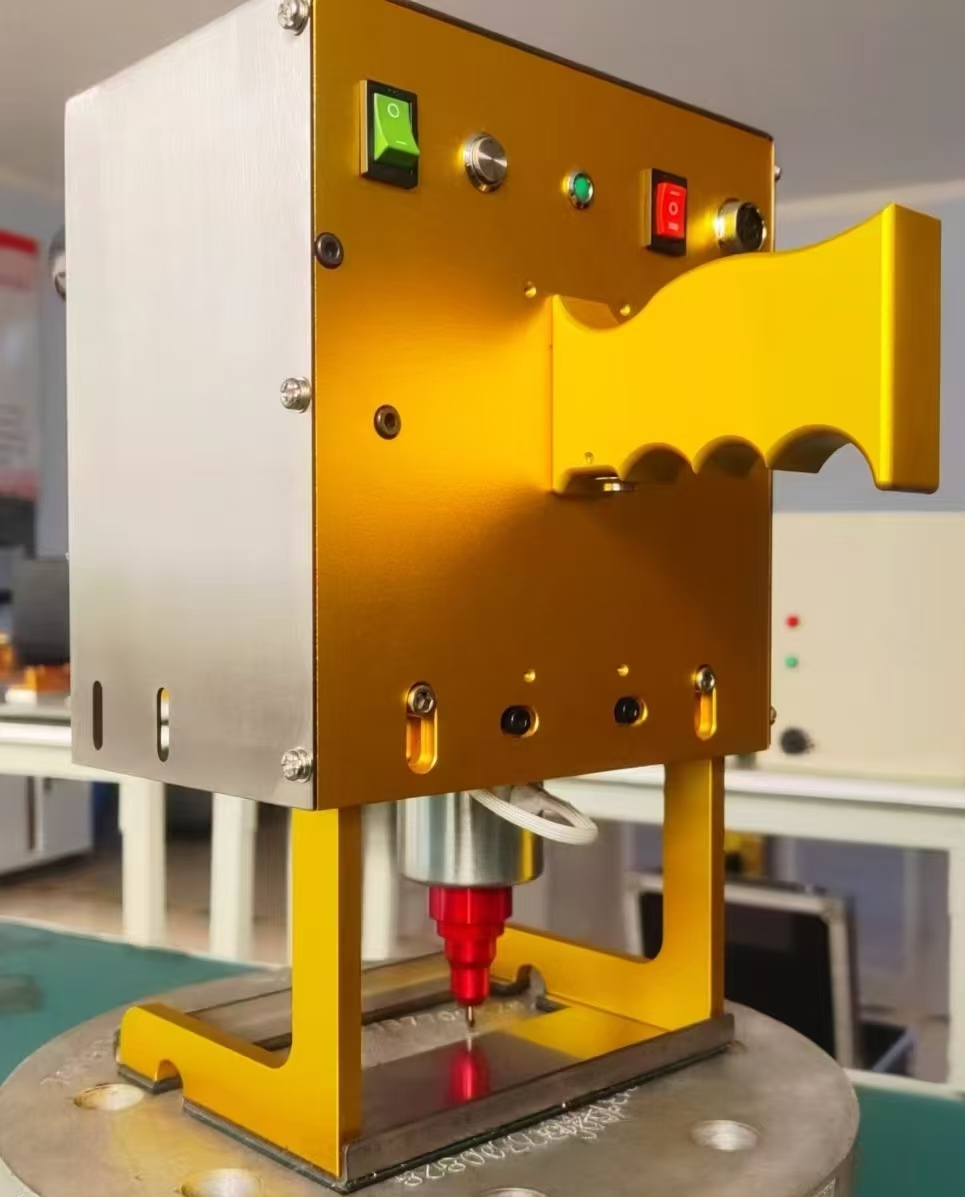
Understanding Handheld Marking Machines
Permanent identification has become an essential part of modern metal manufacturing. Serial numbers, model codes, VIN numbers, production information, inspection references, part numbers, and company identification may all need to remain readable throughout the service life of a component.
However, many industrial components are not convenient to place on a traditional desktop marking machine. Steel tubes, large frames, vehicle chassis, fabricated structures, heavy plates, pipes, and installed machinery can be difficult or expensive to move. This is where a handheld marking machine provides a practical advantage.
Instead of transporting the workpiece to the machine, the operator carries the marking equipment to the workpiece. This simple change can significantly improve production flexibility, especially when the component is large, heavy, irregularly shaped, or already positioned on a production floor.
What Problems Can a Handheld Marking Machine Solve?
Industrial marking often looks simple from the outside, but production teams encounter several practical difficulties. The biggest challenge is usually not creating one mark; it is creating consistent, readable identification without slowing the entire workflow.
1. Large Workpieces Are Difficult to Move
Moving a large steel component to a fixed marking station may require cranes, forklifts, additional operators, or special fixtures. These activities consume time and introduce unnecessary handling risks.
A portable marking system reverses the process. The operator can take the marking machine directly to the workpiece and complete identification at its current location.
2. Conventional Marking May Be Too Temporary
Paint labels, stickers, handwritten codes, and surface printing can become difficult to read after exposure to abrasion, oil, weather, heat, cleaning processes, or repeated handling. Mechanical marking creates a physical impression in the surface, making it a useful option when long-term identification is required.
3. Field Marking Can Be Difficult
Construction sites, equipment maintenance areas, fabrication workshops, and outdoor production environments may not have convenient access to a fixed marking station. Battery-powered handheld equipment can make these applications much easier because the operator does not need to position the workpiece beside a large machine.
4. Production Identification Must Be Flexible
Different batches may require different serial numbers, dates, codes, graphics, or identification formats. A computer-controlled marking system can provide considerably more flexibility than manually stamped characters.
How Does Handheld Electric Marking Work?
Electric handheld marking machines generally use a controlled marking needle to create individual impact points on the surface of a workpiece. The control system guides the marking needle along programmed X and Y coordinates to form letters, numbers, symbols, graphics, or other required information.
This process is commonly known as dot-peen marking. Instead of removing large amounts of material, the marking needle makes a series of controlled indentations. When viewed together, these points form the required characters or graphic.
One advantage of this method is that the resulting identification is physically formed into the material rather than simply applied on top of it. For metal components that must retain their identification through handling and industrial use, this can be an important consideration.
Why Are Handheld Marking Machines Valuable for Industrial Production?
The value of a handheld marking machine is not limited to portability. A well-designed system can improve several parts of the production process at the same time.
Portability Where It Matters
A handheld machine can be particularly useful when the workpiece is heavier than the marking equipment. Instead of building a workflow around moving the component, operators can bring the marking system to the required location.
Reduced Dependence on External Power or Air
Battery-powered models can be especially convenient for mobile work. Luyue's battery operated handheld marking solutions are designed without the need for a conventional electric cable or air source, and certain models are specified for approximately 4–6 hours of continuous operation depending on the model and working conditions.
Permanent Identification
Mechanical dot-peen marking can provide durable identification on suitable metal surfaces. This is useful for serial numbers, component codes, VIN-related applications, equipment identification, and traceability information.
Flexible Marking Content
Depending on the control system, operators may mark English and Chinese characters, numbers, graphics, serial information, dates, VIN or PIN codes, and other programmed content. Some systems can also import files through USB storage or work with CAD-based graphics.
Suitable for On-Site Work
When production, repair, inspection, or installation takes place away from a conventional workshop, portability becomes a major productivity factor. A compact marking machine can help operators complete identification without reorganizing the entire work area.
Where Can a Handheld Marking Machine Be Used?
The versatility of handheld marking technology makes it suitable for many industries. The exact application depends on the material, required mark depth, available surface area, and environmental conditions.
| Application | Typical Marking Requirement | Why Handheld Equipment Helps |
|---|---|---|
| Steel Tubes and Pipes | Part numbers, specifications, batch codes | Can be positioned directly on round or large components |
| Vehicle Frames | VIN, serial numbers, identification codes | Large frames do not need to be transported to a fixed station |
| Metal Plates | Serial numbers, logos, technical information | Portable positioning simplifies large-plate marking |
| Machinery | Equipment numbers and maintenance references | Useful for marking installed or assembled equipment |
| Fabricated Structures | Component identification and traceability | Operators can mark parts in the fabrication area |
| Motorcycle and Bicycle Frames | Frame numbers and product identification | Compact equipment can reach narrow or curved work areas |
Portable marking equipment is also relevant to industries such as automotive manufacturing, metal fabrication, machinery production, steel processing, agricultural equipment, construction equipment, and general component manufacturing.
Which Features Should Buyers Evaluate?
Purchasing a marking machine based only on price can create problems later. The equipment should be evaluated against the actual production environment and marking requirements.
Marking Area
The marking area determines how much information can be placed in one operation. For example, a Luyue LYD800 configuration is listed with a 140 × 60 mm marking range, while other handheld models use different working areas. Select a working range that matches the longest common marking content rather than choosing a specification in isolation.
Marking Depth
Different applications require different depths. A shallow identification may be sufficient for a protected component, while industrial traceability may require deeper marking. Certain Luyue handheld models list a marking depth range of 0.01–2 mm. Actual results depend on material hardness, surface condition, needle selection, and operating settings.
Battery Performance
For mobile applications, battery endurance is critical. A machine that requires frequent charging may interrupt production. Users should consider working hours, number of marks per shift, charging arrangements, and whether spare batteries are available.
Weight and Ergonomics
Operators may need to hold the machine against a workpiece repeatedly. Excessive weight can increase fatigue and reduce marking consistency. A compact structure, suitable grip, stable positioning method, and balanced design are therefore important.
Software and Data Input
The control system should support the information used by the factory. Useful functions can include variable text, serial numbering, date and time information, VIN or PIN codes, graphics, and imported files.
Material Compatibility
Always verify the intended material before purchasing. Steel, stainless steel, aluminum, hard plastics, and other materials can behave differently during impact marking. A supplier should be able to discuss material hardness, surface condition, required depth, and suitable needle configuration.
How Does Handheld Equipment Compare with Fixed Marking Machines?
Neither handheld nor fixed equipment is universally better. The correct solution depends on the workpiece and production environment.
| Consideration | Handheld Marking Machine | Fixed/Desktop Machine |
|---|---|---|
| Large Workpieces | Very convenient for on-site marking | May require workpiece movement or special fixtures |
| Small Parts | Suitable for many applications | Often highly convenient when batches are standardized |
| Mobility | Excellent | Limited |
| Production Line Integration | Useful for flexible operations | Often better for dedicated high-volume processes |
| Outdoor Work | Particularly suitable for battery-powered models | Usually less convenient |
| Operator Flexibility | High | Dependent on fixture and machine layout |
For factories processing many small components in a controlled environment, a desktop marking machine may provide excellent repeatability. For large, heavy, assembled, or difficult-to-move workpieces, handheld equipment can offer a more practical workflow.
How Can Operators Improve the Marking Workflow?
Good equipment alone does not guarantee good results. A repeatable operating procedure helps maintain consistent quality.
- Clean the marking area. Remove excessive oil, loose scale, dirt, or other contamination from the surface.
- Confirm the marking content. Check part numbers, serial numbers, dates, and other variable information before marking.
- Choose a suitable position. Make sure the marking location is accessible and leaves enough space for the complete code.
- Stabilize the machine. Keep the marking head properly positioned against the workpiece to reduce unwanted movement.
- Perform a sample mark. When working with a new material or surface condition, test the settings before beginning the full batch.
- Inspect the result. Confirm character clarity, alignment, depth, and readability.
- Record production information. For traceability-critical applications, connect the marking process with the factory's existing identification and quality-control procedures.
What Maintenance Practices Help Keep Marking Quality Stable?
Portable industrial equipment still requires regular care. Maintenance is particularly important because the marking needle and mechanical drive system repeatedly experience impact forces.
- Keep the marking head and surrounding components clean.
- Inspect the marking needle for wear and replace it when necessary.
- Check mechanical movement for abnormal noise or resistance.
- Keep batteries charged according to the manufacturer's recommendations.
- Inspect power connections and charging equipment before use.
- Protect the control unit from unnecessary impact, dust, moisture, and contamination.
- Use appropriate settings for the material instead of applying excessive force.
- Periodically verify marking quality with reference samples.
If mark depth gradually becomes inconsistent, the cause may not always be the software. Needle wear, surface contamination, material variation, incorrect positioning, mechanical wear, or unsuitable parameters can all influence the final result.
Why Supplier Experience Matters
Marking equipment is closely connected with the material and application. A supplier should therefore do more than provide a machine specification. Technical communication before purchase can help determine whether the selected system is appropriate for the workpiece, marking content, depth requirement, and production environment.
Jinan Luyue CNC Equipment Co., Ltd. specializes in laser, pneumatic, and electric marking equipment, including metal engraving machines, dot-peen marking machines, and fiber laser marking machines. The company also provides customized and OEM services for different marking requirements.
Its product range includes handheld, portable, desktop, pneumatic, electric, battery-powered, and laser marking solutions. This broader range can be useful when a customer needs to evaluate different technologies for different workpieces rather than forcing every application into one machine category.
For buyers considering a handheld electric marking machine, discussing the actual material, workpiece dimensions, marking size, required depth, working environment, and daily marking volume with the supplier can provide a much clearer basis for selecting equipment.
Frequently Asked Questions
Handheld dot-peen and electric marking machines are commonly used for suitable metal surfaces such as steel and other industrial materials. Material hardness and surface condition affect the final result, so application testing is recommended for unfamiliar materials.
Yes. Portable marking machines are particularly useful for steel tubes and pipes because the machine can be positioned directly on the workpiece. Suitable fixtures or positioning accessories can improve stability on curved surfaces.
Battery-powered models can be very convenient for outdoor or mobile applications because they reduce dependence on fixed electrical or compressed-air connections. Actual operating time depends on the model, battery condition, marking workload, and environmental conditions.
Marking depth depends on the machine configuration, material, needle, and operating parameters. Some Luyue handheld models specify a depth range of approximately 0.01–2 mm. The appropriate depth should be confirmed through application testing.
Yes. Suitable marking systems can support numbers, letters, serial information, VIN, PIN, dates, and other variable data. The exact supported formats depend on the controller and software configuration.
Choose a marking area based on the longest information you normally need to place in one operation. If the application involves long serial numbers, graphics, or multiple lines, a larger marking field can reduce the need for repositioning.
The two technologies serve different requirements. Mechanical marking is attractive when a physically indented mark is desired, while laser marking can be preferable for applications requiring high-speed, fine, non-contact surface processing. The material, required mark, production volume, and workpiece geometry should determine the technology.
Provide the material, workpiece photographs, approximate dimensions, marking content, required marking size, desired depth, daily production volume, and working environment. If possible, provide sample parts or sample images so the supplier can evaluate the application more accurately.
Which Handheld Marking Machine Is the Right Fit?
The right handheld marking machine is the one that matches the real production environment, not simply the one with the longest specification list. Buyers should consider the size and shape of their workpieces, material hardness, required marking depth, marking area, data requirements, battery endurance, operator comfort, and expected workload.
For large or difficult-to-move components, portability can be the decisive advantage. For field applications, battery operation can simplify installation and reduce dependence on external utilities. For traceability applications, programmable serial numbers and permanent mechanical identification can make production records more reliable.
A carefully selected handheld marking machine can therefore do more than add a number to a metal surface. It can help manufacturers create a more flexible marking workflow, reduce unnecessary material handling, support long-term product identification, and make on-site marking significantly easier.
Need a Handheld Marking Solution for Your Application?
Whether you need to mark steel tubes, metal plates, vehicle frames, machinery, nameplates, or other industrial components, the best starting point is to match the machine with your actual workpiece and marking requirements.
Jinan Luyue CNC Equipment Co., Ltd. can provide marking equipment, customization, and technical support for different industrial applications. Share your material, workpiece size, marking content, and required depth to discuss a suitable solution and contact us for further assistance.