

Article Summary
Learn how to evaluate laser marking machine manufacturers, compare fiber, UV, and CO2 laser technologies, select suitable power and marking configurations, assess production requirements, and verify after-sales support. Use the comparison tables and purchasing checklist to reduce equipment selection risks and identify a machine that fits your actual manufacturing needs.
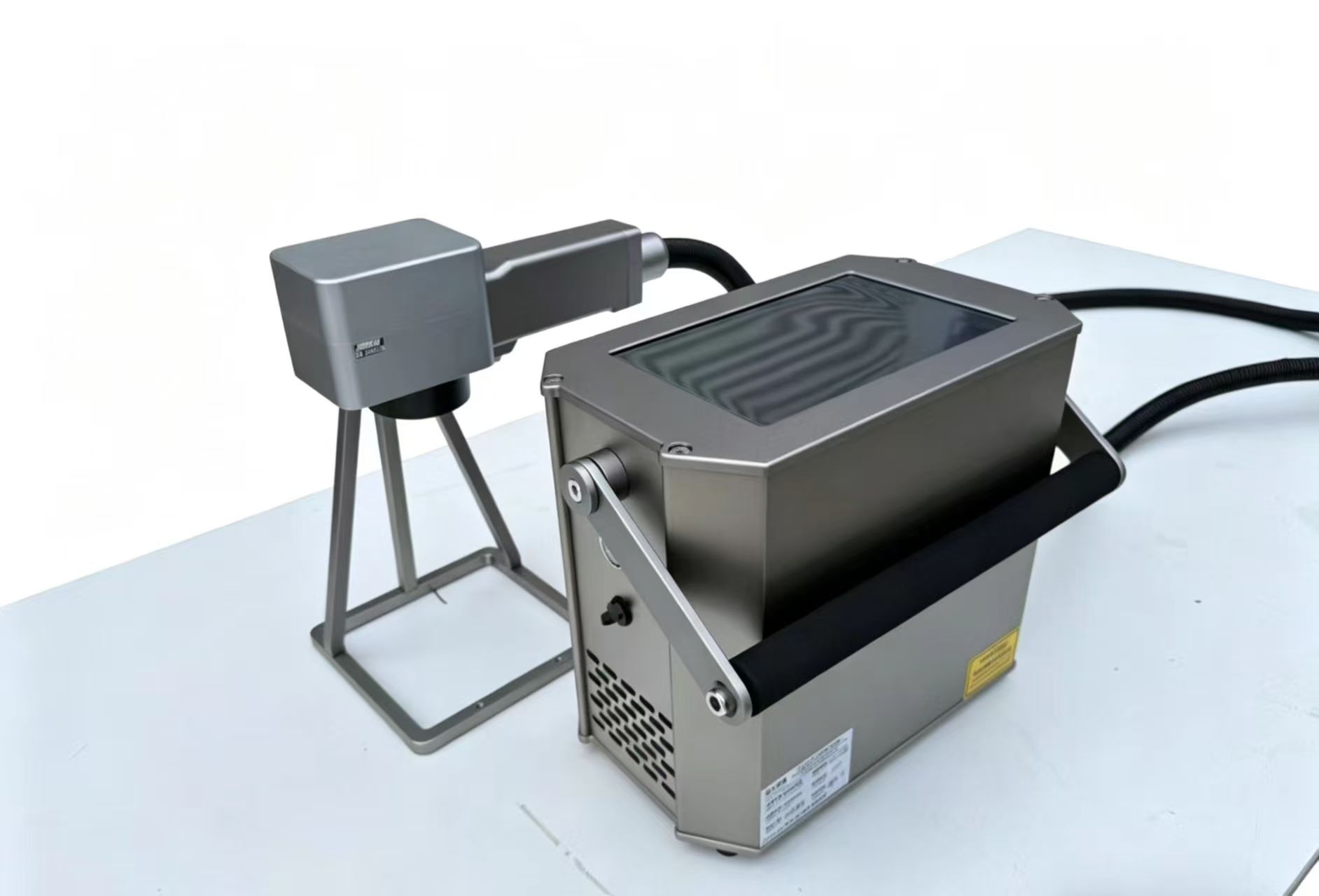
1. Why Does Manufacturer Selection Matter?
Laser marking is widely used to apply serial numbers, product identifiers, logos, QR codes, barcodes, and other information directly to components. Compared with ink-based labeling or conventional contact marking, laser processing can offer precise, permanent identification with limited consumable requirements.
However, the quality of the final result depends on more than the laser source. Optical components, control software, motion systems, workholding arrangements, machine structure, and process parameters all contribute to performance.
Working with an appropriate manufacturer can help buyers address several common production challenges.
Consistent marking quality
Uneven contrast, distorted characters, inconsistent engraving depth, and unreadable codes can cause inspection failures and rework. A suitable machine configuration and a properly developed marking process help maintain consistent results across production batches.
Higher production efficiency
Slow marking cycles can create bottlenecks when equipment must process hundreds or thousands of components. The correct laser source, scanner, lens, fixture, and software settings can improve throughput without sacrificing the required mark quality.
Lower operating risk
Unplanned downtime can delay deliveries and increase labor costs. Buyers should therefore assess component availability, maintenance requirements, technical documentation, warranty terms, and the supplier's ability to provide troubleshooting assistance.
Better application compatibility
A machine suitable for stainless steel identification may not be the best choice for transparent plastics, glass, or wood. Experienced suppliers should ask about the actual material, surface finish, required marking effect, and production environment before recommending equipment.
2. Which Laser Marking Technology Fits Your Production Needs?
Different laser technologies interact with materials in different ways. Selecting the correct type at the beginning helps prevent poor contrast, surface damage, unnecessary investment, and disappointing production results.
| Laser Technology | Typical Applications | Main Advantages | Important Considerations |
|---|---|---|---|
| Fiber laser | Steel, stainless steel, aluminum, and selected engineering plastics | Effective metal marking, precise detail, and generally low routine consumable requirements | Not ideal for every plastic, transparent material, or organic surface |
| MOPA fiber laser | Metal identification, anodized aluminum, and selected color-marking applications | Adjustable pulse duration offers greater process flexibility | Results depend on material, surface condition, and parameter development |
| UV laser | Selected plastics, electronics, glass, and heat-sensitive components | Fine marking with reduced thermal effects in suitable applications | Material testing is important; the initial equipment cost may be higher |
| CO2 laser | Wood, paper, leather, acrylic, and various nonmetallic materials | Well suited to many organic materials and nonmetal applications | Metal marking generally requires a compatible surface or specialized process |
These categories are starting points rather than universal guarantees. Actual results depend on the exact material formulation, wavelength, power, pulse characteristics, optical setup, and desired appearance.
Fiber lasers for industrial metal marking
Fiber laser marking machines are commonly selected for metal components because they can produce detailed identification marks on many industrial alloys. Typical applications include serial numbers on machine parts, logos on tools, traceability codes on automotive components, and identification marks on metal nameplates.
For applications involving deep engraving, reflective metals, or demanding cycle times, the required power and configuration should be established through application testing rather than wattage alone.
MOPA lasers for greater process flexibility
MOPA fiber lasers allow adjustment of pulse duration over a specified operating range. Depending on the material and settings, this flexibility can help achieve particular surface finishes, high-contrast marks, or color effects on suitable metals.
Buyers should request actual samples when appearance is critical. A MOPA source does not automatically guarantee a particular color, contrast level, or processing speed.
UV lasers for fine and heat-sensitive marking
UV laser systems are often considered when processing small components, selected plastics, electronic parts, or materials that may be damaged by excessive heat. Their shorter wavelength can support fine features in suitable applications.
Before purchasing, confirm that the machine can meet your required contrast, detail, cycle time, and durability targets on the exact production material.
CO2 lasers for nonmetallic materials
CO2 systems are widely used for marking or engraving materials such as wood, paper, leather, acrylic, and certain packaging products. They may be suitable for product branding, decorative patterns, labels, and identification on nonmetal surfaces.
For mixed-material production, determine whether one machine can reasonably meet all requirements or whether separate laser technologies are more practical.
3. How Should You Match the Laser to Your Materials?
Material compatibility should be one of the first topics discussed with laser marking machine manufacturers. A general description such as "metal marking" or "plastic engraving" is not specific enough to determine the correct configuration.
| Material | Technology to Evaluate First | What to Verify During Testing |
|---|---|---|
| Stainless steel | Fiber or MOPA fiber | Contrast, surface finish, depth, and corrosion requirements |
| Carbon steel | Fiber laser | Marking speed, depth, and consistency |
| Anodized aluminum | Fiber or MOPA fiber | Contrast, coating integrity, and repeatability |
| Copper and brass | Fiber laser, subject to testing | Reflectivity, heat effects, and marking stability |
| Engineering plastics | UV or fiber, depending on formulation | Color change, melting, readability, and surface deformation |
| Glass | UV or CO2, depending on the application | Surface quality, cracking, contrast, and required marking method |
| Wood and leather | CO2 laser | Edge quality, discoloration, depth, and smoke extraction |
| Acrylic | Usually CO2 for suitable acrylic types | Surface finish, transparency, edge quality, and thermal effects |
Even materials with the same general name can behave differently. Plastic additives, coatings, anodized layers, surface oxidation, polishing, and material thickness may change the marking outcome.
For that reason, provide a supplier with real samples whenever possible. If sending samples is impractical, share the exact material grade, surface treatment, part dimensions, and photographs of the marking area.
4. Which Machine Specifications Should Buyers Compare?
Comparing specifications carefully helps prevent purchasing a machine that looks suitable on paper but cannot satisfy real production demands.
Laser power
Laser power influences processing speed and the ability to remove material, but higher wattage is not automatically better. Fine surface marking may require a different configuration from deep engraving. Material response, pulse characteristics, and required cycle time also affect the decision.
Ask suppliers to demonstrate the target result using the proposed laser source and configuration.
Marking area and lens selection
The marking field must accommodate the part and all required marking content. A larger field can be convenient, but changing the lens and field size may affect spot characteristics and achievable detail.
Check the usable marking area, working distance, focus adjustment, and whether the component can be positioned consistently.
Marking speed and accuracy
Published maximum speeds may not represent the actual production rate for your design. Dense graphics, small text, deep engraving, complex paths, and repeated passes can significantly affect processing time.
Request a timed test using representative artwork and actual parts. Evaluate both the marking result and the time required for loading, positioning, processing, inspection, and unloading.
Control software and file compatibility
Software should be practical for operators and compatible with your production workflow. Confirm supported graphic formats, variable-data functions, barcode generation, serial numbering, parameter storage, and any required communication interfaces.
If the machine will be integrated into an automated production line, establish requirements for PLC communication, triggering, status signals, and fault handling before finalizing the order.
Machine construction and workholding
Stable machine construction and repeatable positioning are particularly important for small characters, complex patterns, and high-volume production. Fixtures should hold components securely and locate the marking area consistently.
For cylindrical parts, consider a rotary axis. For oversized workpieces, investigate split-type or portable configurations. For high-volume lines, assess conveyor-based or automated marking systems.
Cooling, extraction, and utilities
Confirm electrical requirements, cooling arrangements, ambient operating conditions, ventilation, and space requirements. Materials that produce smoke, dust, or hazardous emissions may require a suitable extraction and filtration system.
These requirements affect installation costs and workplace safety, so they should be reviewed before the equipment arrives.
5. Where Are Laser Marking Machines Used?
Laser marking serves a wide range of industrial and commercial applications. The appropriate configuration depends on the product, marking content, production volume, and required permanence.
- Automotive manufacturing: Component identification, serial numbers, traceability codes, and supplier part numbers.
- Electronics: Identification of housings, connectors, circuit-related components, and small precision parts where compatible materials and marking methods are used.
- Machinery and tools: Logos, model numbers, specifications, and identification marks on metal parts.
- Medical equipment: Device identification and traceability marking, subject to applicable material, cleanliness, and regulatory validation requirements.
- Hardware and metal products: Brand logos, product specifications, and batch information.
- Packaging and consumer goods: Identification or decorative marking on compatible materials.
- Jewelry and personalized products: Fine lettering, logos, and custom designs on suitable materials.
For applications involving regulated products, confirm the applicable marking, readability, validation, and recordkeeping requirements before equipment selection. A laser marking machine alone does not establish regulatory compliance.
6. How Can You Verify Marking Quality Before Purchase?
A sample marking test is one of the most useful ways to evaluate whether a machine can meet your production requirements. It replaces assumptions with observable results and gives purchasing teams a more reliable basis for comparing quotations.
Define measurable acceptance criteria
Before testing, agree on what a successful mark looks like. Depending on the application, criteria may include:
- Character size and legibility.
- Contrast against the original surface.
- Required engraving depth, where applicable.
- Position and dimensional accuracy.
- QR code or barcode readability.
- Surface appearance and allowable heat effects.
- Resistance to expected wear, cleaning, or environmental exposure.
- Cycle time at the required quality level.
Test representative production parts
Use the actual material and surface finish whenever possible. A demonstration on a different alloy or plastic formulation may not predict production results accurately.
For high-volume projects, test multiple samples and repeat the process after the machine has been operating under representative conditions. One successful sample is useful evidence, but it does not establish long-term process stability.
Verify codes and durability
If your product requires traceability codes, test readability using the appropriate scanner or verification equipment. If the mark must withstand abrasion, cleaning, or exposure to chemicals, establish a suitable durability test based on the real operating environment.
Ask the supplier to document the tested settings, laser configuration, material description, and measured cycle time. These details help production teams reproduce the result after installation.
7. How Do You Evaluate Laser Marking Machine Manufacturers?
Finding suitable Laser Marking Machine Manufacturers requires a broader assessment than comparing advertised power ratings or purchase prices. The objective is to identify a supplier capable of delivering equipment that meets your technical, commercial, and operational requirements.
Review relevant technical experience
Look for evidence that the supplier understands applications similar to yours. Relevant case studies, sample marks, technical explanations, and documented machine configurations can help you evaluate its practical capabilities.
Ask whether the proposed system has been tested on comparable materials and whether the supplier can explain the reasoning behind its recommendations.
Confirm the actual equipment configuration
A quotation should identify the laser source, rated output, scanning system, lens, working area, control software, fixture options, and included accessories. If the machine uses third-party components, ask for their exact models and relevant documentation.
Clear specifications make it easier to compare different suppliers and reduce misunderstandings about what is included in the purchase price.
Assess customization and integration
Some factories require standard benchtop machines, while others need rotary fixtures, customized worktables, protective enclosures, or production-line integration.
Ask the supplier to distinguish standard features from optional equipment and custom engineering. Confirm which party is responsible for integration, commissioning, and acceptance testing.
Check documentation and quality controls
Request operating instructions, maintenance guidance, electrical information, applicable conformity documentation, and a clear description of inspection or acceptance procedures.
Certification claims should be checked against the actual model, market, and intended use. Do not assume that every machine from a supplier carries the same certifications.
Evaluate after-sales support
Reliable support can reduce the impact of technical problems after installation. Ask about warranty coverage, response times, remote troubleshooting, spare parts, operator training, and the availability of replacement components.
For international purchases, clarify communication arrangements, installation responsibilities, shipping terms, and how technical problems will be handled across time zones.
Consider Jinan Luyue CNC Equipment Co., Ltd.
Jinan Luyue CNC Equipment Co., Ltd. is a company buyers can contact when researching laser marking equipment and discussing their application requirements.
When evaluating its suitability for your project, share your material specifications, sample artwork, target marking area, required production speed, and installation conditions. Request the relevant machine specifications and, where practical, sample-marking results before selecting a configuration.
You can learn more about the company through its official company profile. Confirm the available machine models, included components, technical support arrangements, and commercial terms directly with the supplier.
8. How Should You Calculate the Total Cost of Ownership?
The purchase price is only one part of the cost of operating a laser marking machine. A lower-priced machine may become more expensive over time if it requires frequent intervention, cannot achieve the required throughput, or lacks suitable technical support.
When comparing quotations, consider the following cost categories.
| Cost Category | Questions to Ask |
|---|---|
| Initial equipment price | Which laser source, lens, fixtures, software, and accessories are included? |
| Installation | Are commissioning, training, and integration included or charged separately? |
| Utilities | What electrical supply, cooling, and extraction systems are required? |
| Routine maintenance | Which components need regular inspection, cleaning, or replacement? |
| Production labor | How much operator time is required for loading, positioning, and inspection? |
| Downtime | How quickly can technical support and replacement parts be provided? |
| Quality losses | What are the potential costs of rejected marks, rework, or inconsistent output? |
Estimate the real cost per marked part
A useful starting point is to divide the total operating cost over a defined period by the number of acceptable parts produced during that period.
Cost per acceptable part = Total relevant operating cost ÷ Number of acceptable parts produced.
The operating cost should include the expenses relevant to your application, such as labor, energy, maintenance, extraction, and quality losses. The calculation becomes more meaningful when suppliers provide realistic cycle-time data and you account for actual production availability.
This approach helps buyers compare machines based on operational value rather than initial price alone.
9. What Maintenance and Safety Requirements Should You Plan For?
Appropriate maintenance supports stable marking quality and helps identify problems before they interrupt production. Follow the maintenance schedule provided for the specific machine and laser source.
Routine maintenance practices
- Inspect optical components according to the manufacturer's procedures.
- Keep the work area clean and remove accumulated dust or debris safely.
- Check fixtures, positioning systems, and mechanical fasteners.
- Inspect extraction and filtration systems when they are installed.
- Back up machine settings, marking files, and production parameters.
- Record faults, maintenance actions, and changes to marking quality.
Do not clean optical surfaces using unspecified materials or methods. Improper handling can damage sensitive components and affect beam quality.
Implement suitable laser protection
Laser safety depends on the wavelength, power, beam path, enclosure, and operating environment. Select appropriate protective measures for the actual equipment and intended application.
Depending on the laser class and installation, these measures may include a fully enclosed marking station, interlocks, controlled access, suitable wavelength-rated protective eyewear, warning labels, and operator training.
Never assume that ordinary glasses or generic protective eyewear provide adequate protection. Follow the manufacturer's safety instructions and applicable local requirements. Where fumes or particulates are generated, provide appropriate extraction and assess the hazards associated with the material being processed.
10. A Practical Checklist Before Ordering
Use this checklist when requesting quotations from Laser Marking Machine Manufacturers. Providing complete information helps suppliers recommend a suitable configuration and makes quotations easier to compare.
- ☐ Identify the exact material and surface treatment.
- ☐ Define the required marking content, including logos, text, and codes.
- ☐ Specify the required marking effect, contrast, and engraving depth.
- ☐ Confirm part dimensions and the required marking field.
- ☐ Establish the target cycle time and expected production volume.
- ☐ Request sample testing using representative production parts.
- ☐ Confirm the laser source, rated power, lens, scanner, and software.
- ☐ Check fixtures, rotary options, automation interfaces, and enclosure requirements.
- ☐ Review electrical supply, cooling, extraction, and installation conditions.
- ☐ Request the applicable technical documents and warranty terms.
- ☐ Confirm training, spare parts, maintenance, and after-sales support.
- ☐ Compare total operating costs and acceptance criteria before approving the purchase.
For the most reliable comparison, ask each supplier to quote against the same technical requirements. This reduces the risk of comparing a basic machine with a more fully equipped configuration as though they were equivalent.
11. Common Purchasing Mistakes to Avoid
Choosing solely by wattage
Power is important, but it does not determine every aspect of marking performance. Wavelength, pulse characteristics, optics, material response, and processing strategy must also be considered.
Accepting a generic sample
A demonstration on a different material may look impressive without proving that the proposed system can meet your requirements. Whenever possible, insist on testing your actual production material.
Ignoring the complete production workflow
A fast laser may not deliver high overall productivity if operators spend excessive time positioning parts or inspecting marks. Consider handling, fixturing, loading, unloading, and downstream verification.
Overlooking safety and installation
Inadequate space, missing extraction, unsuitable electrical arrangements, or insufficient laser protection can delay commissioning. Review the installation conditions before shipment.
Failing to clarify service responsibilities
Before placing an order, confirm what the warranty covers, which parts are excluded, how technical assistance is provided, and who is responsible for commissioning or integration.
Resolving these questions in advance helps establish realistic expectations and supports smoother cooperation throughout the equipment's service life.
12. Frequently Asked Questions
Q1. Which laser marking machine is best for industrial metal parts?
A fiber laser marking machine is a common starting point for stainless steel, carbon steel, aluminum, and many other metals. MOPA fiber systems may be preferable for certain surface finishes or color-marking applications. The final choice should be based on material testing, required mark quality, and production speed.
Q2. How do I find reliable Laser Marking Machine Manufacturers?
Evaluate application experience, equipment specifications, sample-testing capability, documentation, customization options, warranty conditions, spare-parts availability, and after-sales support. Request a written quotation that identifies the actual machine configuration rather than relying on general product descriptions.
Q3. Is a higher-power laser marking machine always better?
No. Higher power may improve throughput or support material removal in some applications, but it may not improve every surface-marking result. The appropriate power depends on the material, marking depth, required contrast, processing time, and other system parameters.
Q4. Can one laser marking machine process both metal and plastic?
Some fiber laser systems can mark metals and selected plastics. However, results depend on the exact plastic formulation and desired appearance. If the application includes heat-sensitive plastics or a wide range of materials, compare fiber, MOPA, and UV technologies through sample testing.
Q5. What information is needed for a laser marking quotation?
Provide the material and surface finish, part dimensions, marking artwork, required field size, target cycle time, production volume, automation requirements, and installation location. Photographs or sample parts can help the supplier evaluate the application more accurately.
Q6. How can I verify that a laser-marked QR code is readable?
Test the code using an appropriate scanner or verification system after marking. Evaluate readability under realistic operating conditions and confirm that the code size, contrast, and surface quality meet your requirements. For regulated or traceability-critical applications, establish the required verification criteria before production.
Q7. What affects the service life of a laser marking machine?
Service life depends on component quality, operating conditions, maintenance, cleanliness, usage patterns, and the availability of appropriate repairs. Ask the supplier for component specifications and maintenance recommendations instead of relying on an unsupported single lifespan figure.
Q8. Should I choose a standard machine or a customized marking system?
A standard machine may suit straightforward manual marking and relatively simple parts. Customized fixtures, rotary axes, enclosures, or automated integration may be more appropriate for complex geometry, higher output, or production-line operation. The decision should reflect actual workflow requirements and the total cost of ownership.
Q9. Why should I request a sample test before purchasing?
Sample testing demonstrates how the proposed configuration performs on the real material. It helps establish achievable contrast, detail, depth, surface quality, and cycle time, reducing the risk of purchasing equipment that cannot meet production requirements.
13. Conclusion: Make Your Equipment Decision With Confidence
Choosing among Laser Marking Machine Manufacturers requires a clear understanding of your material, marking requirements, production targets, installation conditions, and long-term operating costs. The best machine is not necessarily the most powerful or the least expensive. It is the configuration that consistently produces acceptable marks within your required production process.
Start by defining your application, compare suitable laser technologies, verify performance through sample testing, and review the supplier's technical capabilities and support arrangements. A structured purchasing process makes equipment comparisons more objective and helps reduce avoidable production risks.
Jinan Luyue CNC Equipment Co., Ltd. is a potential point of contact for buyers researching laser marking solutions. Visit the company website to learn more, and discuss your application requirements directly with the supplier.
Looking for a Laser Marking Solution for Your Business?
Whether you need precise component identification, durable product traceability, detailed logo marking, or an efficient industrial marking process, start with your actual material and production requirements.
Contact Jinan Luyue CNC Equipment Co., Ltd. to discuss your application, request relevant technical information, and explore a suitable equipment configuration. Share your marking samples, target output, and quality requirements to make the next step more productive.
Visit the company website and contact us to discuss your laser marking project.