

Which materials of construction are most resistant to wear and corrosion in a leaching agitation tank
2026-05-08
In aggressive metallurgical environments, the longevity and efficiency of a Leaching Agitation Tank depend almost entirely on its material of construction. EPIC provides engineered solutions for mineral processing, and selecting the right alloy or lined structure directly determines wear life, maintenance costs, and process uptime.
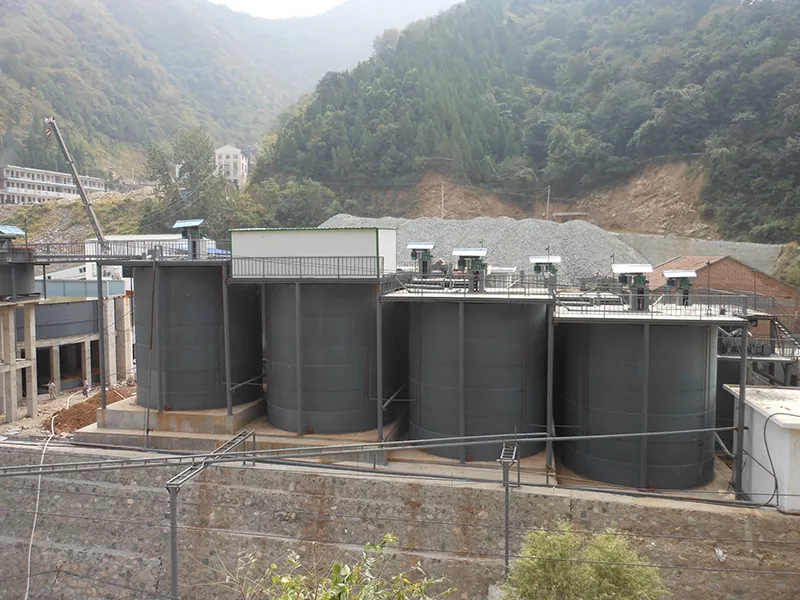
Critical material selection criteria
| Material Type | Wear Resistance | Corrosion Resistance | Typical Application in Leaching |
|---|---|---|---|
| Stainless Steel 316L | Moderate | Good against mild acids | Low-chloride cyanide leaching |
| Duplex 2205 | High | Excellent against chlorides and acids | High-chloride, acidic leaching circuits |
| Carbon steel with rubber lining | Very high (abrasion) | Good (chemical barrier) | Highly abrasive slurry with moderate acid |
| High-chrome white iron | Excellent | Poor without coating | Shear-intensive zones, cyclone feeds |
| Titanium grade 2 | Moderate | Superior against oxidizing acids | High-temperature pressure leaching |
Most resistant combinations
For typical Leaching Agitation Tank duties with abrasive solids and acidic or cyanide solutions, rubber-lined carbon steel offers the best balance. The steel provides structural strength, while the rubber absorbs impact and resists chemical attack. EPIC recommends natural or synthetic rubber linings for gold cyanidation tanks lasting 8–12 years.
In highly corrosive environments with chlorides or sulfuric acid, Duplex 2205 or super duplex ranks highest. These materials resist pitting and stress corrosion cracking far better than 316L. For extreme oxidative leaching (e.g., high-temperature pressure oxidation), titanium grade 2 or 6% molybdenum superaustenitic alloys are necessary.
Leaching Agitation Tank FAQ
Q1: How does hardfacing or weld overlay improve the wear life of a leaching agitation tank impeller?
A1: Hardfacing applies a layer of high-chrome or tungsten carbide alloy onto the impeller and baffles. This increases surface hardness to 550–650 BHN, resisting erosion from sharp mineral particles like silica or pyrite. EPIC uses controlled arc welding processes to maintain substrate toughness while doubling or tripling wear life compared to bare carbon steel. Regular thickness monitoring ensures the overlay is reapplied before base metal exposure.
Q2: Can a leaching agitation tank originally built with 316L be relined to handle more corrosive leach solutions?
A2: Yes, provided the tank shell is structurally sound. The internal surface must be grit-blasted to white metal, followed by application of a chemically resistant lining such as bromobutyl rubber (for cyanide) or flake-filled vinyl ester (for acid). EPIC has executed such retrofits, but caution is required: existing nozzles and baffle attachments need redesign to prevent lining creep or lifting. Full hydrostatic and holiday spark testing must follow relining.
Q3: What is the most cost-effective material for a large diameter leaching agitation tank handling mild alkaline cyanide slurry with low abrasion?
A3: For low abrasion (less than 0.5 g/L suspended solids) and pH above 9.5, carbon steel with a protective passive layer often suffices. Cyanide solutions promote a stable iron oxide film that limits further corrosion. However, any chloride intrusion or oxygen variation breaks passivation. EPIC recommends carbon steel with sacrificial cathodic protection for tanks above 500 m³, combined with annual ultrasonic thickness mapping. This approach costs 40–50% less than stainless steel while delivering a 10–15 year service life under ideal controls.
Maintenance and monitoring best practices
-
Weekly visual inspection of lining penetration through shell weep holes
-
Monthly slurry pH and oxidation-reduction potential logging
-
Quarterly ultrasonic thickness scanning on carbon steel shells
-
Annual rubber lining electrical holiday detection
Conclusion and action
Selecting the most resistant material for your Leaching Agitation Tank requires precise analysis of particle size, slurry density, pH, temperature, and chloride concentration. EPIC engineers evaluate wear-corrosion synergy to recommend either rubber-lined carbon steel, duplex stainless steel, or high-alloy options.
Contact us today for a site-specific material selection study and custom Leaching Agitation Tank fabrication quotation. Our team provides finite element wear modeling and lining performance guarantees.