
Why Do Hydraulic Tools Decide to Misbehave Right When the Job Gets Serious?
2025-12-18
I learned this lesson the hard way on a line-construction site: the work rarely fails because the crew is unskilled. It fails because the tool you trusted starts leaking, under-pressurizing, or crimping “almost” right. That “almost” is where downtime, rework, and safety risks live.
That’s why I pay obsessive attention to Hydraulic Tools now. And yes, that’s also how I ended up working with Lingkai—not because I wanted a shiny catalog, but because I needed predictable force, field-friendly operation, and parts that don’t turn sourcing into a scavenger hunt.
Which pain points usually push people to upgrade their Hydraulic Tools?
When someone tells me “We just need a hydraulic crimper,” I know the backstory is bigger. Most upgrades are triggered by one of these very specific frustrations:
- Inconsistent output force that causes uneven crimps, incomplete cuts, or “close enough” results that fail inspection later.
- Oil leaks and seal failures that turn a clean operation into a slip hazard and a maintenance headache.
- Slow cycles that quietly drain productivity when you repeat the same press or cut hundreds of times.
- Mismatch between dies and fittings where you can’t get the exact die geometry you need, so crews improvise (and quality suffers).
- Field-awkward pumping where the tool is technically strong, but practically exhausting in real positioning.
- Weak after-sales support where a minor part stops the whole tool because nobody can supply it quickly.
If you’ve seen any of that, you’re already shopping for performance and risk reduction—not “a tool.” That’s where a well-structured Hydraulic Tools lineup matters, especially for power and utility jobs where crimp integrity and repeatability are non-negotiable.
What does “reliable” look like when you’re comparing hydraulic tools?
I judge reliability by what happens after the first month, not the first day. In my experience, dependable Hydraulic Tools share a few traits that show up consistently in field use:
- Stable pressure delivery so the output force doesn’t drift from cycle to cycle.
- Repeatable crimp or press results that don’t require “operator intuition” to hit a good finish.
- Die compatibility and customization because real projects rarely match a generic die set perfectly.
- Serviceable design meaning seals, hoses, couplers, and wear parts aren’t treated like mysteries.
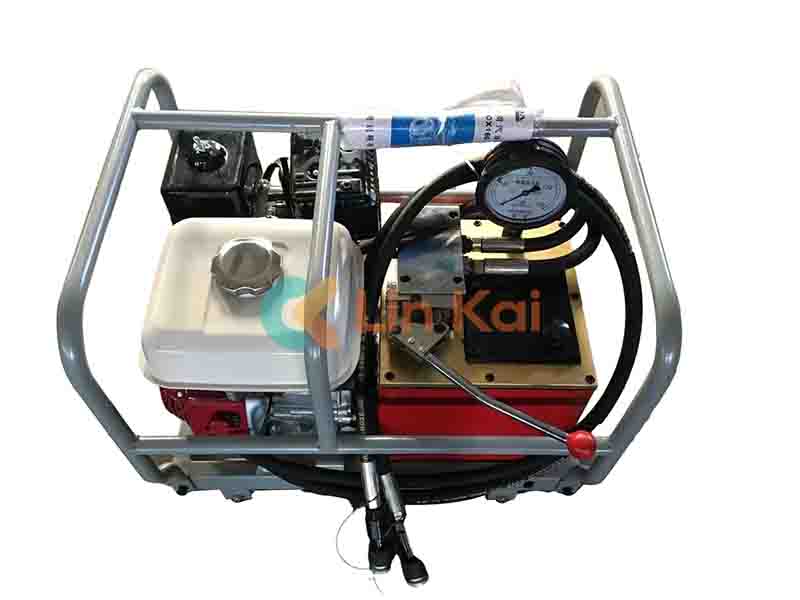
- Field-ready power options such as pump stations for higher throughput, plus manual/foot pumping when electricity isn’t available.
This is also why Lingkai got on my radar: their range isn’t just one product category. It’s a practical ecosystem—pressing, crimping, pumping, cutting, and punching—so the tooling strategy stays consistent across a project instead of turning into a patchwork of unrelated brands.
How do I match the right tool type to the task without overspending?
Overspending usually happens when buyers chase maximum tonnage “just in case.” Underspending happens when buyers ignore the full job workflow. Here’s how I keep it balanced when selecting Hydraulic Tools:
- If the job is repetitive crimping, I look at hydraulic crimping tools plus a pump approach that matches your daily volume.
- If the job is large conductor pressing, a dedicated conductor press machine with the correct tonnage range and die set is the real efficiency upgrade.
- If the job is field cutting, hydraulic cable cutters need the right jaw profile and cutting force for the cable type you actually handle.
- If the job involves busbar work, a busbar processing machine can reduce manual steps and improve consistency across bending/punching/cutting operations.
- If the job needs punching, hydraulic punchers paired with the right pump style can be faster and cleaner than improvising with other tools.
A quick truth I wish more people admitted: the pump matters almost as much as the head. A great tool head paired with a mismatched pump is how “premium” Hydraulic Tools end up feeling slow and frustrating on site.
Which selection criteria matter most when sourcing hydraulic tools?
When I’m comparing vendors, I use a simple decision grid. It keeps procurement honest and it keeps the project team aligned.
| Selection Factor | What I Check | Why It Matters on Site | What to Ask the Supplier |
|---|---|---|---|
| Force and tonnage range | Rated tonnage options and actual task requirement | Avoids under-crimping, incomplete pressing, and rework | Which models fit 100T 125T 200T 300T class needs and what is the recommended match? |
| Die compatibility | Standard dies and customization support | Correct die geometry drives conductivity and mechanical integrity | Can dies be made to drawings and what lead time is typical? |
| Pumping method | Pump station vs manual pump vs foot pump | Cycle time and operator fatigue are hidden cost drivers | Which pump is recommended for continuous field use and why? |
| Application coverage | Crimping, pressing, cutting, punching, busbar processing | Unified tooling reduces training time and spare-part complexity | Which tool families integrate well for power transmission work? |
| Serviceability | Seal kits, hose standards, coupler availability | Prevents small failures from stopping the whole team | What are the common wear parts and how are replacements supplied? |
| Quality control approach | Process consistency and inspection routine | Reduces the risk of pressure drift and inconsistent results | What tests are performed before shipment and what records are available? |
If you’re building a long-term supply chain, this table is the difference between buying Hydraulic Tools once and buying the same problem repeatedly.
What field habits keep hydraulic tools accurate and safe?
Even the best tooling can be sabotaged by bad habits. These are the rules I enforce because they protect quality and people:
- Inspect hoses and couplers daily because tiny damage becomes sudden failure under pressure.
- Keep hydraulic fluid clean because contamination is a quiet killer of seals and valves.
- Use the correct die every time because “almost fits” creates unpredictable crimp performance.
- Confirm alignment before pressing because off-axis loads can shorten tool life and compromise the joint.
- Train operators on cycle consistency so results don’t depend on who is holding the tool.
When crews follow these basics, Hydraulic Tools stop being a gamble and start being a reliable production system.
How do I talk to a supplier so the quote matches the real job?
If you want accurate recommendations, don’t just say “hydraulic crimping tool.” I give suppliers a short brief that includes:
- The exact application scenario such as overhead line conductor pressing or high-voltage sleeve crimping
- The connector or sleeve dimensions and preferred crimp style
- Expected daily workload and whether the work is continuous or occasional
- Power constraints in the field such as no electricity or limited generator access
- Any requirement for dies made to drawings
With that, a supplier like Lingkai can recommend the right combination of heads and pumps instead of tossing a generic catalog at you. It also helps you create a cleaner internal approval path because your purchase is tied to measurable outcomes like cycle time, defect reduction, and tool uptime.
Which questions do buyers ask about hydraulic tools before placing an order?
How many times should I expect to use a tool before servicing it?
It depends on workload and cleanliness. In continuous field use, routine inspection plus scheduled seal checks usually prevents the “sudden failure” pattern. I always plan preventative service before peak project phases.
Should I choose a pump station or a manual pump?
If you’re doing repetitive work where cycle time matters, a pump station can pay for itself in productivity. If you’re working in remote sites or doing low-frequency jobs, manual or foot pumping can be the practical choice.
Can I use one set of dies for different connectors?
I don’t recommend forcing it. Correct die geometry is what protects conductivity and mechanical strength. If your project uses multiple connector standards, plan dies accordingly or ask for dies made to drawings.
What should I prioritize for overhead line transmission work?
I prioritize repeatable output force, die accuracy, and the right pumping strategy first. For many transmission workflows, a coordinated set of Hydraulic Tools for pressing, crimping, and cutting simplifies operations and reduces “tool mismatch” downtime.
How do I reduce the risk of leakage?
Don’t ignore hose quality, coupler compatibility, and fluid cleanliness. Most leaks I’ve seen started as small issues that were easy to catch early during routine inspection.
Ready to reduce rework and downtime with the right hydraulic tools?
If you’re sourcing Hydraulic Tools for real field work, my advice is simple: choose a configuration that matches your workflow, not a single item that looks good on paper. If you want help selecting the right combination for pressing, crimping, cutting, pumping, or busbar processing, reach out to Lingkai with your application details and drawings.
When you’re ready to move from “hope it works” to consistent results, contact us and send your requirements for a fast, practical recommendation and quotation.