

Why Does Auxiliary Equipment Matter More Than Ever in Modern Industrial Lines?
2026-01-27
When I first started evaluating production efficiency beyond the core machinery, I quickly realized that the real bottlenecks rarely come from the main system itself. They come from what supports it. This is where Auxiliary Equipment quietly defines whether a production line runs smoothly or constantly struggles. As I explored different solutions in the market, GRM Machinery naturally entered the picture through real-world discussions about stability, adaptability, and long-term operating cost control.
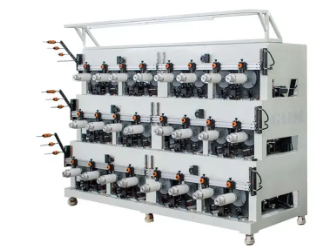
What Problems Does Auxiliary Equipment Actually Solve in Daily Production?
In practice, Auxiliary Equipment is not about adding complexity. It is about removing friction. I have seen factories invest heavily in primary machines, only to lose efficiency because material handling, cooling, guiding, or safety systems were overlooked. These supporting systems bridge the gap between theoretical capacity and real output.
- Reducing unplanned downtime caused by material jams or misalignment
- Stabilizing operating conditions to protect core machinery
- Improving operator safety and workflow consistency
- Allowing flexible adaptation to different product specifications
When designed correctly, Auxiliary Equipment works quietly in the background, yet it directly influences productivity, product quality, and maintenance frequency.
How Does Well Designed Auxiliary Equipment Improve Overall Line Efficiency?
From my experience, efficiency gains do not come from speed alone. They come from balance. A rolling mill or processing line can only perform as well as its weakest supporting link. This is why I pay close attention to how Auxiliary Equipment integrates into the entire system rather than viewing it as an afterthought.
| Operational Area | Role of Auxiliary Equipment | Practical Benefit |
|---|---|---|
| Material Handling | Guiding, feeding, and transfer systems | Smoother flow with fewer interruptions |
| Temperature Control | Cooling and lubrication support | Reduced wear and extended machine life |
| Alignment & Stability | Positioning and stabilization units | Consistent product quality |
| Safety Management | Protective and monitoring components | Lower operational risk |
This system-level thinking is one reason why I found solutions from GRM Machinery aligned with practical production needs rather than theoretical specifications.
Why Should Auxiliary Equipment Be Customized Instead of Standardized?
One lesson I learned early is that no two production lines behave exactly the same. Raw materials, output requirements, and operating environments all vary. Standardized Auxiliary Equipment may work on paper, but customization is often what unlocks real efficiency.
- Matching equipment capacity with actual load conditions
- Adapting layouts to existing workshop constraints
- Optimizing interfaces between core machines and support units
By focusing on adaptable designs, Auxiliary Equipment becomes an active contributor to performance rather than a passive attachment.
How Does Auxiliary Equipment Contribute to Long Term Cost Control?
Cost control is not only about initial investment. I evaluate total ownership cost, and this is where Auxiliary Equipment proves its value over time. Stable operation reduces emergency repairs, while optimized support systems lower energy waste and material loss.
| Cost Factor | Without Proper Support | With Optimized Auxiliary Equipment |
|---|---|---|
| Maintenance Frequency | High and unpredictable | Planned and manageable |
| Energy Consumption | Excessive due to inefficiencies | Balanced and controlled |
| Component Wear | Accelerated | Significantly reduced |
This long-term perspective explains why manufacturers increasingly treat Auxiliary Equipment as a strategic investment rather than a secondary expense.
What Should Buyers Look for When Selecting Auxiliary Equipment?
When selecting Auxiliary Equipment, I focus less on appearance and more on engineering logic. Reliable suppliers demonstrate a clear understanding of how their equipment interacts with the full production process.
- Proven compatibility with existing systems
- Clear design rationale rather than generic specifications
- Support for customization and future upgrades
- Practical installation and commissioning guidance
These criteria help ensure that Auxiliary Equipment delivers measurable value rather than becoming an overlooked component.
Are You Ready to Upgrade Your Production Line with Smarter Auxiliary Equipment?
If you are evaluating how to improve reliability, efficiency, and cost control across your production line, it may be time to take a closer look at how Auxiliary Equipment fits into your overall strategy. I encourage you to explore tailored solutions that align with real operating conditions instead of generic assumptions.
For detailed discussions, technical guidance, or customized recommendations, feel free to contact us and share your requirements. The right support equipment can make a measurable difference, and starting the conversation is often the most important step.