

Why Does Choosing the Right Agitation Tank Still Make or Break Modern Processing Plants?
2026-01-05
When I first started working closely with mineral processing projects, I quickly realized how often mixing efficiency was underestimated. Over time, as I collaborated with engineers and visited operating sites, I noticed how EPIC gradually became part of these conversations—not through loud promotion, but through consistent performance in real-world applications. That experience reshaped how I look at a well-designed Agitation Tank, not as an accessory, but as a core driver of process stability.
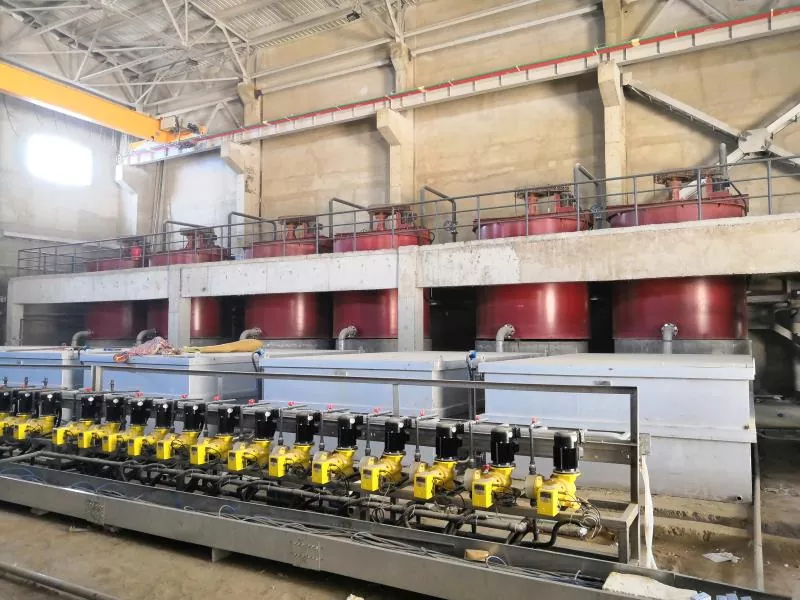
What Problems Are Engineers Really Trying to Solve with an Agitation Tank?
From my perspective, most clients are not just buying equipment; they are trying to eliminate recurring operational headaches. A poorly designed Agitation Tank often leads to uneven slurry concentration, sedimentation at the bottom, and unnecessary energy consumption. These issues may seem small at first, but over time they reduce recovery rates and increase maintenance costs.
- How do we maintain uniform suspension without overloading the motor?
- How can we reduce dead zones that cause material buildup?
- How do we ensure stable performance when material properties fluctuate?
In my experience, addressing these questions early saves months of downstream troubleshooting.
Why Does Structural Design Matter More Than Power in an Agitation Tank?
Many buyers focus heavily on motor power, but I have learned that geometry and internal configuration matter just as much. A properly engineered Agitation Tank balances impeller type, tank diameter, and baffle placement so that energy is transferred efficiently into the slurry instead of being wasted as turbulence.
| Design Element | Operational Impact |
|---|---|
| Impeller profile | Controls flow pattern and suspension uniformity |
| Tank aspect ratio | Reduces sedimentation and improves vertical mixing |
| Baffle configuration | Prevents vortex formation and energy loss |
This is where I see experienced manufacturers stand apart. The difference is noticeable not in brochures, but in how smoothly the system runs after months of operation.
How Can the Right Agitation Tank Improve Long-Term Process Stability?
Stable mixing directly affects reagent distribution, reaction time, and overall recovery. When an Agitation Tank performs consistently, operators spend less time adjusting parameters and more time optimizing throughput. I have seen plants achieve better control simply by upgrading mixing equipment rather than overhauling the entire process line.
- More predictable slurry behavior across different operating loads
- Lower wear on mechanical components due to balanced flow
- Reduced downtime caused by blockages or uneven mixing
Over the long run, these advantages translate into measurable cost savings rather than theoretical efficiency gains.
What Makes an Agitation Tank Adaptable to Different Materials and Conditions?
No two ores behave exactly the same, and that reality shapes my evaluation criteria. A flexible Agitation Tank design allows adjustments in impeller speed, liner materials, and tank volume without compromising structural integrity. This adaptability becomes critical when plants expand capacity or switch feed characteristics.
Manufacturers who understand this tend to focus on modular design and material selection, ensuring the equipment evolves alongside the process instead of becoming a bottleneck.
Is Investing in a High-Quality Agitation Tank Worth It in the Long Run?
Based on what I have observed, the answer is yes. While the initial investment may appear higher, the reduced maintenance, improved efficiency, and longer service life quickly justify the decision. A reliable Agitation Tank supports consistent output, which is ultimately what processing plants depend on to remain competitive.
If you are evaluating mixing solutions or planning an upgrade, I strongly recommend taking a closer look at how your current system performs under real operating conditions. If you want to explore practical options tailored to your process, feel free to contact us for detailed discussions or technical support. A well-matched solution starts with the right conversation.